Okay. Could you guys back off enough I can be serious, so I can be reflective like the Winter Garden at noon. Reflexive like a Swede assuming insult. Reflexable (ain't not word, but) like no one's business.
The reading on Monday night, a public recitation previously referenced, was a dream framed and kept. And there was wine and lush foodstuffs==no strangers to poets.
So it was me, Margo Berdeshevsky and Joannie Stangeland at the Cornelia St. Cafe. I've done enough readings I don't have much of anything to write here PER SE that wouldn't sound precious, not that precious doesn't have its place somewhere or other.
It might be the friend factor that moved this reading ahead in the pantheon of readings, pals who showed up. One is just beginning to understand I'm a poet (there is at least one dimension of my life that doesn't intersect with stanzas and line breaks). Three great friends I met in group formation a few years ago appeared, smiling and brilliant. One friend who knows most portions of my life and for that is highly treasured (and for wit and artistic perspective) watched. One new friend who may always be just out of reach but visible showed to support and/or out of curiosity. So nice very really very nice. One who'd published me.
& of course my co-readers had their fireflies and moths so by the end of the reading it was as if I had been heard, something I long for in some sense of needing completion or a sense donut-holeness from early years.
I have assembled a second poetry collection, and in reading some of those poems, it became real, viable, something to place in the world.
Two glasses of Riesling and a French rendering of lamb. New stories from new people. A little post-dinner idiocy on my part (I was born with Ginsberg ennui). The evening was textured, Rembrandt rich with a whole lot of stuff going on. Once more I became a poet. Once more.
Showing posts with label poetry readings. Show all posts
Wednesday, March 14, 2012
Tuesday, December 6, 2011
The Democracy of the Open Mic
What I like about Open Mics is the democracy, given limits of time and space.
Why write this? I recently heard a poet say, No one goes to open mics if they they write good poetry (or--are connected). That's not a direct quote, but it conveys the gist.
Okay. What's different between open mics and poetry readings with featured readers. In New York, the latter are generally staged by the under forty-set. The under-forty set who have graduated from a local MFA program and have friends their age, with their interests.
The poetry readings with featured readers do not, in fact, necessarily offer a finer quality poetry than open mics do, not overall. I recently attended a reading of three featured readers. Each had an MFA. One was a wonderful poet--or a poet I consider wonderful, as does a publisher and critics and the friend I went with. The other two were not wonderful. Much self-absorption. No wit, no wisdom, no lyricism, no ear.
That said, I may only hear one or two poets whose poems make me yearn for more when I go to an open mic of, say twenty poets. And unless I get lucky, I don't hear a Frank O'Hara or Rita Dove or Marilyn Nelson or Doug Anderson in the making.
(Of course, God knows what the other poets think of me. Usually they avoid me. We all make our judgments.)
Unless I attend a reading at Cave Canem, the organization for Black poets, it's unlikely I'll see a Black poet at a featured-reader event. Sad and most often true. Open mics are often mixed, maybe not fully representative of all New York, but lively, of more than one social set--or more than one esthetic. I remember a young woman--this was years ago in Seattle--improvise a poem about being made love to by her supremely attentive boyfriend. It wasn't a great poem but the event of it, the lighting, her voice, the remarkably quiet (for a bar) room, not to be forgotten. And not to be missed.
Yes. Sometimes I want to hear high level art honed by years of work. Sometimes I want to hear a famous poet. But sometimes I just want a chance to test out my own poems. Sometimes I want to be around people who love poetry. How wonderful is that.
Why write this? I recently heard a poet say, No one goes to open mics if they they write good poetry (or--are connected). That's not a direct quote, but it conveys the gist.
Okay. What's different between open mics and poetry readings with featured readers. In New York, the latter are generally staged by the under forty-set. The under-forty set who have graduated from a local MFA program and have friends their age, with their interests.
The poetry readings with featured readers do not, in fact, necessarily offer a finer quality poetry than open mics do, not overall. I recently attended a reading of three featured readers. Each had an MFA. One was a wonderful poet--or a poet I consider wonderful, as does a publisher and critics and the friend I went with. The other two were not wonderful. Much self-absorption. No wit, no wisdom, no lyricism, no ear.
That said, I may only hear one or two poets whose poems make me yearn for more when I go to an open mic of, say twenty poets. And unless I get lucky, I don't hear a Frank O'Hara or Rita Dove or Marilyn Nelson or Doug Anderson in the making.
(Of course, God knows what the other poets think of me. Usually they avoid me. We all make our judgments.)
Unless I attend a reading at Cave Canem, the organization for Black poets, it's unlikely I'll see a Black poet at a featured-reader event. Sad and most often true. Open mics are often mixed, maybe not fully representative of all New York, but lively, of more than one social set--or more than one esthetic. I remember a young woman--this was years ago in Seattle--improvise a poem about being made love to by her supremely attentive boyfriend. It wasn't a great poem but the event of it, the lighting, her voice, the remarkably quiet (for a bar) room, not to be forgotten. And not to be missed.
Yes. Sometimes I want to hear high level art honed by years of work. Sometimes I want to hear a famous poet. But sometimes I just want a chance to test out my own poems. Sometimes I want to be around people who love poetry. How wonderful is that.
Saturday, April 2, 2011
Poetry Q&As: in the entourage of art
Being but a humble entity in the world of poetry (or a brazen nonentity, yes, that might be the case) I have participated in only one Q&A after a reading. By which I mean I was to be the "A" part of the equation and the audience was the "Q."
This "A"-time followed a reading of three poets. We also delivered manifestos on poetry and queerdom, teaching poetry, living queerdom and poetry, and so on, so there was indeed room for interrogation. Such a manifesto is meant to provoke. Incidentally, this was in February at Trace Peterson's Tendencies series at the CUNY Grad Center.
The topic here is Q&A sessions. I just saw them mentioned elsewhere, and with annoyance, the idea being why do poems read at poetry-only poetry readings need further explanation?
They don't. The occasional Q&A can be interesting and if there is promise of sparkling water, wine, good cookies, perhaps a crudity or two, then more than tolerable. Poetry, however, needs not be explained. A poem can be written about or talked about. That's good, interesting. But directly after it has been presented to an audience, there should be no need to eradicate its already fleeting hover by asking the poet where she writes, or what she thinks about formal verse or MFA programs.
So why the Q&As? I suspect they've been around forever. I don't know that, but it seems reasonable given the stick-to-it-ness of human folly. A few responses grabbed from the air:
This is off the top of my head which is already off its heady rocker and you are welcome to protest or suggest more reasons the poet and not the poem is celebrated.
Thank all the powers of heaven and earth for the poem. {Pictured: where poems are born.}
This "A"-time followed a reading of three poets. We also delivered manifestos on poetry and queerdom, teaching poetry, living queerdom and poetry, and so on, so there was indeed room for interrogation. Such a manifesto is meant to provoke. Incidentally, this was in February at Trace Peterson's Tendencies series at the CUNY Grad Center.
The topic here is Q&A sessions. I just saw them mentioned elsewhere, and with annoyance, the idea being why do poems read at poetry-only poetry readings need further explanation?
They don't. The occasional Q&A can be interesting and if there is promise of sparkling water, wine, good cookies, perhaps a crudity or two, then more than tolerable. Poetry, however, needs not be explained. A poem can be written about or talked about. That's good, interesting. But directly after it has been presented to an audience, there should be no need to eradicate its already fleeting hover by asking the poet where she writes, or what she thinks about formal verse or MFA programs.
So why the Q&As? I suspect they've been around forever. I don't know that, but it seems reasonable given the stick-to-it-ness of human folly. A few responses grabbed from the air:
- We don't like to feel. A poem provokes nesting emotion, wakens it. Much of the world's ugliness arises out of a fear of feeling. Certainly addictions widely pervasive cloud us from our feelings, as strip mining hides from us from the troubling realities of nature in her raw beauty.
- We like to pretend we are "in" on the poem or the poet's thoughts, life, process. We want to be part of the action. We want to be in the entourage of art. (We can do that by making art, but that's time consuming.)
- The above two suggestions assume it is the audience that is at fault, when it may well be the organizer of the reading who worries the poems themselves won't be enough. They see the poems as a basic black dress and then accessorize it to hell with long introductions of the poets and the Q&A. (The wine and cheese are good things. Don't touch that.)
This is off the top of my head which is already off its heady rocker and you are welcome to protest or suggest more reasons the poet and not the poem is celebrated.
Thank all the powers of heaven and earth for the poem. {Pictured: where poems are born.}
Monday, March 7, 2011
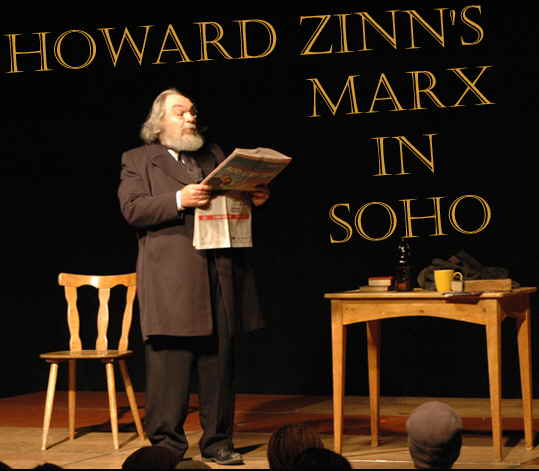
Karl Marx at Sarah Lawrence, or if not him, me, I'll read there, Tues., 3/8, 7 pm
I've written about Karl Marx three days in a row. I'm reading Isaiah Berlin's biography, Annette Funicello: The Early Years, NO! Karl Marx (Oxford).
Contrast, please, the seething poverty Marx and his family endured in London with Bronxville, the upper-scale upscale town atop which Sarah Lawrence College sits. Can't be done. Marx and his brood lived in two crappy rooms that sound like a crack house with filth and broken furniture. Maybe Yonkers, a few blocks away, has a crackhouse or two (which the super rich slum in), but not CEO-aplenty Bronxville.
I will have to bring poverty (and maybe sloth and anarchy) to my co-reading at Sarah Lawrence College on Tuesday, March 8 at 7 p.m. in Slonim House. (It's such a small campus and Slonim's well-known; you'll find you're way.) Co-readers are Todd Dillard, Sam Starkweather, Sally Bliumis-Dunn.
I'm a wonderful reader out louder of poetry. Please do stop by if you are in Westchester County. It's free (ahem) and there'll be a Q&A and maybe cookies, wine or revolution. More on Marx soon.
*poster for Howard Zinn's play Marx in Soho
Contrast, please, the seething poverty Marx and his family endured in London with Bronxville, the upper-scale upscale town atop which Sarah Lawrence College sits. Can't be done. Marx and his brood lived in two crappy rooms that sound like a crack house with filth and broken furniture. Maybe Yonkers, a few blocks away, has a crackhouse or two (which the super rich slum in), but not CEO-aplenty Bronxville.
I will have to bring poverty (and maybe sloth and anarchy) to my co-reading at Sarah Lawrence College on Tuesday, March 8 at 7 p.m. in Slonim House. (It's such a small campus and Slonim's well-known; you'll find you're way.) Co-readers are Todd Dillard, Sam Starkweather, Sally Bliumis-Dunn.
I'm a wonderful reader out louder of poetry. Please do stop by if you are in Westchester County. It's free (ahem) and there'll be a Q&A and maybe cookies, wine or revolution. More on Marx soon.
*poster for Howard Zinn's play Marx in Soho
Thursday, February 10, 2011
I Present a Manifesto; & abide in a pink cloud
| Heya . . . I'm Sarah's pink cloud.* |
Whooo hooo is a scholarly term obscure and quietly, sullenly essential in comprehension of theory, poetic theory, of which I know little, though last night, at the Tendencies series run by Trace Peterson, a doctoral candidate at CUNY, I knew much. I had to. I delivered a manifesto on poetry.
Also manifesto presenting were poet Christopher Schmidt and filmmaker Joel Sachs. I'm still so happy with the evening, my manifesto, my co-presenters, I can't unpink my cloud. I'm in the pink cloud of manifesto presentation, a fuzzy happy space which has little correspondence to "reality" but more to spaces of the mind in which flight--flight--lifts us up and over.
There is a lesson here. See, one evening I got off my rear to go to a reading in Brooklyn because two of the three poets interested me. Tim Peterson was one; we became friends and a year later, a manifesto was born.
I often send out many invitations to my readings, hoping poets who never show up for me will suddenly show up for me. Hoping poets who I show up for will show up for me. They don't. They don't. What I changed was who I asked to come. Who I asked were warm friends and of course they showed.
GO TO THE WARMTH!
See you soon, you warm snuggly reader, you. Remember to use your Wonder Woman bracelets to fight negativity and self-pity.
Sarah's pink cloud by Michel Feder. So beautiful. From the site http://www.michelefeder.com/clouds/pink_cloud.jpg
Tuesday, February 1, 2011
I Brave Icy Roads to Read on Wed., 2/2, 6-8pm, Busboys & Poets, 5th & K, Washington, DC, FREE
Starting Wednesday, a gaggle of writers, most of whom are attached in some way to teaching / the academy, will convene in Washington, DC for an annual conference. I'm not going.
Word For/Word,
http://www.wordforword.info/vol17/index.htm,
But I couldn't resist an invitation to read, OFF-SITE, from editors of Reconfigurations. Storm or no storm, I have a ticket on a Bolt Bus, a reservation at a hostel, a song in my heart. Here's the flyer. Be there, oh please. And introduce yourself to me.
AWP Off-Site Poetry Reading:
Free Verse/Editions, Reconfigurations, and Word For/Word
*
Wednesday, February 2, 6-8 PM,
Busboys and Poets (5th and K)
1025 5th Street, NW, Washington, DC.
http://www.busboysandpoets.com/
**
Readings by:
James Capozzi, Geoffrey Gatza, Adam Golaski, Matthew Klane, Adam Liszkiewicz, Marjorie Maddox, Brittany Perham, Sarah Sarai, Jon Thompson, Daniel Tiffany, Sam Truitt, and Bryan Walpert
***
From:
Word For/Word,
http://www.wordforword.info/vol17/index.htm,
Free Verse/Editions,
http://www.jon-thompson.net/free-verse-editions.html, and
Reconfigurations,
http://reconfigurations.blogspot.com/
http://www.jon-thompson.net/free-verse-editions.html, and
Reconfigurations,
http://reconfigurations.blogspot.com/
****
This event is free. We hope to see you there.
W. Scott Howard, editor & publisher, Reconfigurations
Jonathan Minton, editor & publisher, Word For/Word
Jon Thompson, editor & publisher, Free Verse/Editions
*****
James Capozzi lives in Binghamton, NY. His poetry has been published widely, including journals and magazines such as BOMB, New Republic, Denver Quarterly and Chicago Review. His book, Country Album, won the New Measure Poetry Prize and will be published by Free Verse Editions in 2011.
Geoffrey Gatza is the editor and Publisher of BlazeVOX [books] and the author of eight books of poetry; Secrets of my Prison House will be out in the Fall of 2010. Kenmore: Poem Unlimited and Not So Fast Robespierre are now available from Menendez Publishing. HouseCat Kung Fu: Strange Poems for Wild Children is also available from Meritage Press. He lives in Buffalo, NY with his girlfriend and two cats. http://www.geoffreygatza.com/ & http://www.blazevox.org
Adam Golaski is the author of the collections of short stories, Worse than Myself (Raw Dog Screaming Press, 2008) and Color Plates (Rose Metal Press, 2010). He is the co-founder and co-editor of Flim Forum Press and writes at the blog Little Stories.
Matthew Klane is co-editor/founder of Flim Forum Press. He is the author of the book B_____ Meditations from Stockport Flats Press (2008). His latest chapbooks include Friend Delighting the Eloquent, Sorrow Songs, and The- Associated Press. He currently lives and writes in Albany, NY.
A.J. Patrick Liszkiewicz lives in Buffalo, NY, where he is an MFA student in Media Arts Production at the University at Buffalo. He is the Assistant Editor of Digital, Visual and Sound Poetry at the journal, Anti-.
Director of Creative Writing and Professor of English at Lock Haven University, Marjorie Maddox has published Perpendicular As I (Sandstone Book Award) and others.
Brittany Perham is a Wallace Stegner Fellow at Stanford University. Her first collection of poems, The Curiosities, will be published in 2011 by Free Verse Editions/Parlor Press. She holds degrees from Tufts University and from the University of Virginia, where she was a Henry Hoyns Fellow.
Of Sarah Sarai's collection, The Future Is Happy (BlazeVOX), Gerald Schwartz wrote, "the confrontation and interactions with an emotional life gives the author's poems a nervy, discomfiting vitality. Their very rawness and urgency bring these poems to a kind of transcendence." Poems in Threepenny Review, Parthenon West, Mississippi Review, and others; a chapbook soon from Loose Gravel Press. She lives in her New York and dreams of her California.
Jon Thompson teaches at North Carolina State University where he edits Free Verse; A Journal of Contemporary Poetry & Poetics and the single author poetry series, Free Verse Editions. His first book of poems was The Book of the Floating World; his most recent book is a collection of lyrical essays, After Paradise: Essays on the Fate of American Writing (Shearsman Books, 2009).
Daniel Tiffany is the author of three books of poetry: Puppet Wardrobe (Parlor Press); The Dandelion Clock (Tinfish Press); and Privado (Action Books). His critical books include Toy Medium: Materialism and Modern Lyric and Infidel Poetics: Riddles, Nightlife, Substance. In addition, he has translated works by Georges Bataille, Sophocles, and the Italian poet, Cesare Pavese. He teaches at the University of Southern California in Los Angeles.
Sam Truitt is the author of numerous books in the Vertical Elegies series, including The Song of Rasputin, Falltime, Raton Rex, The Section, Anamorphosis Eisenhower, and the forthcoming Street Mete. He lives in Woodstock, NY where he edits Station Hill Press.
Bryan Walpert is the author of a collection of poetry, Etymology, and collection of short stories, Ephraim's Eyes. He holds an MFA from the University of Maryland and Ph.D. from the University of Denver. His work has appeared widely in journals, such as AGNI, Crab Orchard Review, Hayden's Ferry Review and Tar River Poetry. A recipient of the James Wright Poetry Award from the Mid-American Review, he teaches creative writing at Massey University in Palmerston North, New Zealand.
Monday, April 26, 2010
Shuffling Poets: lustre defined and questioned
As in fiction so in poetry readings. The consumer wants to trust the the narrator, in this case poet, who is protagonist of her or his reading.It's not that poet -or narrator- must be entirely honorable a human or kind to the masses. If he or she is either, that becomes clear and adds to the lustre. But drunkenness and sleeping with students are also part of the chemical formulation of a poet's -or narrator's- lustre.
Fine and good but lustre's composition does become questionable, thin and plastery, when a poet stands at the podium and shuffles through her or his work, not just looking for a poem but trying to decide which poem to read next.
Of course I merely have one collection out (have I mentioned that in the last five minutes?), not ten books and twice as many uncollected poems. It's really not so hard for me. For me it takes a few stickies in my book (it's published, by the way) (The Future Is Happy) (go to Small Press Distribution or Amazon) and another eight to ten "new" poems (enough, already, the audience will get the idea). "New work" has at most been published in journals.
Some poets will announce, "this poem was accepted by Farmer's Snotrag Review of Southern Illinois Agricultural and Combine Academy and then wait, as if honoring a line break, for gasps of admiration. But the audience never reacts. I wonder if there'd be a stir for a poem kissed by dewy lips of the New Yorker or Poetry's poetry editors?
My disdain is barely concealed when a poet does that, piles it on a poem. Isn't the poor poem itself worth our time? I fear my disdain means I will any day now do the same. What Sarah Sarai disdains barely she soon does.
So who cares what I have to say about readings?
I do and I'll tell you why: I am reading tomorrow night, Tues., April 27, at Bluestockings Bookstore at 7 p.m. Details below. I must make selections tonight then spend the day at the seashore with pebbles in my mouth, practicing, rehearsing, emoting.
Fat chance. But I am always thrilled anyone wants me to read and am thinking about the saucy audience at this activist bookstore and center. I will make my choices tonight and decide which one or two poems I'll do something extra with--I warbled a poem recently and am pushing myself for more.
The right people and the right number of people always show up at readings. I taught myself that years ago. People are showing up for poetry? What could be wrong with that scenario? Nothing. Nothing at all. Not even a shuffling poet.
Join us: Tuesday, April 27th @ 7p.m.
Women’s / Bi / Trans & co. Poetry Jam & Open Mike (All welcome)
Featuring Sarah Sarai & Adrienne Baldassano
Bluestockings Bookstore
173 Allen Street
$5 or best offer--Vittoria passes a hat
(lower east side, 1 block so. of Houston, btwn. Stanton/Rivington)
train: 1 block south of the F’s 2nd Ave stop; 5 blocks from the JMZ's Essex/Delancey stop
Hosted by Vittoria Repetto, the hardest working guinea butch dyke on the lower east side
Saturday, November 14, 2009
The Great Nomadic Peoples: at a poetry reading
One of my early demonstrations of independence from my family was in a movie theater with my mom and three older sisters. My father would have stayed home with a glass of Scotch, Bach sheet music, a James Bond novel, Nick and Nora Charles on The Million Dollar Movie.Usually, the minute lights dimmed, we five became alert to the possible intrusion of extraneous sounds: a piece of Juicy Fruit being unwrapped, a too-loud engagement with molars and popcorn, a whispered comment. We were guardians of the quiet, Swiss guards for hush, lookouts ever vigilant against intrusions on our concentration.
The screen with its handsome flickering images was all. Double features (that's how long ago this was) were to be our atmosphere, landmass, weather system, internal and external organ. And if we heard a fatal crinkle of a candy wrapper we'd have to move. Sometimes my mother or a sister would venture a stern, "Shush!" but that held no truck with the Milky Way lover. Nor should it have. Candy and popcorn are inalienable rights. A movie ticket is a bearer bond for sweet and salty joys.
So the Hershey Bar would be unwrapped by a happy patron sitting behind us, a handful of popcorn noisily consumed and, as if a starting shot had been sounded for the greyhounds, my family would be off and running to another row, a quieter row, a perfect row.
I found moving from one row to another, having to yet again judge the height of the people in front -- potential blockades to Sidney Poitier or Elizabeth Taylor -- tiresome, and not cool (whether or not that was the word I used when I was thirteen).
My rebellion? I stayed put. After years of moving from seat to seat, I refused to collude with my mother and sisters in making fools of ourselves. I'd frown. I'd cross my arms over my unformed chest. I'd say, "No."
And watch their tribute to the great nomadic peoples of the world as they moved, sometimes several times in one movie. I'd hear evaluative whispers, especially if my oldest sister, who'd had the most pressure from circumstance and family, was in from San Francisco. The irony of their creating distraction -- when in fact they fled distraction-- escaped them.
And how does this relate to poetry readings? Well, I was at one today (a wonderful reading at the Bowery Poetry Club). The audience was attentive and the poets strong. Personages in my row, however, were not practiced reading attendees.
We're not talking teenagers (capable of anything). These people were older than me (hard to believe). And uh-huhing and yessing and commenting. I kept my tongue. But then my friend S-- was up and this nice lady next to me became not simply a bit distracting but, well, chatty. It's as if she were a Patriots fan sitting with six other Patriots fan in a den or sports bar (with the television on and all sorts of processed snacks hot and steaming); she began narrating the events in an unaware (bless her) stage whisper.
"He seems a bit nervous." "Oh, yes, I've met his mother. She's like that, you know, just like in that poem." And, as S-- began reading the last poem of his set, she turned to me to ask, "Oh, how do you know him? Are you a student or a poet or---" At which point my genetic material took over. Not the nomadic impulse--this was a full house and fleeing to another seat was not an option; no, the "Would you please be quiet" (whispered) impulse asserted. She became quiet.
Talking and silence, cell phones, involuntary and unconscious oohs and ahas, small comments, cheers, boos, laughter, bartenders -- they are all part of a poetry reading. There's no conclusion to be drawn from the above except I'm a silly goose. Yes, she was outsized. But I keep getting annoyed and it is not doing me any good. I want the calm of the great nomadic peoples of the world, to be able to pick up tent in silence -- but only if really very necessary.
We're not talking teenagers (capable of anything). These people were older than me (hard to believe). And uh-huhing and yessing and commenting. I kept my tongue. But then my friend S-- was up and this nice lady next to me became not simply a bit distracting but, well, chatty. It's as if she were a Patriots fan sitting with six other Patriots fan in a den or sports bar (with the television on and all sorts of processed snacks hot and steaming); she began narrating the events in an unaware (bless her) stage whisper.
"He seems a bit nervous." "Oh, yes, I've met his mother. She's like that, you know, just like in that poem." And, as S-- began reading the last poem of his set, she turned to me to ask, "Oh, how do you know him? Are you a student or a poet or---" At which point my genetic material took over. Not the nomadic impulse--this was a full house and fleeing to another seat was not an option; no, the "Would you please be quiet" (whispered) impulse asserted. She became quiet.
Talking and silence, cell phones, involuntary and unconscious oohs and ahas, small comments, cheers, boos, laughter, bartenders -- they are all part of a poetry reading. There's no conclusion to be drawn from the above except I'm a silly goose. Yes, she was outsized. But I keep getting annoyed and it is not doing me any good. I want the calm of the great nomadic peoples of the world, to be able to pick up tent in silence -- but only if really very necessary.
Subscribe to:
Posts (Atom)