Sunday, March 31, 2013

Sopheap Pich at the Met...Don't Miss this Exhibit

 
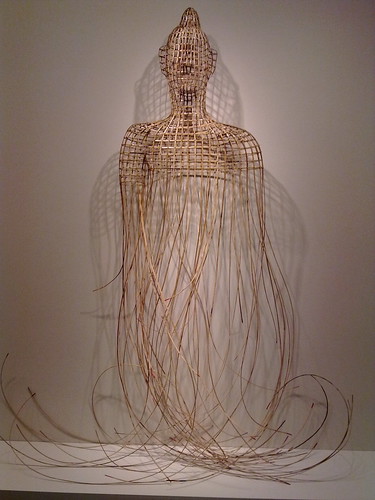
Quite an exhibit, in several of the Asian galleries, including up a staircase to an elevated gallery. An exploration, a winding revelation.  Sopheap Pich at the Met until July 7. When the Khmer Rouge was in power, morning glories (above) were sometimes all that were available for food, or at least for filling of the stomach.


I haven't found a photo showing the blush of red at the tips of the rattan, the faint riveting reminder of the Khmer Rouge's stranglehold on Cambodia. No matter.  "Budda 2." A sculpture of rattan, wire, and dye.

An excerpt from the artist's statement:
Buddha 2 was born out of a short journey my family took on foot from a Khmer Rouge village to the center of Battambang, the province of my birth. The Buddha was to symbolize a temple called Wat Ta Mim. My family built a hut across the street. I used to go past the temple ground everyday with a buffalo to the rice field several hundred meters away. I would occasionally walk inside the temple hall to see bloodstains on the floor, ceiling, and walls—bloodstains that looked like they had been sprayed with a toy gun. Where there used to be the normal Buddha sculptures, there were just piles of broken things I couldn’t see. . . . I was afraid to look in the dark. [Sophea Pich]
 
Sopheap Pich at the Metropolitan Mueum of Art.

Sunday, March 10, 2013

My AWP Takeaway

Family Dog Presents Buffalo Springfield
My AWP Takeaway

1.  Google runs buses from "the Valley" into San Francisco.
2.  There is, was, and will be gorgeous poetry in Turkey.
3.  Google runs buses from San Francisco into "the Valley."
4.  Nazim Hikmet, 1902 to 1963, is a joy to read.
5.  Those Google people are sure tight with their money when it comes to charitable giving.
6.  Lewis Hyde's exploration of The Gift presents us writers with models of being.
7.  San Francisco has a decent poetry scene, but who wants to live there.
8.  Boston breeds poets and venues.
9.  No good music has come out of San Francisco since Buffalo Springfield.
10.  There are, in fact, countless wonderful poets in Boston and everywhere.
11.  Jefferson Starship?  You kidding me?
13.  Writers of fiction, nonfiction, creative abstracts & co. abound, are enthusiastic, convivial, and of course all too human.
14.  Did Hot Tuna come out of S.F.? 
15.  Approaches to and manifestations of persona poems are varied.
16.  Now, L.A., is a great place to live.
17.  Uses of letters (epistles) in writing range from highly creative to usefully functional and (most) always interesting.
18.  Google is in search of something or other. God help us all when Google finds it.
19.  Hearing poetry in a bar with warm colors and brass fixtures is a necessary antidote to convention center readings.
20.  Soft hands are, for some, genetic.

Basically, heard and saw and met many n-a-m-e-s and wondrous people. The Dusie Kollektiv chapbook swap was a highpoint, partly because it facilitated putting faces to names, mainly because the poets were fun and generous. 

Suggestion for another AWP:  Read all material in advance. Make lists of people I want to catach up with. Plan.  Get phone numbers in advance.  Stay closer to the convention center so offsite readings in the eventuality of snow or other weather are easier to negotiate than they were this time around. 

Saturday, March 9, 2013

And on the Third Day . . . of AWP

Kinda beat. Long day. Lots of walking around, in spite of hitting some panels.  Went to a great one on Turkish poet Nazim Hakmet. Another great one on Lewis Hyde's The Gift as it applies to the writing game as known at AWP.

Some startlingly fabulous discussions with people whose names I don't remember. A few disappointments with people I thought I had more of a bond with than is really there. Much warmth from New York friends.  A few names and email addresses written down and saved.

Went to evening receptions.  Wine and enough snacks, some from a chafing dish, to make a meal.

Here's Nazim Hakmet, one of Turkey's greatest poets.


I love my country:
I’ve swung on its plane trees,
I’ve slept in its prisons.
Nothing lifts my spirits like its songs and tobacco…
My county:
goats on the Ankara plain,
the sheen of their long blond silky hair.
The succulent plump hazelnuts of Giresun.
Amasya apples with fragrant red cheeks,
olives,
figs,
melons,
and bunches and bunches of grapes
all colors,
then plows,
and black oxen,
and then my people,
ready to embrace
with the wide-eyed joy of children
anything modern, beautiful and good –
my honest, hard-working, brave people,
half full, half hungry,
half slaves…

Nazim Hikmet, 1902, Salonica to 1963, Moscow (courtesy of "Turkish Poetry--click on his name).

Thursday, March 7, 2013

Day Second of AWP--Odes & Laughs

It was a sloppy kiss of a snowfall today, wet and easy. I was in Cambridge, a veritable hamlet to my New York eye, to enjoy at least a little. Mostly, however, I was at Hynes Convention Center, Boston, for day two of AWP.

Started off with an exultation. "Odes, Psalms and Praise Songs: A Living Tradition" was about poetry "claiming a space for the human voice" (not sure who I'm quoting). I got to hear David Ferry, Kristen Bulger, Jennifer Barber, and George Kalogregris.

Next I went to Epistolophilia--use of letters (not poetry, but who knows)--and as with odes & co. was presented with a ton of ways to use and imagine, transgressively or retrospectively.

And then the bookfair, a mighty surfeit of journals and schools, beyond my comprehension, so I joked and had fun. Got swag--enough magnets to hide my refrigrator, even from drones.

Met some people I'd planned to meet, ran into some friends, met folk I knew through Facebook, went to an offsite reading where I heard Bill Hicok, C. Dean Young and others and more.

And then I went online and saw I had a short story accepted. Which is kind of ironic. I spent a day at a conference meeting editors yet my fate is over-the-transom.

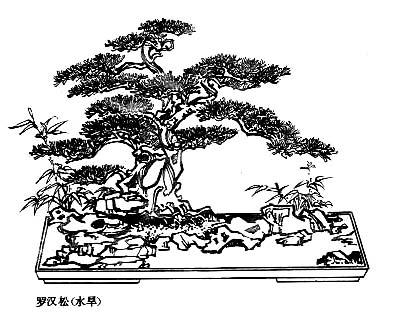
illustration from:  Shi Jing Introduction Table of contentThe Book of Odes

Wednesday, March 6, 2013

AWP: I Arrive, *Emily Dickinson's Coconut Face* in Hand

Cover illustraton for Emily Dickinson's Coconut Face.
 
My AWP experience hit two high points, maybe the only two, but that's enough.  One was today when I picked up my badge at Hynes Conference Center in Boston: I didn't feel hostility. I didn't feel jealousy (over what, you might ask, all you did was stand in line and register). Believe me. When I'm comparing myself to anyone, an easy breezy task at a conference of writers, I am more than capable of insecurity masked as hostility. But my internal work this year has been freeing. Plus I'm taking a great class in New York, studying Hopkins with very smart people, which reinforces the beatifying effect literature can have. Which makes me feel good.. So today I just felt happy, relaxed, part of something but not attached. The feeling's going to last for the duration.

Second high point came yesterday in New York when I picked up my chapbook from Staples.  I'd volunteeredfor an AWP chapbook swap organized by Susana Gardner of the Dusie Kollektiv, agreed to show up with 30 copies. At some point 30 poets are going to meet and share. I was ridiculously proud of the results of my two days of work: a selection of five poems, a cool illustration on the cover, the Dusie Kollektiv seal, a bio. 

The poems--there are five--are orphans. With the exception of "Longing for a Blue Sky" which was published in Lavender, I've never been able to place them. I assumed they were early shots, good starts and nothing more, but together they work. At least I think so, and confidence adds a glow to the book. Books of poems need a glow.

I procrastinated pulling the chapbook together because I couldn't find the instructions and was generally panicked. Then I emailed a fellow swappee, publisher, poet, editor T.A. Noonan who graciously and immediately sent what I needed, bless her. Even though I have too many blank pages and committed an infinitude of infractions (I'm sure), these poems are happy to be with each other and proud of their presentation. So for me, without having started, AWP is a success.

Above cover illustration of my chap, Emily Dickinson's Coconut Face, is from S. Sekiya and Y. Kikuchi: The Eruption of Bandai-san, in Transactions of the Seismological Society of Japan. 13(2), 1890, pp. 139-222.} 

Thursday, February 28, 2013

The Next Big Thing: I Go Viral

"The Next Big Thing" has been going around for a few weeks now like a flu you hope to get. Part chain letter, part credo, authors are asked to respond to ten questions AND to tag five more writers to do the same.  I was tagged by poet and fiction writer Rachel Dacus (click Here for her Q/A).

Here I go:
 
What is the title of your book?
It's not a book, it's a chapbook:  I Feel Good.

Where did the idea for the book come from?
Grammar, as in the direct-address comma.

What genre is your book?
 E-chapbook of poems, swashingbuckling epic, romance novel with a frisson of manifesto, a hint of saffron.

If your book were made into a movie, what actors would you choose to play the part of your characters?
Penélope Cruz as Jezebel.

What is a one-sentence synopsis of your book?
You can't win, so try.

How long did it take you to write the first draft of the manuscript?
It came in winds, not drafts.

Who or what inspired the writing of your book?
The philosophy of Sun Ra; the musical stylings of Swedenborg; the grandeur and compassion of Emma Goldman.

What else about your book might pique the reader’s interest?
Poem #1 is "You, Jezebel" (note direct-address comma). In its own way, this poem questions the habitual and age-old vilification of Jezebel, Ahab's wife who was greatly misrepresented by history, which, it turns out, is written by historians who are hired by the victors. Such as the victory was. Get a clue, history. No one wins for long, or in the long run. Jezebel, for instance, was not unspiritual nor a-religious. She continued to worship goddesses and gods of her parents, and that served as insult and vexing provocation to Mr. Deuteronomy.

Who published or will publish your book?
It will be published in the next few months by Beard of Bees, Eric Elshtain, editor.

My tagged writers for next Wednesday:
I'll link when links are given to me (unless they post on Facebook, which is also good), but the writers are Melissa Studdard, Mary Meriam (more, forthcoming).
 

Monday, February 18, 2013

James Wright's "Northern Pike" {an exalting poem}

Easy enough to find this poem online, other sites, elsewhere.  Every and each placement brings it to us anew and so I post.

Northern Pike

All right. Try this,
Then. Every body
I know and care for,
And every body
Else is going
To die in a loneliness
I can't imagine and a pain
I don't know. We had
To go on living. We
Untangled the net, we slit
The body of this fish
Open from the hinge of the tail
To a place beneath the chin
I wish I could sing of.
I would just as soon we let
The living go on living.
An old poet whom we believe in
Said the same thing, and so
We paused among the dark cattails and prayed
For the muskrats,
For the ripples below their tails,
For the little movements that we knew the crawdads were making
                       under water,
For the right-hand wrist of my cousin who is a policeman.
We prayed for the game warden's blindness.
We prayed for the road home.
We ate the fish.
There must be something very beautiful in my body,
I am so happy.
 
James Wright (click for bio, courtesy of the Poetry Society of America)
Image from West Virginia University, Davis College of Agriculture, Natural Resources and Design, List of Fish Species 

Sunday, February 10, 2013

Anne Shaw's "Drag King Manifesto" {a pirate of a poem}


Drag King Manifesto

That woman is an engine, I refuse. To generate. To be chambered. To combust.


Let her who would acquire don the masculine article. The necktie and the wingtip and the the.
The leather chair, its kingdom. As swishy shadow tidies in the wake.


I too unhitch my notice. I touch what I will touch. I wear roulette-wheel cufflinks
and filch the jack of diamonds from the deck.


I'll show you how to razor: Take off your gown of ghosts. Untie your solaces, unzip your name.


Let her who would be pirate begin in piracy. The double-breasted suit. The clip.
And Adam's apple pendant in the throat.


Let her who would go veiled take up her wrench, her drill. Up her sleeve the jackal
of hearts, the jack of jills.


Let her in frilled distress begin. To study the mallet, the screw.


And therefore tinker. Therefore crux. How treason wears the pants.


Let her who would go naked smith her tool.
ww

by Anne Shaw, author of Undertow and Shatter and Thrust (Persea)

image from the wonderful Liana's Paper Doll Blog

Wednesday, February 6, 2013

Ching-In Chen's "Gruel, Tea: a riddle" {a fierce poem}


Agnes Martin's hand


Very happy to post Ching-In Chen's "Gruel, Tea: a riddle." I met her a few months ago. Was so impressed. Yet I'm messing up her poem. The 2 stanzas should be parallel or do I mean opposite each other.  I tried.  This is part of a larger piece.

Gruel, Tea: a riddle

A room full of fathers birth
maggots which boil
into a sticky bag of
soup. Some sons
learned to suckle
too tightly, their
incandescent greed
dropping into the pot.
Others memorized
the recipe of how to
survive without

Will follow you for 1000
miles without breaking sweat,
desires neither to be fed or
clothed, fears neither guns nor
soldiers, can kiss the bruising
sun or coax a lullaby from the
dying mother.

Wars have been lit in its name.

by Chin-In Chen, from The Heart's Traffic. Arktoi Books/Red Hen Press.

Info on image of Agnes Martin's hand here.

Tuesday, February 5, 2013

Susan Firer's "On the Island of the Elder Poets" {a witty poem}

by Agnes Martin

On the Island of the Elder Poets

In Memory of Kenneth Koch

"Why live in the provinces
when you could be in the capital?"

"Don't tell people you like Sexton—
it makes you look bad!"

"No atmosphere, please."

"If you don't sleep with me,
I will kill myself."

"Kiss me after my reading."

"Will you do my wash?"

by Susan Firer, author of the collections, My Life With the Czar and Other Poems, The Laugh We Make When We Fall, The Lives Of The Saints And Everything, Underground Communion Rail.

art by Agnes Martin. 1965 drawing. 

Monday, February 4, 2013

Judith Harway's "Middle Ages" {a beautiful poem}

Agnes Martin


Middle Ages

Eventually, we have to face the truth:
time passes, and flesh passes,
and the things we passed for
fall away like rags.
Someone brags or someone sings
and suddenly the artist is a hack,
the soul a sham, the word
(which, in the end, is all we have)
reveals its lie. We learn
the avalanche that buries us
is ours, the cells of sloughed off skins,
the dust we're destined for
because (or so we're told)
it's our beginning. Eventually,
our words begin to crumble
underneath the weight
of worlds we build, believing
in no other. I am writing this
because I love you still,
because the girl you loved lies
like a baby fallen in the well,
and when they bring her up—
or if, perhaps—we have to face
the truth of what survives.

poem: Judith Harway, author of All That is Left (2009) and The Memory Box (2002).

art:  Agnes Martin, Starlight, 1963. Watercolor and ink on paper, 8 x 8 in. Private Collection

Wednesday, December 12, 2012

Czeslaw Milosz Takes the Long View in "Forget"

Parnassius mnemosyne ilster.jpg

He had me at the first two lines.  "Forget the suffering / You caused others."  

Forget
Forget the suffering
You caused others.
Forget the suffering
Others caused you.
The waters run and run,
Springs sparkle and are done,
You walk the earth you are forgetting.

Sometimes you hear a distant refrain.
What does it mean, you ask, who is singing?
A childlike sun grows warm.
A grandson and a great-grandson are born.
You are led by the hand once again.

The names of the rivers remain with you.
How endless those rivers seem!
Your fields lie fallow,
The city towers are not as they were.
You stand at the threshold mute.
________
by Czeslaw Milosz


translation by Robert Hass

Thursday, December 6, 2012

Names of the Lying Idiots Against the Disabilities Treaty

 The List: The 38 Senators Who Voted Against The Disabled, Including Vets

by David Badash on December 5, 2012


Post image for The List: The 38 Senators Who Voted Against The Disabled, Including Vets                                                                                                                                                               For the full article click here:thenewcivilrightsmovement

Saturday, November 24, 2012

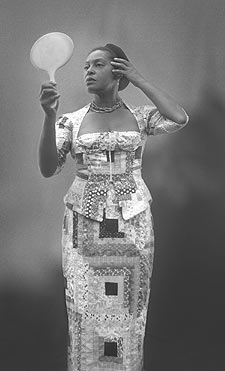
"Claudia" (for Claudia Rankine)

by artist Carrie Mae Weems*
I wrote this in 2011 in response to Claudia Rankine's calling out of Tony Hoagland.  The debate can be Googled. Easily.

Writing poetry is not easy and creating characters or presenting a persona is not easy. I appreciate that. We make mistakes and sometimes create crappy art. If we were to offend, say, the KKK, we would be proud. They are bad people.

But if we reveal our own racism (everyone's got it), well, we say we're sorry. It's embarrassing, I can see that, but all God's creatures are idiots at one point or another. Hoagland, to my understanding, couldn't admit participation in the great idiocy of mankind and wouldn't apologize or recognize the issue.

I can't imagine it's easy being a man, and I know it's not easy being white, but we stumble through this one lifetime and hope for some grace now and then.

Rankine offered to post relevant poems on her blog. I wrote the following back then but never shipped it over and now I can't find her blog. I feel a little shaky about the poem's value. It's not even easy being me, but I stumble along.


Claudia

      legislate paper
draft a bill

      name it
The Inscrutable East
Mother
Dialogs of Plato
          
          cast

      Socrates as Chinook
The Symposium a potlatch

the eidos of flesh the
perfect form of each of us

      a woman

The perfect form is
a woman but hush on that
Tough enough a trek

      out of Africa made
more beautiful
for ultimate
inaccessibility of return by

      likes of me

Do we rescue
(a ship is burning)
the captain or smirk as an arrow
feathers his bone

      Glad's another word for
the elephant felt up by
blind men and thus

      elephants grieve
an impossible perfecting
of the heart
the impossible accepting
of the self

      nine hundred hatreds
Each orchid in a bell jar
each girl in an orchid
each boy in an orchid each

      movement of only gratitude
If Jesus dies for sins
of the west, his suffering
is just begun.
____
Sarah Sarai, 2011

*Carrie Mae Weems online:http://carriemaeweems.net/

Friday, November 23, 2012

In Which the Poet Pushes to Remain Conscious

Vengeful Sprites.  "Cain" by Sophie Blackall*
I finally input the draft of the poem I scribbled early this month at the Met.  Like "St. Sarah Sarai Carrying the Infant Christ Child"--first published in the Mississippi Review (R.I.P.), the poem overtook me.

It's too soon to know if the new poem, written in full draft while I sat on a bench facing a great from the catalog of Euro art.

My point is, however--and I'm using this space as a Memo to Sarah, Hello! Already. Probably the most consistent story in my life that isn't the story of MY LIFE can inspire a poem. It won't necessarily do so.  No sure thing. 

But my intuition says, and pretty loudly given I'm bidden to make it public and relatively, in the way of blog postings, public, keep at it.  Go back to the source. I also note "Remorse"--which was published in Terrain (a thriving online journal) (scroll down--it's the 2nd poem there). It was inspired (I'm using "inspired" as a placeholder--there is a more accurate description unavailable to me) by a story in Genesis.

What I'm saying to myself is Why not push harder to write poems on this theme, aligned to this mythology, belief, religion, wildly active participant in the collective mind?

Huh, Sarah? Don't let yourself bury the impulse in mystery novels and searches for the perfect purse.

*For more on Sophie Blackall, wonderful artist, visit her Facebook page, Sophie Blackall.

Sunday, November 18, 2012

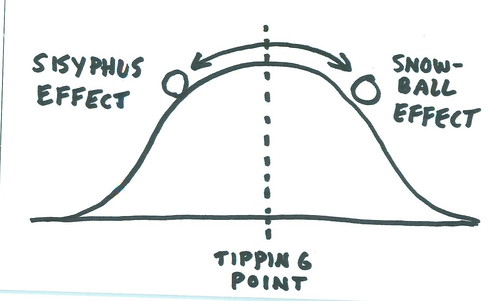
The U.S. Has Reached a Tipping Point Toward the Good (Obama) (Huzzah)

You know that feeling before the news is in, that suspended state of false knowledge and ugly anticipation when the suspension fluid is fear, and it sinks into your pores, doesn't permeate, maybe, probably doesn't permeate but still, it reaches organs and blood cells, tumbles through your body until every inch of your personal geography has some reminder the worst could be on the way, and every shred of your variable consciousness negotiating good and bad alike, hope and fear, the known, unknown, and the imagined, informs your life that this--all this--could soon end? THAT feeling?

And the tension builds, internalizes and externalizes, sneaks in and out, up and down, sideways, elliptically, in a parabolic curve, and straight-ahead like a dive-bombing bee headed for that Looney Tunes buzzard or Bugs Bunny. And you who prides yourself on flexibility and imagination, on coping mechanism and device, cannot imagine yourself coping if the worst that could be materializes?

And so after months and weeks and days you go to bed not knowing, because if this is your last night of hope, you are going to let yourself have it.

So you wake, like it is the Day the Bomb is dropped in your lifetime. 

And you are safe.  Your loved ones are safe.  Yes, safe is relative, but the great ignorance and hating both belonging to Mitt Romney and Paul Ryan have been vanquished.  The world has changed, not like it did in 2008 when we elected a black president and the country showed it was trying to do the right thing. This time around, there the victory is more telling. This time around, the disaffection for poor people, basically for any but the wealthy, was exposed. And voted down by the majority of voters.

And every so often I feel the relief. I'll be walking down the street and my body will remember it can be happy.  I realize yet again just how scared I was.  A little more tension evaporates. And my joy is monumental. The U.S. has reached a tipping point toward the good.

Thursday, November 15, 2012

A Few Reviews (by me) Lately Published, Plus I'm Unicornless No More

This unicorn has no relationship to anything
but my blog was hitherto without a unicorn,
an omission now rectified.


Howdy, all.

Recently-ish I reviewed two poetry collections and a novel for Lambda.

‘Buddha in My Belly’ by Brittany K. Fonte

Posted on October 29, 2012 by
If Roseanne Barr wrote prose poems, they wouldn’t be so very different from those in Buddha in My Belly, Brittany K. Fonte’s debut collection (Hopewell Publications, 2012).  Like Barr’s routines, these pieces are sardonic, honest—and about women. Sometimes it’s hard to be one. Okay, that was Tammy. Anyway.   (more…)

Lady Business: A Celebration of Lesbian Poetry’ edited by Bryan Borland

Posted on August 22, 2012 by
A dozen long-stemmed red roses? Ho hum. How 50s heterosexual can you get?  It’s not that I’m disenchanted with roses, their heady fragrance and dizzying blend of fragility and toughness. It’s just, well, I love me some variety. (more…)

AND . . . a novel by an Australian writer . . .

‘My Sister Chaos’ by Lara Fergus

Posted on June 17, 2012 by in Fiction, Reviews
The world of My Sister Chaos (Triangle Publishing’s  Edmund White Award for Debut Fiction winner and a finalist for this year’s Lambda Literary Award in Lesbian Debut Fiction) is disconcerting.  Always near the surface of this quiet and speculative methodical tale is the fact that we are in a time of crisis. (more…)

Enjoy!

Wednesday, November 14, 2012

Oh Shoot! (Poem written n / o / w)

Stephanie Holttum*
Oh Shoot!

It's so long 

since I posted here
I'm just going to
chance it
and write a few thoughts
which means
translate.
I am translating 
as I type 
strike that
typing my translation
of the sensory volume
in my stomach.

Two days I edited

pharmaceutical
advertising for AIDS
meds and that was
good as long 
I thought about Good
and not Death
or Profits. 
Late afternoon
the office was 
hot enough
to bake gingerbread.
Why gingerbread
people?  
They're fragile but
cheery and sweet.

Today I put in
more time with a
new story
the third about
Berthe whose parents
were killed in jail.
She's large
and a dyke who
teaches lit.
This one began
in L.A. then flew to
("one" = story)
 San Francisco.

"Lillia" is a 24/7
Seattle story
published in
Devil's Lake.  
The devil does have
lakes as I recall.
We've all taken
the tour. 
Berthe's deal ia
she figures out
(never stated)
she is always 
working out her
parents' insanity.
Like I'm always
working out my mom's.
The Christian Scientist
who fostered cancer
for twenty years and
then things got worse.
Your body doesn't forget
but it is busy with
circulation of the blood
through the heart and
lungs and elimination
of toxins.  
The body has a to-do
list the length of
its intestines and is
busy night and day.

It was nice to have
a feeling
and know the lurch
was something old
and no longer
impossibly painful
but kept alive just like
I am by the flow.

Is this a poem?
I don't know.
Sometimes I want 
to tell poets
they can't just lineate
thoughts and 
events and call it
a poem.  
I'm not calling this
a poem I'm calling it
a blog posting
written in a free 
moment between
jobs and as a
marker to the fact
that today 
I felt something old
and it was okay.
_____________
Sarah Sarai, November 14, 2012


*For more information on artist Stephanie Holttum, please visit http://www.thurstontalk.com/2012/01/21/a-visit-with-artist-stephanie-holttum/.

Friday, October 19, 2012

Poem: A Legend of Usual Cruelties: infinity, redwoods, folly

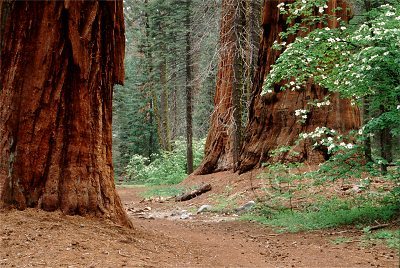
Those are redwoods, to the left, massive, humbling redwoods.

Since the poem below was published in a review named after deft and learned genius, Katherine of Alexandria, may I inform you she is among those who chose Christianity over paganism (that being anything not Christian), thereby irking Maximus who called on heavyweight scholars and philosophers to argue her back to sanity. Tables were turned, as happens in tales of Christianity, and scholar after scholar & co. was convinced by Katherine's shining arguments to, themselves, convert. Things got iffy--mandatory for a saint in the making.

She lived and was martyred in the 4th Century. Like Saint Katherine College and Saint Katherine Review (which published "A Legend with Usual Cruelties") she is part of the Greek Orthodox tradition, in which she is celebrated for silencing the "arrogance of the ungodly." Oh how we need her now. 

Re: Saint Katherine Review. Scott Cairns is editor; Claire Bateman,  poetry editor; Kathleen Norris, prose editor; Caroline Langston Jarboe, fiction editor. Founded in 2011 at Saint Katherine College in oaky Encinitas, in California's subtly leafy southern portions.

 A Legend with Usual Cruelties

A thousand-year Redwood—
one ring encircling the other—
concentrically outdoing in circumference—
protecting—what grew before.
Dimensions beyond the obvious are
science, fiction, legend an adolescent will wrap her
mind around concentrically—
that there could be
replicas of her, unaware of her or wrapping
a parallel mind around a possibility of replication.
So legend replicates legend. Thus,
you are legend despite merely requisite
dimensions and flyaway hair with its layers
of disobedience and gleam.
You are a legend with usual cruelties.
You are a legend because one day you are kind
and don't laugh at Sarah Sarai saying
struggle could end if only.
You're a legend because you picked up a leaf,
a red leaf, and tried to figure, its spine now brittle like
your grandmother and thin but beautiful
how it grew on that tree and after a season
of impudent green, turned color,
like the sky will, every night, and
fluttered to brown hard earth.
They are talking of you even
now in a dimension transecting folly,
of your queasy appreciation of the gift.
So, beloved, you can sleep, and rest,
assured you inspire in more than one world.
_____________________
Sarah Sarai. Saint Katherine Review, Volume 2, Number 2, 2012.


Wednesday, October 17, 2012

Binders of Women--on polygamous compounds--sanctioned statutory rape

Oh my God! I just remembered Big Love, the HBO series about a polygamous Mormon family hiding in plain sight.

The papa, played by Bill Paxton, is from a polygamous compound ruled by a tyrannical "father" (Harry Dean Stanton). There are, in fact, binders of women. Girls coming of age are  cataloged in a 3-ring notebook, through which the funky, ugly, nasty, male polygamists paw.  In exchange for political favors, or simply because it is their due, they choose wives and more wives (sister wives). Sanctioned, accepted statutory rape.

Yes, Big Love is a TV show, but this is a bit of a coincidence, me thinks. That reference to "binders of women" morphs from awkward to creepy to sinister.

Romney's father was born a year after my father. My background memories from my grandfather are the motherland of Russia, blended mysticism of the Caucasus Mountains, and the Cossacks being not so nice to Jews. On my mother's side: farming, Sweden, hardship, humor, good Lutheran propriety.  All that is part of me, as polygamy and cynicism toward women are part of Mitt.

Saturday, October 13, 2012

"Use It." A Transexual Tale.

Originally titled "Jordan Jones, Then and Now," "'Use it.'" was published in 1992 in West, a journal edited at Hampshire College.


Use it.”

by Sarah Sarai
When Jordan is a boy, his father signs him up for Scouting. “Be good for you, son.” Jordan asks why and his pop bops him one on the head, then pours out a tall whiskey. Hunkers into his chair.
Fellowship, companionship. It’s good to be like everyone else.”
Jordan tries.
I eat wimps for breakfast,” Scoutmaster Frank snarls. The stumpy man’s shoulders move up his neck with stealth as one eyebrow lifts like a Black Hawk on a mission. “You a wimp, son?”
In an early wet summer the troop is camping in the mountains. All eight Scouts huddle around the fire, and listen to wood crackle like an old radio in a garage. They’ve dragged through wet mud all day. Hoping to prevent mildew growth, Jordan sets his boots by the fire.
Eat it.” Jordan must look startled because Scoutmaster tears at one of Jordan’s boots with meaty hands, snorting as the toe guard loosens. He hacks away with his reg knife and displays the crusty leather like it’s a freshly slain fox. Jordan chews a small chunk of shoe and more meekly throws up. The following day, wearing sneakers, he leads the troop along rocks and twisty trails, to show he’s no weakling.
Maybe,” the leader spits, “you’re not a wimp, kid.” He levels his gaze to Jordan’s darting eyes. “Time will tell.” Jordan doesn’t reveal that his favorite part of camping is wishing on every bright star in the dark mountain sky to make him a girl.
He quits scouting. “Mom, it’s just no way to have fun.” He and his mother are standing in their small service porch, Mom at the ironing board, Jordan folding terry cloth towels. The windows’ limp green curtains flutter like a trapped canary as the steam iron clunks along. Mom responds variously and with a pause between each comment.
1. “Good for you, Jordan.” She whacks at an inset shoulder.
2. “That was a stupid thing to do.” Mom slops brandy into her morning coffee, and taking slight care to avoid making creases, slings Jordan’s father’s shirt onto a wire hanger.
3. She unplugs the iron; plugs it in again; looks around as if for a clue to her next move. “What’d you say?”
Jordan’s parents are light on child-rearing theories. Parenting as a concept or philosophy would strain the native inevitability of their approach: eat drink read have a kid see the kid reads. His parents are not en-people. En-people have en-kids. Empowered enabled entitled. His father, like an N-reactor, however, is unpredictable. He expresses pleasure at the demise of Scoutdom in the family.
Bunch of militarists. Stay home. Read a book. Learn to smoke. That’s what a boy should do. Learn to smoke.” He gives his startled son fifty cents for his first pack of cigarettes and returns to Huck Finn after refreshing his drink.
So Jordan smokes and plays with dolls and secretly dresses this way and that. He volunteers as prop master in the school plays and is also dummy for the hemming and fitting of the leading lady’s clothes. Wearing dresses with ruffled skirts and fitted bodices makes him feel normal. Then and now he is the same height and weight as the school prima donna. Then and now: 5-3, 130, black hair with waves like a pond on a sweet breezy day.
High school is the pits and that’s enough of that. Everything happens after he graduates. Instead of going to college, which he assumes will be an extension of the discomforts of high school, Jordan is a clerk in the main library downtown. Now all along he accepts his virility as a fait accompli and one of nature’s cruel flukes, yet feels wrong and empty. He figures there must be something in the world that can make him happy.
He meets Heidi. She’s an auditor for the City and comes to the library to examine financial ledgers. “I don’t really like to read,” she explains, tucking a blonde wisp behind her glasses. She pauses at his desk to ask if there’s a snack bar and as if she were at least a little chagrined by her nonintellectual admission—which he later realizes she isn’t—nervously bites her bottom lip, thin but painted, and reveals shallow dimples on either cheek.
So what good are books?” He slips out his marker from volume four of Galsworthy’s Forsythe Saga, suddenly finding all families, unhappy or happy, to be merely worrisome. He decides then and there that Heidi’s attitude, which keeps her safe from fiction’s heady twists, is the right one to have. He directs her to a coffee shop a block away and offers to meet her for lunch.
Heidi is five years older than he is and everything he isn’t: tall, slim, blonde, mathematical, remote and female. He falls: splat into love.
About the same time as he meets Heidi and in what feels like a parallel but distant galaxy, he becomes incensed, like he’s a chafing dish with an eternal flame as sterno. A tan skinny woman in turquoise sweats and loose strings of gold chains comes into the library and asks for the works of Shirley MacLaine. “Lady, look on the astral shelves,” he snaps, punching a blank piece of paper in the automatic date stamp. She’s confused. “You’re stupid, you know that?”
When a bug-eyed mother of two loud brats demands he remove Lord of the Flies, he rips out the flyleaves from three copies of the book she’s carrying and crams them into her cold sweaty hand. The deciding incident occurs in the elevator heading up to the fourth floor. Some athletic coach-type presses the third-floor button, in search of cowboy paperbacks Jordan figures, flipping the coach-type the bird followed up with a resonant raspberry. The head librarian, Mrs. Applebalm, insists Jordan get help.
After a few phone calls and referrals followed by more phone calls and a screening interview so that he can be more incisively screened and referred, he begins seeing a therapist and attending group. Everyone in the non-geometric circle talks about their parents and he takes the hint, revealing more than he thought he knew or remembered.
I don’t think they listened to me very closely.” He looks at the members of group, sitting on folding chairs in the dumpy room with People and Psychology Today on the Formica coffee tables.
He tells about the Fall day his parents drove to the desert to practice archery. Pop and Mom noisily unloaded the car; slung on quivers. The red rocks watched them without comment. “Stay close to me, Jordan,” his father cautioned. He screwed the cap back on his flask and aimed his thirty-weight bow straight up. “Galileo didn’t think of this one,” he boasts, shooting a steel-tipped arrow into the clear desert air.
Watch out, Pop,” Jordan warned, weakly tugging at his father’s arm.
Son, have I ever steered you wrong?”
They shaded their eyes and watched transfixed as the arrow shot straight up in a seeming attempt to outrun natural laws, give up, accede to the inevitable and shot straight down, landing one foot from where they stood. Only its striped feathers were visible above the desert earth.
Jordan’s mother came running. “Oh my God,” she shouted at Pop, “you could have been killed.” She slugged Jordan on the arm. “You’re supposed to take better care of your father. This is your fault. Why aren’t you like other boys?”
What are you talking about? The kid’s a bum. You a bum, Jordan?” Jordan shrugged and tried without success to unearth the buried arrow. Pop bopped him one on the head. “Let’s eat,” he said. “So are there sandwiches or not?”
What’s the rush?” Mom stretched and smiled as sweetly as Eve awakening into another morning in paradise, maybe her last. She stared at Jordan as if trying to remember who he was and reached for Pop’s flask.
Jordan’s therapy group hears the family narrative. His sharing is even more intensely tracked when he joins an anonymous fellowship. “I think Heidi’s not like my family. I think Heidi does care,” he explains. His throat hurts. “I think she does listen.” Folks look concerned, their eyes flickering compassion and warning. “She does,” he insists, pushing on his Adam’s apple. She’s not a woman to love too much.
Well, they do have some good times. She’s a birder, a fact which inspires him to buy several field guides. Heidi the auditor says he shouldn’t be so extravagant.
I thought you liked birds,” he protests. “Heidi, your interests are my interests.”
Jordan, there’s no need to spend money.” They are speaking on the phone, but he can imagine the stern line of her lip, ending in a dimple like an indentation in sand. He traces hearts and their initials in the margins of a guide to feeder birds.
One time they drive a bit on a Saturday morning and park his beater of a car by an open field. “That’s a Robin redbreast, Jordan. You know them.” Heidi hands him her thrift-shop binoculars. He adjusts for myopia then locates: a fingerprint, an abandoned Chrysler and, finally, a simple winged creature, a Turtus migratorius, etc. etc., as Heidi explains.
More, more,” he says, enthused by her erudition. Heidi bashfully lowers her eyelids and suggests they drive further up the road. They hold hands when they arrive at the next spot. Rain has begun to spatter her window and the trees and sturdy grasses hide the birds from their view. “I love you, Heidi. I want to be just like you.”
He invites her to a party that night, a fellow library clerk has become engaged to her high school beau, now an English teacher, but Heidi says she’s had enough for one day, not that she’s had enough of Jordan, but that she’s tired. By the time he drops her off, she’s nodding blankly as he gabs on. He describes his parents; his reluctant masculinity; career dreams; the big changes he feels imminent within.
I had fun.” Heidi clutches the door handle, her knuckles white as a pigeons’ breast, “and I think we should do this again and I’m glad you’re around because you’re good for me.” He asks what she means and she says that he makes her contact her own emotions and dreams, which she understands is important to do.
Jordan is in heaven. Someone wants him to be as he is, talkative and questing. They go birding two more times and Heidi opens to him like the door to her soul is an not only an automatic one, but has a back-up generator for emergencies, or so he believes. “Sometimes I’m scared,” she confides. When he asks her of what, she furrows her brow and squints as if she sees a new aerial species on a far tree. She talks about staying with the City for another ten years and then moving to private industry. Cutting expenditures is a lifelong goal. His goals are also grand but not so specific. He’s begun taking college classes and thinks about being therapist some day.
Could you change, Jordan?” she asks as they eat her peanut butter and margarine sandwiches on day-old bread. It absorbs the tastes better, she maintains.
How?”
Not always be so emotional?” She shakes out the baggies and tucks them in her purse.
He buys a string of pearls, and calls her that evening. They chat then she says she’s tired and hangs up. He calls back and she hangs up. He calls back again. She doesn’t answer. The next morning she’s happy to talk.
I’m sorry,” he says.
Don’t be silly. I just unplugged the phone. I’m as happy as a clam.”
He’s grateful she still wants to see him the next weekend. When they’re together, Heidi tries on his pearls, but says the strand is too long for her. She holds them up to Jordan’s face and quickly lowers them.
A few weeks later, they discuss commitment. She swivels those cool green eyes to his teary blue eyes and says, “I have none.”
He argues that he can change.
All couples form habits and follow patterns and this is theirs: his calling and getting hung up on several times; his panicking; driving to her place, begging to be let in, being let in, sweet closeness, and then fighting about the style of that closeness.
He wears his first string of pearls to work. Whether or not the pearls’ luster set off his cherry cheeks and blue eyes is not the issue, he now knows. He is still a biological man, feeling like a woman, in a relationship with someone whom, these days, he wouldn’t even choose to be friends with.
His therapist notices his pearls. He acknowledges they’re more than just a fashion statement. He wants the accessories that go along with his accessories—like a bustline. His therapist also broaches the fact that he claims to be in love with a human who only causes him pain. He skirts the possibility. When that same issue of his loving an inappropriate human comes up in his groups he is more honest.
I’m terrified of being alone.”
After the pearls come the lace collar, patiently tatted in 1899 by a Philadelphia Quaker. He still owns it, it’s quite lovely. Then he shaves the hair from his chest, arms and legs. He recalls that day well, because he shaves the hair, then phones Heidi with the news.
That’s okay, Jordan,” she assures him. “That’s not why I don’t want you.”
But do you love me?”
I don’t care to talk about that.”
Will you go out with me Friday?”
If you insist.”
And next Friday?”
Don’t hassle me.”
Can I come over?”
No.”
Please?”
She hangs up. He calls back. No answer. He drives to her house. “Let me in.” She opens the door, takes a hammer and begins to whack at him. He gets a fleshwound. She bops him one on the head with her fist. He falls to his knees, kisses her lap and stares at her with adoration.
A woman likes being looks at like that,” she admits. “It makes a woman feel good.”


His transsexual support group hears as much about Heidi as they have about what it’s been like to live on hormones, and go through four operations. They’ve been great. His emotional peers are those who know the impact of the pull of one body for another body; it’s as strong as gravity as described by Newton, as distance between two masses. This pull is the impact of his type of love for Heidi. His peers help him disentangle himself from the shame of the pull. They point out that Heidi is stuck.
They remind him of the time he asked Heidi if she’d get counseling with him. She refused, saying, “My boyfriend in high school tried therapy, and it changed him.” She has a recurring dream which he doesn’t divulge: “I’m in a stream, and a big group of loud people are having fun over in the distance on the shore and I’m wearing all my clothes, including my wool coat, and hugging my knees and can’t get myself to move.”
While he and Heidi are still going together and still fighting, she finds someone else, and that’s that. Anyone who has ever loved, or been loved, or had a friend who’s loved or been loved, or even sat next to someone on a bus or plane or train, someone who’s loved or been loved; anyone who’s ever read any of the greats, near-greats, or purveyors of sleaze and trash, or seen an opera, soap, mini-series, or movie; or followed the lives of the stars as recorded in the tabloids, knows that story, so he’s free to continue with his.
Except that soon after Heidi starts seeing the man, Jordan wakes up in such internal agony that he decides suicide is okay, that this stuff about sin is a notion, a held belief, and that if it doesn’t fit he doesn’t have to heed it. He looks up guns in the yellow pages and tears out the half-page listing stores where he can buy a revolver or something. He is going to shoot Heidi and then himself. He phones to tell her.
Are you serious?”
I’m not sure. I think so.”
Leave me alone. And go ahead shoot yourself.” She hangs up.
He jumps in his car and sideswipes a VW on his way over. She screams he’s sick when he bangs on the door. She calls the police. He isn’t arrested, just asked to leave. His transsexual transition group meets at his apartment. Folks help him en-vision a new way of filling himself, without Heidi. “How do you want to feel about your life? What do you see yourself being and doing?”
He wants to feel calm, positive, and fearless. He sees himself as female.
Repeat affirmations,” folks say.
I am powerful,” he declares. “I am serene,” he coos. “I am woman.”
Go for it,” friends cheer.
He does.
He dresses as he feels is natural, in skirts, shirtwaists and graceful slacks. He tries heels but decides flats are fine for this woman, although he does like the look of a shaved leg. He arranges his waves into a shapely coif, buys a flattering shade of lipstick, five eye shadows (creams and glitters), and a motorcycle jacket from the Goodwill, experimenting with what it means to be female.


He goes to a gender-identification clinic back east where he’s tested extensively, and is in therapy for five years. He has a boyfriend for three of those five years but the boyfriend isn’t ready for a lifetime partnership.
It’s not that you were once a man,” Brad says, gripping Jordan’s soft hands. “It’s that I need to keep myself open to experience. And how can I be sure you’re the person to spend all of my life with?”
All the while he’s opening up as a woman Jordan’s opening up his humanity. He can’t help but feel that being a woman serves as a metaphor for being a peacemaker. “But I know my violence and need to hurt Heidi wasn’t in me because I’m a man.” He offers this information to his group, along with more tales of poor modeling during childhood years. At one time in his life, he had no idea that aggression and nastiness weren’t standard operating procedure. “Jordan, there are other ways to be in this world.” Alternative behaviors are described and discussed. They aren’t fluid or natural to him, but he gives them a shot.


He’s been partner in a group practice for five years. Feeling guilty at drawing on his life experiences, he listens to his old friend Mrs. Applebalm, when she advises, “Use it.”
I couldn’t have behaved otherwise back then,” he shares with his client. He fiddles with the leaves on his potted ivy. “And you’re doing the best you can do every minute.”
You don’t make me feel like I’m sick, like other therapists do.” His client’s blush warms his heart. He doesn’t know if he’s changed the world one bit. But having cushioned his need to hurt and be hurt is, if not the end of ire, a continuation of all that his body, with its moving and very interchangeable parts, has told him all his life. And if it’s true, and he knows it is, that some people find him an aberration, a distortion of nature or some divine plan, all he can say is, “Think again.” 
_________
by Sarah Sarai.  "'Use it.'" was published as "Jordan Jones, Then and Now," in West, Hampshire College, 1992.