Showing posts with label fiction. Show all posts

Saturday, August 5, 2023

Pine Hills Review LOW-LIFE MALIBU (a #poem)


Adventurous lit journal Pine Hills Review is published at The College of St Rose in Albany, New York. 

Pine Hills Review, "Low Life, Malibu" by Sarah Sarai

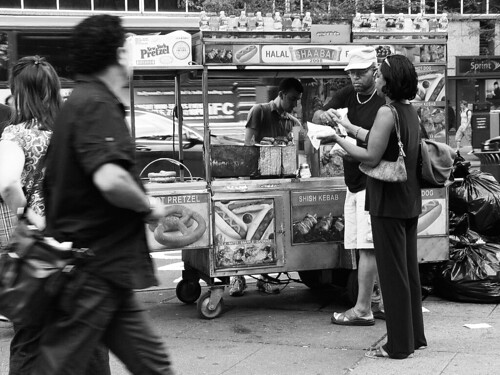
Dig it. And also, the perfect image.“Lunch Break” by Nicole Monroe. That's what life felt like when I was young and shiftless. 

Check out the PHR submission policies for art and poetry and prose. 

The end. (Sorry to be so brief.)

Monday, August 29, 2022

If Ezekiel could see it, why not me

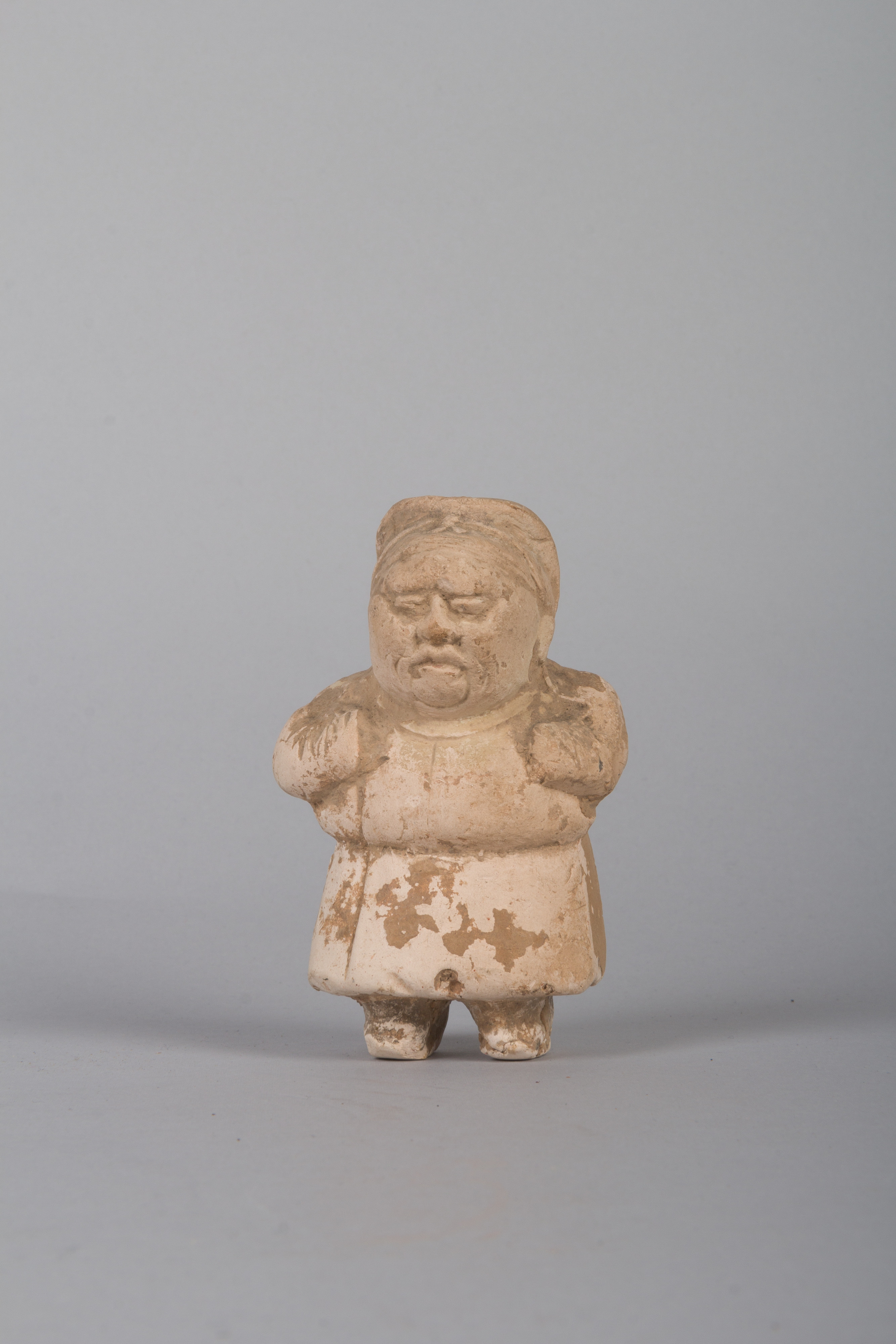
(A Chinese dwarf, courtesy of the Met; my alter ego) As a follow-up to my August 4 posting, I’ve done it, revisited my not-yet-published fiction. Deleted: several paragraphs on what a dumb schmuck I am. Yesterday I submitted one of the revived stories to a contest and charged the fee. Thank you, Chase. On the 21st of I sent off another of these revived stories. Not for a contest but there’s money if they take it. Two stories now out there, waiting. Last month I pulled together a novella I’d started again years ago. Found a reader who has a great eye. So now it’s ready to go asking for what it's worth. It's a delight. Two stories and a novella. Then a novel is collecting dust, all the dust there is in my Cloud. The one solid piece of advice I was given in grad school was: Leave New York. I don't belong here. I never have. I wonder if I'd feel better about my work if I'd moved. I'll be back to this blog in September. Ezekiel? Read the skies. Was he in pain?

Thursday, August 4, 2022

Words and their heftier cousins...invited to the writing party


You tell me.

Reviving drafts of unfinished short stories which is proving to be enormously rewarding. And by rewarding I mean I'm diggin' the words. The current drafts are just that - fiction that's unfinished or finished but not polished. Stores not new to the party, such as the writing party is. Well, obviously the cellar's been dug and the foundation laid so there's that. Yeah. Stop. Okay.

I haven't sent one of the previously unpublished (and now reworked) stories out yet, mainly because there are few and when the few are gone ... girl, they'll be gone. They'll be gone, girl.

We're talking two or three new stories one of which is novella-like. It's like a novella because it is one.

Some days I am up against depression. It throws me to the ground and holds me down with vicious glee. The counteractive to depression is joy.

Repeat: The counteractive is joy. Words and their heftier cousins, sentences, are joy. New and reworked and working on reworking. Joy. Sarah Sarai 8/4/22

a hefty cousin


Tuesday, March 28, 2017

With Y as an Absence of Pain #fiction

A story I wrote is in print or virtual print. Check out the latest issue (#17) of Cleaver Magazine to read "With 'Y' as an Absence of Pain." 

Thank you. It takes so long to write one story and then, poof, it's up and out, a dandelion shred blowing.

With 'Y' as an Absence of Pain


Saturday, July 11, 2015

Oracular Radiation and The Young Orator


2 poems:

Marc Jacobs designs clothes or his team does or whatever. And accessories. And many new stores which are polluting Greenwich Village. So that's the background to "(Marc Jacobs to the West Village.)" And, yeah, I did feel an elephant trunk brush my calves, but that was as I crossed Third Avenue, near 26th Street. See, "As She Crosses." Both poems are in Other Rooms Press' latest issue, Oracular Radiation. That is such a great name I'm not sure poems are necessary. Oracular Radiation conjures old movies and visions of what could be.

Co-editors of Other Rooms are Ed Go and Michael Whalen. Ed Go is a poet and artist - I've oogled with much respect his collaborations several times at the Center for the Book in New York City. He wrote "Heaven, Hell & Middle Earth," an essay about three poems in my collection, The Future Is Happy.


1 story:

Last year my story "The Young Orator" was published as a fiction chapbook by Winged City. The publisher and editor, Teneice Marie, has revamped so Winged City is now under Argus House Press. "The Young Orator," about an eight-year old who spouts quotations from Ben Franklin and Thomas Jefferson. The story also features a '57 Chevy Bel Air with pinstriping.  

Saturday, October 13, 2012

"Use It." A Transexual Tale.

Originally titled "Jordan Jones, Then and Now," "'Use it.'" was published in 1992 in West, a journal edited at Hampshire College.


Use it.”

by Sarah Sarai
When Jordan is a boy, his father signs him up for Scouting. “Be good for you, son.” Jordan asks why and his pop bops him one on the head, then pours out a tall whiskey. Hunkers into his chair.
Fellowship, companionship. It’s good to be like everyone else.”
Jordan tries.
I eat wimps for breakfast,” Scoutmaster Frank snarls. The stumpy man’s shoulders move up his neck with stealth as one eyebrow lifts like a Black Hawk on a mission. “You a wimp, son?”
In an early wet summer the troop is camping in the mountains. All eight Scouts huddle around the fire, and listen to wood crackle like an old radio in a garage. They’ve dragged through wet mud all day. Hoping to prevent mildew growth, Jordan sets his boots by the fire.
Eat it.” Jordan must look startled because Scoutmaster tears at one of Jordan’s boots with meaty hands, snorting as the toe guard loosens. He hacks away with his reg knife and displays the crusty leather like it’s a freshly slain fox. Jordan chews a small chunk of shoe and more meekly throws up. The following day, wearing sneakers, he leads the troop along rocks and twisty trails, to show he’s no weakling.
Maybe,” the leader spits, “you’re not a wimp, kid.” He levels his gaze to Jordan’s darting eyes. “Time will tell.” Jordan doesn’t reveal that his favorite part of camping is wishing on every bright star in the dark mountain sky to make him a girl.
He quits scouting. “Mom, it’s just no way to have fun.” He and his mother are standing in their small service porch, Mom at the ironing board, Jordan folding terry cloth towels. The windows’ limp green curtains flutter like a trapped canary as the steam iron clunks along. Mom responds variously and with a pause between each comment.
1. “Good for you, Jordan.” She whacks at an inset shoulder.
2. “That was a stupid thing to do.” Mom slops brandy into her morning coffee, and taking slight care to avoid making creases, slings Jordan’s father’s shirt onto a wire hanger.
3. She unplugs the iron; plugs it in again; looks around as if for a clue to her next move. “What’d you say?”
Jordan’s parents are light on child-rearing theories. Parenting as a concept or philosophy would strain the native inevitability of their approach: eat drink read have a kid see the kid reads. His parents are not en-people. En-people have en-kids. Empowered enabled entitled. His father, like an N-reactor, however, is unpredictable. He expresses pleasure at the demise of Scoutdom in the family.
Bunch of militarists. Stay home. Read a book. Learn to smoke. That’s what a boy should do. Learn to smoke.” He gives his startled son fifty cents for his first pack of cigarettes and returns to Huck Finn after refreshing his drink.
So Jordan smokes and plays with dolls and secretly dresses this way and that. He volunteers as prop master in the school plays and is also dummy for the hemming and fitting of the leading lady’s clothes. Wearing dresses with ruffled skirts and fitted bodices makes him feel normal. Then and now he is the same height and weight as the school prima donna. Then and now: 5-3, 130, black hair with waves like a pond on a sweet breezy day.
High school is the pits and that’s enough of that. Everything happens after he graduates. Instead of going to college, which he assumes will be an extension of the discomforts of high school, Jordan is a clerk in the main library downtown. Now all along he accepts his virility as a fait accompli and one of nature’s cruel flukes, yet feels wrong and empty. He figures there must be something in the world that can make him happy.
He meets Heidi. She’s an auditor for the City and comes to the library to examine financial ledgers. “I don’t really like to read,” she explains, tucking a blonde wisp behind her glasses. She pauses at his desk to ask if there’s a snack bar and as if she were at least a little chagrined by her nonintellectual admission—which he later realizes she isn’t—nervously bites her bottom lip, thin but painted, and reveals shallow dimples on either cheek.
So what good are books?” He slips out his marker from volume four of Galsworthy’s Forsythe Saga, suddenly finding all families, unhappy or happy, to be merely worrisome. He decides then and there that Heidi’s attitude, which keeps her safe from fiction’s heady twists, is the right one to have. He directs her to a coffee shop a block away and offers to meet her for lunch.
Heidi is five years older than he is and everything he isn’t: tall, slim, blonde, mathematical, remote and female. He falls: splat into love.
About the same time as he meets Heidi and in what feels like a parallel but distant galaxy, he becomes incensed, like he’s a chafing dish with an eternal flame as sterno. A tan skinny woman in turquoise sweats and loose strings of gold chains comes into the library and asks for the works of Shirley MacLaine. “Lady, look on the astral shelves,” he snaps, punching a blank piece of paper in the automatic date stamp. She’s confused. “You’re stupid, you know that?”
When a bug-eyed mother of two loud brats demands he remove Lord of the Flies, he rips out the flyleaves from three copies of the book she’s carrying and crams them into her cold sweaty hand. The deciding incident occurs in the elevator heading up to the fourth floor. Some athletic coach-type presses the third-floor button, in search of cowboy paperbacks Jordan figures, flipping the coach-type the bird followed up with a resonant raspberry. The head librarian, Mrs. Applebalm, insists Jordan get help.
After a few phone calls and referrals followed by more phone calls and a screening interview so that he can be more incisively screened and referred, he begins seeing a therapist and attending group. Everyone in the non-geometric circle talks about their parents and he takes the hint, revealing more than he thought he knew or remembered.
I don’t think they listened to me very closely.” He looks at the members of group, sitting on folding chairs in the dumpy room with People and Psychology Today on the Formica coffee tables.
He tells about the Fall day his parents drove to the desert to practice archery. Pop and Mom noisily unloaded the car; slung on quivers. The red rocks watched them without comment. “Stay close to me, Jordan,” his father cautioned. He screwed the cap back on his flask and aimed his thirty-weight bow straight up. “Galileo didn’t think of this one,” he boasts, shooting a steel-tipped arrow into the clear desert air.
Watch out, Pop,” Jordan warned, weakly tugging at his father’s arm.
Son, have I ever steered you wrong?”
They shaded their eyes and watched transfixed as the arrow shot straight up in a seeming attempt to outrun natural laws, give up, accede to the inevitable and shot straight down, landing one foot from where they stood. Only its striped feathers were visible above the desert earth.
Jordan’s mother came running. “Oh my God,” she shouted at Pop, “you could have been killed.” She slugged Jordan on the arm. “You’re supposed to take better care of your father. This is your fault. Why aren’t you like other boys?”
What are you talking about? The kid’s a bum. You a bum, Jordan?” Jordan shrugged and tried without success to unearth the buried arrow. Pop bopped him one on the head. “Let’s eat,” he said. “So are there sandwiches or not?”
What’s the rush?” Mom stretched and smiled as sweetly as Eve awakening into another morning in paradise, maybe her last. She stared at Jordan as if trying to remember who he was and reached for Pop’s flask.
Jordan’s therapy group hears the family narrative. His sharing is even more intensely tracked when he joins an anonymous fellowship. “I think Heidi’s not like my family. I think Heidi does care,” he explains. His throat hurts. “I think she does listen.” Folks look concerned, their eyes flickering compassion and warning. “She does,” he insists, pushing on his Adam’s apple. She’s not a woman to love too much.
Well, they do have some good times. She’s a birder, a fact which inspires him to buy several field guides. Heidi the auditor says he shouldn’t be so extravagant.
I thought you liked birds,” he protests. “Heidi, your interests are my interests.”
Jordan, there’s no need to spend money.” They are speaking on the phone, but he can imagine the stern line of her lip, ending in a dimple like an indentation in sand. He traces hearts and their initials in the margins of a guide to feeder birds.
One time they drive a bit on a Saturday morning and park his beater of a car by an open field. “That’s a Robin redbreast, Jordan. You know them.” Heidi hands him her thrift-shop binoculars. He adjusts for myopia then locates: a fingerprint, an abandoned Chrysler and, finally, a simple winged creature, a Turtus migratorius, etc. etc., as Heidi explains.
More, more,” he says, enthused by her erudition. Heidi bashfully lowers her eyelids and suggests they drive further up the road. They hold hands when they arrive at the next spot. Rain has begun to spatter her window and the trees and sturdy grasses hide the birds from their view. “I love you, Heidi. I want to be just like you.”
He invites her to a party that night, a fellow library clerk has become engaged to her high school beau, now an English teacher, but Heidi says she’s had enough for one day, not that she’s had enough of Jordan, but that she’s tired. By the time he drops her off, she’s nodding blankly as he gabs on. He describes his parents; his reluctant masculinity; career dreams; the big changes he feels imminent within.
I had fun.” Heidi clutches the door handle, her knuckles white as a pigeons’ breast, “and I think we should do this again and I’m glad you’re around because you’re good for me.” He asks what she means and she says that he makes her contact her own emotions and dreams, which she understands is important to do.
Jordan is in heaven. Someone wants him to be as he is, talkative and questing. They go birding two more times and Heidi opens to him like the door to her soul is an not only an automatic one, but has a back-up generator for emergencies, or so he believes. “Sometimes I’m scared,” she confides. When he asks her of what, she furrows her brow and squints as if she sees a new aerial species on a far tree. She talks about staying with the City for another ten years and then moving to private industry. Cutting expenditures is a lifelong goal. His goals are also grand but not so specific. He’s begun taking college classes and thinks about being therapist some day.
Could you change, Jordan?” she asks as they eat her peanut butter and margarine sandwiches on day-old bread. It absorbs the tastes better, she maintains.
How?”
Not always be so emotional?” She shakes out the baggies and tucks them in her purse.
He buys a string of pearls, and calls her that evening. They chat then she says she’s tired and hangs up. He calls back and she hangs up. He calls back again. She doesn’t answer. The next morning she’s happy to talk.
I’m sorry,” he says.
Don’t be silly. I just unplugged the phone. I’m as happy as a clam.”
He’s grateful she still wants to see him the next weekend. When they’re together, Heidi tries on his pearls, but says the strand is too long for her. She holds them up to Jordan’s face and quickly lowers them.
A few weeks later, they discuss commitment. She swivels those cool green eyes to his teary blue eyes and says, “I have none.”
He argues that he can change.
All couples form habits and follow patterns and this is theirs: his calling and getting hung up on several times; his panicking; driving to her place, begging to be let in, being let in, sweet closeness, and then fighting about the style of that closeness.
He wears his first string of pearls to work. Whether or not the pearls’ luster set off his cherry cheeks and blue eyes is not the issue, he now knows. He is still a biological man, feeling like a woman, in a relationship with someone whom, these days, he wouldn’t even choose to be friends with.
His therapist notices his pearls. He acknowledges they’re more than just a fashion statement. He wants the accessories that go along with his accessories—like a bustline. His therapist also broaches the fact that he claims to be in love with a human who only causes him pain. He skirts the possibility. When that same issue of his loving an inappropriate human comes up in his groups he is more honest.
I’m terrified of being alone.”
After the pearls come the lace collar, patiently tatted in 1899 by a Philadelphia Quaker. He still owns it, it’s quite lovely. Then he shaves the hair from his chest, arms and legs. He recalls that day well, because he shaves the hair, then phones Heidi with the news.
That’s okay, Jordan,” she assures him. “That’s not why I don’t want you.”
But do you love me?”
I don’t care to talk about that.”
Will you go out with me Friday?”
If you insist.”
And next Friday?”
Don’t hassle me.”
Can I come over?”
No.”
Please?”
She hangs up. He calls back. No answer. He drives to her house. “Let me in.” She opens the door, takes a hammer and begins to whack at him. He gets a fleshwound. She bops him one on the head with her fist. He falls to his knees, kisses her lap and stares at her with adoration.
A woman likes being looks at like that,” she admits. “It makes a woman feel good.”


His transsexual support group hears as much about Heidi as they have about what it’s been like to live on hormones, and go through four operations. They’ve been great. His emotional peers are those who know the impact of the pull of one body for another body; it’s as strong as gravity as described by Newton, as distance between two masses. This pull is the impact of his type of love for Heidi. His peers help him disentangle himself from the shame of the pull. They point out that Heidi is stuck.
They remind him of the time he asked Heidi if she’d get counseling with him. She refused, saying, “My boyfriend in high school tried therapy, and it changed him.” She has a recurring dream which he doesn’t divulge: “I’m in a stream, and a big group of loud people are having fun over in the distance on the shore and I’m wearing all my clothes, including my wool coat, and hugging my knees and can’t get myself to move.”
While he and Heidi are still going together and still fighting, she finds someone else, and that’s that. Anyone who has ever loved, or been loved, or had a friend who’s loved or been loved, or even sat next to someone on a bus or plane or train, someone who’s loved or been loved; anyone who’s ever read any of the greats, near-greats, or purveyors of sleaze and trash, or seen an opera, soap, mini-series, or movie; or followed the lives of the stars as recorded in the tabloids, knows that story, so he’s free to continue with his.
Except that soon after Heidi starts seeing the man, Jordan wakes up in such internal agony that he decides suicide is okay, that this stuff about sin is a notion, a held belief, and that if it doesn’t fit he doesn’t have to heed it. He looks up guns in the yellow pages and tears out the half-page listing stores where he can buy a revolver or something. He is going to shoot Heidi and then himself. He phones to tell her.
Are you serious?”
I’m not sure. I think so.”
Leave me alone. And go ahead shoot yourself.” She hangs up.
He jumps in his car and sideswipes a VW on his way over. She screams he’s sick when he bangs on the door. She calls the police. He isn’t arrested, just asked to leave. His transsexual transition group meets at his apartment. Folks help him en-vision a new way of filling himself, without Heidi. “How do you want to feel about your life? What do you see yourself being and doing?”
He wants to feel calm, positive, and fearless. He sees himself as female.
Repeat affirmations,” folks say.
I am powerful,” he declares. “I am serene,” he coos. “I am woman.”
Go for it,” friends cheer.
He does.
He dresses as he feels is natural, in skirts, shirtwaists and graceful slacks. He tries heels but decides flats are fine for this woman, although he does like the look of a shaved leg. He arranges his waves into a shapely coif, buys a flattering shade of lipstick, five eye shadows (creams and glitters), and a motorcycle jacket from the Goodwill, experimenting with what it means to be female.


He goes to a gender-identification clinic back east where he’s tested extensively, and is in therapy for five years. He has a boyfriend for three of those five years but the boyfriend isn’t ready for a lifetime partnership.
It’s not that you were once a man,” Brad says, gripping Jordan’s soft hands. “It’s that I need to keep myself open to experience. And how can I be sure you’re the person to spend all of my life with?”
All the while he’s opening up as a woman Jordan’s opening up his humanity. He can’t help but feel that being a woman serves as a metaphor for being a peacemaker. “But I know my violence and need to hurt Heidi wasn’t in me because I’m a man.” He offers this information to his group, along with more tales of poor modeling during childhood years. At one time in his life, he had no idea that aggression and nastiness weren’t standard operating procedure. “Jordan, there are other ways to be in this world.” Alternative behaviors are described and discussed. They aren’t fluid or natural to him, but he gives them a shot.


He’s been partner in a group practice for five years. Feeling guilty at drawing on his life experiences, he listens to his old friend Mrs. Applebalm, when she advises, “Use it.”
I couldn’t have behaved otherwise back then,” he shares with his client. He fiddles with the leaves on his potted ivy. “And you’re doing the best you can do every minute.”
You don’t make me feel like I’m sick, like other therapists do.” His client’s blush warms his heart. He doesn’t know if he’s changed the world one bit. But having cushioned his need to hurt and be hurt is, if not the end of ire, a continuation of all that his body, with its moving and very interchangeable parts, has told him all his life. And if it’s true, and he knows it is, that some people find him an aberration, a distortion of nature or some divine plan, all he can say is, “Think again.” 
_________
by Sarah Sarai.  "'Use it.'" was published as "Jordan Jones, Then and Now," in West, Hampshire College, 1992.

Tuesday, February 14, 2012

Leaving the Familiar: Clouds abounded but there was no rain; the air rang sweet and dank.

I have no memory the equivalent of the Cascade Mountains, but a thing being equal to itself, I do have that memory, of backpacking, when I lived in the Pacific Northwest. I drew on the spans of green beauty to write this story about a kid who skips out on her family to find something new.

Thanks to the publication Whistling Fire for publishing "Leaving the Familiar."

C.G. went to the forest. She lied about going on a sleepover―at Eleanor’s, Ma, and found her parents’ trusting, Okay, Cee, maliciously benign. She slammed the front door, shouted an apology and left, to pedal furiously along the road winding like a concrete shoreline by the river. At its end she hid her bike under bushes.

A farmer she recognized from the Saturday market allowed her on the back of his pickup along with his cants, toms, corn and berries. She ate one ear of fresh, raw corn while she was in the back of that truck, threw the husk to the floorbed and let the silk glide in the air to the road. . . .

... to read the rest of "Leaving the Familiar" click on the title or here.

Sunday, January 8, 2012

Fiction: Dream Bed. A short story from 1988.

Dream Bed

by Sarah Sarai 
{Reprinted from The Written Arts. King County Arts Commission, Seattle, WA}

My nineteenth summer, before my Sophomore year, I went to San Francisco to stay with Fredric, an old friend of my newly divorced parents. I was given a bedroom facing the afternoon sun, the setting sun. Its bed was double-sized and more than soft. The sinking pliancy was empyrean. So cushioning and tranquilizing was that bed, I slept from ten at night to ten by day, or nine to nine, or eleven to eleven, making my waking life a half-life or my life of dreams and imagination the same. Altogether, the effect was that of living an evenly divided sphere of waking and sleeping so balanced and contiguous, all summer was a rhythmic lap of waves on a mirror-smooth sheathing.

Each morning Fredric ground coffee and whisked eggs. He’d scout European bakeries for heavy, dark bread on which we’d smear avocados, then salt and pepper them for our lunch. Our dinners were seafood sweetly simmered in wines and sherries, roasts lovingly coddled, basted as often as sleeping infants are checked by tender mothers. I was as treasured as rare beef; a delight under any circumstances I’m sure, and a necessary slab of humanity in these circumstances. Fredric’s lover had left a few months before my stay. Friends still visited to join in lamentation, as if for the dead.

“Nola, Lon was tops for Fredric, that’s for sure,” I’d hear.

“He was such a beautiful man.”

“So kind.”

“And handsome.”

“So smart.”

“I thought Fredric should have kicked Lon out long ago. Lon’s cold.”

“He was offered a job with a public relations firm. He wanted it more than he wanted me. What could I say?” Fredric explained when the guests had gone and we were still seated, fiddling with the pie’s crust. “Well, of course I tried and said everything, but none of it took. The Sunday before he left we saw a play matinee, then a movie, then a cabaret that evening. He indulged me. Who else will do that?”

I fell asleep sad that night.

I woke one morning to find him moored on my bed. “Let’s go.” He tapped my arm. We drove to Ocean Beach where he and Lon had talked. He pointed to the very wave that pounded Lon’s moving announcement.

“Each time he spoke my stomach opened like an anemone and was crushed by his words.”

We sat, cold, on the sand.

“When I drove Lon to airport,” Fredric said, “I didn’t walk in with him. We stayed in the car until he almost missed his flight. Both of us were crying. Both of our hearts were broken and we knew it.

Death may hit hard, Nola, but there’s nothing like lost love for a full emotional sweep. Maybe it would help if I had an office to go to. I should buy another restaurant instead of living off my past laurels.” My parents had met him while dining at his spare, moderate and fabulous establishment.

I heard Fredric moving around in the kitchen that same night.

“I’m sorry to wake you.” He stroked my hair.

“It’s okay.”

He threw a dish towel on the counter. “My nightmare ended and I had to get myself out of bed.”

I needed an explanation.

“I was driving back from the desert, a resort in a desert, and I realized I’d left something behind and looked, someone else was driving, and I saw the Saguaro cactus twisting like ocean flora, then grow huge, then fade. Lon became a Saguaro, twisting on the horizon. I shouted, but he wouldn’t hear. I believed he wouldn’t hear, refused to hear.”

It was six in the morning; we stayed up. I ground coffee. Fredric made omelets and passed them under the broiler. The cheese-graced eggs puffed.

Another day I was reading in bed and heard him yell.

“His heart!”

“What?”

“When we were at the beach, Lon and I, we stuck close and quiet. Did I tell you this? That’s why we’d gone there, to work us out, peaceably. I’ve been remembering this, Nola. We didn’t talk after a while. I was trying to exude hope. I could feel Lon’s heart. It wouldn’t move. Mine kept pounding like the waves. I realized it always would, no matter what.”

“That you’d keep living.”

“Of course I’ll live. But I decided I’d never use any excuse, any excuse, to lose heart.” He lifted a glass I'd set on the bedstand. “That I wouldn’t be a downer, Nola. Like Lon. When I’m honest about him, I can admit he was a downer, cold, not willing to try.” The glass rattled with melted ice.

I trekked to and from the kitchen. “Drink,” I told him.

He put both hands around the glass I held out. “I was the one doing the thinking. I was the one hoping.”

“I understand hope,” I said, “but I understand wanting better.” I wanted the arts of history and prophecy abolished. The surprise divorce of my parents was an ambush of my innocent serenity. My world had been overturned and I not unreasonably saw their unhappiness as a threat to my future happiness; an indication of my future inabilities.

I never slept fitfully in Frederic’s house but I slept thickly one night and awoke fraught and coincidental to the phone’s ringing I sprang into the kitchen and yanked the receiver. My father was on the line. He talked and talked and I kept my ear dutifully glued. My friend was by my side by the time my father had finished.

“He drives me crazy!” It was my turn. “ He called to see if I’d talked to my mother recently because even though they’re miles apart, in all ways apart, he’s still attached. Of course he is. But he has to let meknow. ‘Your mother’s a good-looking woman,’ he says and I hear the clink of ice in the glass and more than o.j. is being poured.” I click my glass of spring water against his.

“‘You don’t understand any of this,’ my pop says, ‘you kids don’t understand. So have you been in touch with your mother? Your mother and I spent many years together. What do you know? What does your mother know, anyway? That temper of hers. Your mother should take care of herself. Your mother has some deep troubles. Maybe a psychologist would help. Have you considered that? Have you asked her?’ Finally, we said our good-byes. I was crying but I didn’t let him know.”

Fredric poured me coffee then raced out and returned with fresh raspberries from the little market on the corner and served crisp waffles under berries.

I walked and rode the bus that day, all over the city. Twice, cast-adrift men followed me and it was part my doing. By looking into faces, by trying to read character and nature, I connected with the vulnerable fringe. I had to divest myself of my enamorees, once by hopping on a bus, once by asking directions from a cop. When I returned home, I asked:

“How could you two break up after crying together about breaking up?”

“It was bad,” he conceded, “and it doesn’t make sense. I guess the heart isn’t connected to the brain; and I believe the body does have a deep wisdom. Maybe it’s too deep.”

I slept soundly that night and dozed the next day and slept even more deeply the following night and said to Fredric in the kitchen the next morning:

“It’s doomed. My future is doomed. My love future. All the information I’ve been given is deceptive.”

“Because your parents divorced?”

I stared. “All of it. Because everything they passed on that could lead me to believe I could live and love and do it all successfully, has been changed by the divorce.”

“Now, Nola . . .”

“No, listen,” I interrupted. “Something went wrong way back. Have I told you my aunt’s story? My mom told me. This was years ago when they were still living at home. Aunt Sheila fell totally in love. And he was totally in love with her. A nice guy, too, my mother said. They became engaged and he asked her if she’d work the first couple of years of the marriage so they could get ahead. Sheila refused and the engagement busted. She turned down her true love and then she cried for a year. Can you imagine that? She cried a whole year. My mother watched and vowed she’d never get hurt like that. Maybe she adored my father when she married him, but he wasn’t the man for my poor mother to love. So what chance do I have?”

“Thatisan awful story.” He turned the radio on and off. “They could make an opera about Sheila. I can see that kind of resolve in your mother. But didn’t you write last spring you were seeing someone?”

“Yes, and it was crappy. Thank God it didn’t last. Three months of begging for love.”

“You’re not the first.”

“Well, any begging is too much. I’d be at his place and it would be logical for me to spend the night and he’d say no and I’d have to ask a couple of times for him to relent. Who knows who’s right. It felt like begging and as I did it I swore I’d never do it in another romance. Do you believe romance and marriage is all no-fault?”

“Not always.” Fredric sounded balanced.

“He wanted everything his way. I stayed with him the last few days before finals were over and vacation began. I had one dream.” I described the dream:

“There was a light-skinned black woman. She had purple blemishes on her body, below the collarbone and across her cheeks. I thought they were splotches and began trying to be overtly sympathetic. Then I saw her boyfriend. He had the same markings. I inspected him. The blemishes were swirls in the marble. Both man and woman were statues. I touched them. The man was perfect. She crumbled.”

We busied ourselves. We beat eggs. We baked three layers of genoise; light, rich, spongy cake. The confectioners of heaven get orders for this sybaritic delight. Angels eat their namesake cake as an everyday dalliance and genoise for on-high holy days. We saturated it with rum, spread the layers with mocha cream and dropped slivered almonds on top. We both had unruly dreams that night. I dreamt hot butter was oozing from a chocolate bar and a chorus of shrill women were sighing in the background. Fredric dreamt the clouds were hurling black eggs, far too large to be coffee beans, on the city. He remembered regretting they weren’t coffee beans.

Several days later I was again resting and again I heard the phone ring. I’d just crawled into bed. The time was only 7:30 p.m. but an increasing despondency had prompted me, maybe dulled me, to choose an earlier shift in my bed-bound summer. I hadn’t yet patted the final pat on my pillows and therefore rolled without resentment onto the floor to answer the phone. My bed wasn’t going anywhere without me.

Lon was on the line. He asked for Fredric, who by this time was at my side, wrapped in a towel.

“I knew it,” he declared as he took the receiver from my hand. “I knew it would be you. I’ve been thinking of you in the bath. I was in the bath.” Fredric shooed me away, then grabbed me before I was farther than arms’ distance and pulled me to his moist towel and held me throughout the conversation. I was able to hear it all. Lon had overshot his mark in settling into luxury living and was in debt. The firm he worked for had provided moving expenses, and a big salary, but he’d been banking on a commission, too, and had spent with that in mind; apparently done betting and didn’t want to blemish his reputation in a new town. He asked to borrow money. Fredric was ecstatic.

“And I’ll send some right now, tonight, by Western Union.” He hung up the phone and turned to me. “Excuse me, my dear.” He ripped off the towel and shouted, “Hope!” He dressed and raced out with cash he kept under his mattress and I returned to my bed of dreams where I saw a moon rise and a lizard try to leap over it without success, then claw at its center.

I described this lizard the next morning. Fredric was delighted with the lizard—with everything. He was glad Lon had called. He hoped, with calculation, Lon would find his new life unfeasible, and return.

“And you’d take him back?” I asked.

“You think I shouldn’t?”

“Beats me what should happen. I just want to know.”

“Well, I would,” he said. “I refuse to give up. You haven’t met him. You’d like him.”

“How will I meet him? I’m leaving soon,” I moaned. “Where’d the summer go?”

“Nola, there’s so much we haven’t done.” He leaned on me, as friends do. “There’s so much we haven’t cooked. We must atone.”

“Let’s make pancakes.”

“Why not!” He set me to grating orange while placing pecans on a cookie tray for roasting. “Roasted pecan and orange pancakes. Nola, don’t bother with your degree. Stay here and eat your way into old age.”

The day before I left, there was a post card in the mail from Lon, from the Bahamas. He was on vacation and he wasn’t alone. Frederic didn’t say much, except he’d always been prepared for the worst. He went out and I wandered the apartment all day. He still hadn’t returned at midnight and I pulled back all the drapes so the moonlight aided by city light could enter. The rooms felt sallow and ill as I roamed the wooden floors for hours. Each thing in the apartment stood remote and objective in the night glow. Each thing looked distant and self-sufficient. Each thing was impersonal and I began to feel very lonely. I went to my room and stood at the window. The moon was full, almost bursting its sphere. I pushed my dream bed to the window so I could sink in and keep watch. I stared so long my gaze numbed. I slept. In my sleep I saw it happen. I looked to the night sky whose velvet was corroded by city light and with horrified eyes I saw the moon break. In a wrenching snap, the translucent twins cruelly outlined against the night sky, two things, two half-symbols, fell. I awoke shaking.

My mind flicked on and I began to bawl, unrelentingly, unremittingly, loudly and unceasingly. The giant tears poured onto the pillow and my sobs, at first muted by discretion, soon filled the air.

“Nola?” Fredric was in the room.

I kept crying.

“Don’t stop.” He held me.

I cried until I was drained and then I stopped.

“It’s almost four p.m. Why don’t we have high tea.”

“Do you have cookies?”

“Cookies!”he shouted. “High tea isn’t for cookies. We need cakes and pears. We need the tea of old Russia. Come and help.”

And so while Fredric zipped to the bakery and little market, I was set up at the kitchen table, polishing a samovar, making it bright. I lit the charcoals to brew the tea that could sustain all the Russias through a nineteenth-century winter. At the end of a warm and good summer, Fredric and I sipped mighty tea and nibbled rum cakes, pears and grapes.

We did this together.
________
Sarah Gancher Sarai.  Reprinted with permission. The Written Arts. King County Arts Commission, Seattle, WA. 1988.

Wednesday, December 29, 2010

Wringing Out the Old: in preparation for 2011

I'm emptying out in anticipation of the new year.  It's an odd feeling, not new, but I've never been so aware of this of my too-many phases.  The week before my birthday I traditionally cry and feel depressed (what a grand tradition!) which I accept as preparation.

Don't ask me for what.

This end-of-year emptiness, however, is deceptive. I am writing--finishing up--making nice--one of my 2010 short stories. It's been a boon year for fiction writing for me and may 2011 be a boon year for fiction publishing. For me.

The boon was half earned, if boon's can be earned, before 1989. My mom had saved every story I'd written up until then. I have already written about this. I found the stash earlier this month and have already sent out (submitted) at least four of the Lost Stories of Sarah Sarai.

There are one or two more I'm going to take a look a  tomorrow. Those may need some work. I'll have to decide if they are worth the effort.

This year I figured out a way, a sort of device so I could include family experiences in my fiction without plunging myself into pain or doubt, worry or grief. Maybe even looking back with joy? Nah! When at least one of the New Stories of Sarah Sarai is published, I'll explain more what the device is.

Have to go.  No promises but I probably should write something tomorrow and Friday, shouldn't I, given the year is about to end.   It was a hard one but a grand one.

Saturday, December 18, 2010

Fiction: Vows; the jabber in a psychiatric halfway house

When "Vows" was published a poet I knew got mad. She said she should have written this story, she'd been in (a mental hospital) and I hadn't.


She was right. I only worked, part-time at that, at a psychiatric halfway house, as Reagan destroyed California's public agencies. I was thinking of going back to school in psychology and figured I should do a test run. Not for me.


My halfway house was in L.A. in the nebulous Beverly Blvd./La Brea area (not pictured). This photo is of a nicer neighborhood a few miles away. But it's L.A.

Vows

It is no secret that there is a lot of jabber in the world coming from everywhere including the streets and the houses with their people and telephones and radios and TVs, all of them blasting at you day and night so there is no peace. I know none of these things, these inventions or these people, are really saying anything to anyone, let alone to you or me. This is a fact. Some of the people who live here claim otherwise. They slink up to me real nefarious, ask me if I’ve heard the message and then slink off. I walked into the communism room last night, with all these empty chairs but one and the TV going real loud and this guy sitting but kind of jerking towards the TV. He looked at me like I was an emissary of the third coming**the second coming is past tense to most of the people around here**and pointed like we had this shared secret knowledge, at the tube, then directed his eyes right into mine as if there was anything in his stupid mind to communicate. I said, “Shut up,” and walked out. I said it loud to make sure he heard me because if you don’t stick up for yourself it isn’t my problem.

The doctor comes here one day a week and prescribes meds and talks to our counselors and then leads this afternoon group I get to be in where he hears dreams. He knows what the dream symbols are for the week in L.A. I was telling him how before Isaac Newton invented the cat door, he probably let his cats meow in the backyard**he should have been more careful because the Egyptians would have thought twice about such an action. The doctor looked at me and said, “You know, you’re pretty damn crazy.” He’s right but maybe I shouldn’t be telling you this so soon because you will make some kind of decision about me and this will effect how you read this and I guess there is really nothing I can do about it, but I must be blunt.

Those words formerly mentioned, damn crazy, just don’t mean much. I can remember that before the hospitals and before this place, which isn’t so bad because we can walk in the facility or off and there is a Baskin Robbins five blocks away, I would have thought about those words. Back then I would have felt a certain way. But you know, as I said, it just doesn’t mean anything. I don’t say this because I am damn crazy, although of course I am. I just know that if I could sit down with you and come across, which to say make sense, communicate, I would understand you and you would be highly surprised to realize the glowing hub contained within me**my nonreactive core. So maybe the body would put you off more than the crazy. My mother is always sending me housecoats with short sleeves and snaps, of material like kitchen curtains in a mobile home. I like to wear slipper slip-ons**I have terry and the acrylic fur. I know here too that I would have thought twice about such garb in previous years and that you might back off from it, but again I need to say, none of this matters. So what if I am casual? This is L.A. Just look outside my window. Is that a palm tree? You better say yes or you’ll be crazy yourself. Pretty scary, huh? Huh?

So I thought about the jabber, how incessant it is and there is no escape because of the rampant subtlety. I did OK with school and school did OK with me even in twelfth grade, when I left. I used to want to be a lawyer, a woman one, because I know I would have been a whiz in the courtroom wearing spiked heels and with my present train of thought it is providence that refrained me from such dallying pursuits. Where is the jabber worse than in a courtroom? My sisters went big time and who cares.

The thing about the jabber, and I feel we are here talking insidious, is that IT CAN HAPPEN WITHOUT A SOUND. What about the guy who was watching TV? He didn’t say a word and he was shrieking at me. Stand in line some morning for meds. Pretend you are an oscilloscope or Geiger counter. Your needle will be going boing boing. These loonies are shuffling and pacing and you know their damn spines are creaking because half of their heads hang so low they look more like street lamps than humans. You would possibly say caged animals and I will be tolerant although let’s be honest**what do you think is hanging around out there with you? Everyone’s complaining is what I hear.

The drugs did me in and then my parents didn’t love me which I say without sadness because that is a fact. I would be dishonest if I said otherwise. And then there are my sisters, they’re famous, the Harpies. If you have sisters you need not pretend to be offended. Who needs them, picking and clawing when all I want is my fair share and I don’t mean of material goods although the terms translate in that way these days.

I did all this reading when I came down enough to walk to the library at Cam and got books from my friends, sort of like a jailed prisoner becomes his or her own defense attorney through reading, but it was more jabber. I could build a case any way I wanted, to wit: the drugs did me in or didn’t, my parents did or didn’t, or I could have been a super person overcoming all of this or maybe my being around to write this is just shows you what a super person I am. None of it is important if you don’t react to the term damn crazy because then the distinctions fall to the ground, like jeans, not too quickly or smoothly, but when they get there they stay and you can step out of them and get on with your life.

Cotto used to agree with me until he got hit by a car and died. He lived here, too, but he spent a lot of time on Sunset, reliving the memories of his youth but mostly making up episodes of the cool people. Cotto is not his real name, but he identified with the salami**you know salamis. He got me with it a few times, too. We can leave or keep sleeping here although it is easier to pick up our checks if we stay, so no one minded if Cotto hitched around or walked. We all tend towards great stamina walking all over L.A. And vice versa. My mother took me out once for a vacation but I ended up going to the doctor. She had arranged for two abortions and I guess got weary so there won’t be any more. I don’t care although I will tell you and you would never know if I didn’t, that I just went into the can-can’t room and cried like I did for weeks after I came back. What would be so wrong about a little me? No one seems to realize that although the machinations of the universe worked it out that I was not going to be smothered with affection in this lifetime, I still had a full supply to offer someone else. Most people say it doesn’t work like that. No one ever asked me. I was never asked and so even though I’d vote in favor of choice if I voted, I didn’t get a choice. So I stopped crying and snapped the judgment I wasn’t put here to wear an apron. OK. What next. You talking to the TV, shut up.

To stop the jabber I think of this painting I saw when I went to a museum. The painting is huge and was done in pencil so, OK, it’s not a painting. When you first blink at it, you think it’s the ocean, but then you comment, “There’s no give to those waves and no sound,” and your mind responds, “Sand’s quiet.” You imagine putting a foot down and you’re sure it’s sand, desert sand, high desert, low desert, but desert unless it is mountain top soil. I imagine myself walking on sand firm in the hot sun, the sun of way back when, of prophets ranting, zealots screaming, crazy enough to live here but working it out to their own satisfaction, yammering, “Damn these sandals!” And:

“I’ve seen eternity!”

“The Lord’s mighty strap is broken.”

“Eternity’s an island!”

“Keep it under your tongue.”

“It’s floating, you don’t**need**sandals.”

“Strap’s broken!”

“You won’t need sandals!”

“Cupcakes cupcakes cupcakes cupcakes cupcakes.”

I know eternity, because I was there at my beginning. I’ve been alive when others have ended and I’ve gone on so I know something keeps going on. Eternity’s a sun in amber, held steady in resin, making you feel comfortable with your own lunacy. I get that picture in my head of the sand and the sound of my footsteps. Sandals, no sandals, island, no island, it doesn’t matter, because if I can walk, crazy, sane, jabber, no-jabber, I’m not really stuck.
__________________
Sarah Sarai, The Written Arts. King County Arts Commission, Seattle. April 1989.

Saturday, December 11, 2010

Fiction: Lost & Found ***Three Quicks Tales of Loss & Yearning***

"Lost & Found ***Three Quick Tales of Love and Yearning*** was published in The Antigonish Review in 1992.


LOST & FOUND
***THREE QUICK TALES OF LOVE
AND YEARNING***


***#1:DWIGHT YEARNS FOR CLAUDETTE; FINDS ROSIE***


In college. Wasn’t really frat. Into parties. I’d crawl out of bed each day, grump from the last night’s carousal, go to classes. Looked towards graduation with fear and relief. Only one non-student friend. This was Claudette, the sort of woman I’d have liked to marry. She was about 35. Used to be a grad student. She was blond and sturdy. “Dwight Dalton + Claudette Carr” is what I’d write in the margins of my notes.

Claudette’s boyfriend Houston, a dope, called her at one party. She murmured into the receiver, “It’s okay, I don’t mind, no, don’t worry about it,” then turned to us. “Houston’s staying in Philadelphia another week. He’ll miss my birthday.” We had big plans for her birthday which Houston knew. He was a jerk; evolved from Law into Administration. Wore silk vests. Claudette deserved better. I bit my tongue when she hung up. Had to. Unapproachable—cool, big eyes and big bones. But Sam Pink spoke out because he was a drunk then and a fool like Houston. Me and a few heard what Sam said although most were either sprawled on the living room couch watching a video or playing poker in the wood-paneled den. Sam and Claudette stood in the yellow kitchen by the salmon dip.

“I don’t like the guy,” Sam said.

“Sam Pink,” Claudette faced Sam. “Houston is just who he is. He’s an important man.”

“You gotta be desperate to stick with him. You one of those women who likes difficult men? You could probably find someone else. The guy’s a prick.”

Claudette slumped, then patted Sam’s hand, which should have been broken. You could see Claudette’s attraction to Houston wasn’t what I called love, and wasn’t what I called lust, but that was her business. I wanted a duel; I’d have fought for her, I would. I went up to her and said, “Tell Sam it’s none of his business.”

That woman smiled at me. “Don’t worry, Dwight,” she said. She put a hand on my arm. My body jolted towards Sam but she tightened her grip. “Don’t,” she pressed. “Please don’t.”

By the next day, everyone had heard what Sam said and agreed he was a jerk but everyone forgot or forgave or both. I didn’t. I wished Claudette would tell Sam off. She didn’t. Birthday party okay. Then one more party before summer. Everyone was there, including Houston and Sam. Claudette had placed lilacs in every room, along with pretzels in different shapes.

I was constantly at Sam’s side that night. “My faithful sidekick,” he joked. He didn’t know why I was following him. “Don’t tell me you’re that kind of guy, Dwight D.,” he sneered. A smile. The stereo blared on as a video ended. At a pause between tapes Sam jumped up and danced on the green shag. When the music stopped, he stopped. Finally, he was at the door with a woman on his arm. Other guests were getting ready to leave. An audience. I took a bottle of brew, shook it and let the beer spray onto Sam.

“What the goddam hell,” he said.

“What’s wrong with you?” everyone asked me.

Claudette covered. “Just too much to drink,” she announced. She gently pulled Sam into the bathroom and toweled him dry and said God knows what, because he laughed about it. He knew I’d be a foil for him for years, if he wanted. Fortunately, he forgot about it by the next day.

I was so in love with Claudette. Did she know? She led me into her bedroom; told me to stay until everyone, even Houston, left.

“He knows nothing’s going to happen,” she explained when she returned.

She meant what she said. Too bad.

Claudette told me about her life that night.

“Dwight, I wanted revenge once,” she confessed.
Waiting, eager to hear anything from her peach lips.

“This one time I wanted it with all my heart,” she continued. “I lost my great love and my great friend at the same time.”

She laid back on the ivory comforter, pulling a lacy pillow under her shining head, bending her knees up to lock her hands around her ankles. Her round ankles. Her round wrists and moving hands, beckoned to me. Nothing to do about it.

“When I was 18 I thrilled everyone, including myself, by falling in love with the heir of the other wealthy family in my small town. He was the banker’s son and I was the judge’s daughter.”

Words so soft.

“After two years of romance during college vacations we announced our engagement, and he told me the awful truth one year later.”

Wanting to hold Claudette, to stroke her curls of silk.

“He told me he was in love with someone elsea man.” She pulled herself eye level with me. Her eyes were a deep lagoon. I dove.

“My pride was hurt,” Claudette continued. “My heart was crushed. I was a little disgusted, too. But I stuck to him. I begged him to change or at least marry me. I offered him anything and everything. But no. He didn’t tell anyone else in our town. I covered.”

Who could turn her down? Her fingertips shone like the rosy dawn.

“He came home after graduation with another woman on his arm. She was stunning. To hell with that; she was alive. She was his wife. He’d married her. She came from real money. Washington, D.C. connections. She was a prize. He dumped me cold. He never explained or contacted me. She knew he was gay. He leads a double life. But what grates on me, is that he acts like he doesn’t care. He doesn’t love me.”

Not love Claudette? The dimpled crease of her downy arm called for my lips. Which could not respond.

“So here I stand. Lay.” She giggled. “That man is the villain of my life. I’ve wanted revenge all these years.” She kissed my cheek.

Hating this man.


*The End of Dwight’s Yearning for Claudette* I stopped going to Claudette’s parties. Ashamed? For her or me? No one knew what I knew. I’ve never seen her since then, and didn’t talk about her until two years later. First the end of her story, then the end of mine.

Two years later. I’m in a tavern after our Thursday night softball game with Betty Bailey, the pitcher. The hand of Fate loosens a valve in my mind: The waitress reminds me of Claudette. Maybe it’s the way eyes shine. Maybe it’s the pretzels. I mention to Betty that the waitress resembles Claudette Carr. Turns out Betty knew her.

“You bet. She was going with my cousin years and years ago, back in our home town, and it busted. I heard he was gay. I always thought he was.”

“You knew Claudette Carr?”

“Sure. She was pretty. A little tense. Years older than I am.”

“Is she dead?”

“No. She’s married. I went to her wedding a few months ago. Her husband’s name is Hank. They looked okay to me. For an older couple.”

I wait to hear more.

“My sister helped with the plans,” Betty offered. “Claudette told her everything.”

Now. *The End of Claudette’s Yearning for Her Lost Love* Claudette goes to Washington, D.C. Show down. First thing, runs into her home town love at restaurant. Sees him at the salad bar. Funny stuff. The arch enemy of her life, the man who turned her down, dumped her cold, turned his back on her, made her ache with the agony of lost love made more cruel by his not caring: at a salad bar! Like every other poor schmuck who’s out for lunch. So Claudette forgives him. Goes to his table to tell him. Minute he sees her, grief in his eyes. Then cool again. Enough for Claudette. Back home, dumps Houston the Texas oiler, meets Hank. *Claudette Finds a New Love*. Happy. For a time.

Finally: *Dwight Finds a Love* I talk to this waitress who looks like Claudette. I say, “Hey.” She tells me she’s pre-med. I say, “Great.” I ask, “Name?” “Rosie Pink,” she responds. “Sam Pink’s sister?” I ask. “That I am,” she tells me, “You know him?” “I squirted beer on him,” I admit. “Lots of people have,” she says. Not impressed. I take her home. Date her. This and that. Now putting her through med school. Sam Pink and I talk sometimes. Family gatherings. I have to apologize, don’t I? So, I do. He squints.

“I guess I remember,” he says. I wait. Don’t hear anything, don’t feel bad vibes. He doesn’t care. It doesn’t bother him. What the hell, I think. After all, Claudette’s no longer in my life, I sigh to myself. I get a brew for Sam and myself.

***#2:FOUND LOVE DISCUSSED***

A few years later, in the same dark tavern where Dwight found Rosie Pink, Rosie (now married to Dwight) sits talking with her brother Sam. Sam and Betty Bailey, the pitcher, are lovers. Claudette, along with her found and lost love, will be in final quick tale #3.

“No one should have to suffer,” Sam Pink insists. “But what gets me, is that Betty likes to.”

“I don’t think she likes to suffer.” Rosie takes quick sip of wine. “She’s dramatic and she likes gossip.”

“What do you mean?”

“Which? Drama or gossip?”

“Drama, I already know. She should have gone into acting.” Sam scrapes the salt off a pretzel with his thumbnail. “Of course lately she’s mad because I said I wouldn’t commit.”

“You don’t commit to anything.” Rosie blurts. “It’s true, Sam. I’m your sister. I can say it.”

Sam’s face is blank. “I can understand her being upset. But all this being depressed and crying. Isn’t there anything else she can do with her feelings?”

“You’ve got to sweat it out.”

“You have to suffer and you have to bleed? Is that your medical opinion?”

“Lay off. When Dwight and I have troubles, I go to the movies and cry in the dark.”

“That’s not what Betty said.”

Rosie looks at her curly-haired older brother, wishing she could learn to anticipate his moves. “Sam.”

“Skip it.”

“Sam, finish what you started.”

“Listen. I don’t know. Okay. So Betty said you and Dwight fought, she said it was about the amount of time you spend at the hospital, and you got mad and stepped out on him.”

“What?”

“With the Medical Director.”

“What?”
Sam half grins.

“Sam, I don’t cheat, you should know that. I hope you told that to Betty.”

“I did. I know she was lying.”

“So that’s how Betty gets through hard times.” Rosie smirks.

“Well, what does Dwight do when he’s upset?”

Rosie shrugs her slight shoulders. “Escapes. He daydreams. I think he dreams about Claudette, the woman from your college days.”

Sam lights up. “Claudette.”

“What was she like, Sam?”

“Not of this world, Rosie, soft, like a Southern Belle.”

“Well, that’s where Dwight escapes to, to life with his Southern Belle.”

Sam’s eyes are dancing.

“Sam, it’s time to go.” Rosie reaches for her sweater and purse.

“I wonder how she is. She got married, I heard that. I bet it’s wonderful.” Sam sits, transfixed.

Rosie leaves a dollar for the tip.

***#3:CLAUDETTE’s FOUND LOVE (HANK) IS LOST***
*She Finds that Life Goes On*


“I’m calling the police!”

“Go ahead!”

Hank walked away from the locked sliding glass doors with their view of Claudette, his wife, on the lawn.

“That’s it, run away! You wimp! Hide in the bedroom! I’m not scared of you! You’re scared of me!”

Hank didn’t leave the living room. He took his hand off the phone.

“Dammit, you know you’re just trying to hurt me!” Hank screamed.

“You bet I am!”

Claudette started crying. "I’m sorry. I’m so sorry.” She sobbed.

Hank unlocked the patio door and raced to Claudette. They were anchored in embrace for a long time, anchored; not allowed to float away.

They moved to the rocker and sat, holding hands. “This’ll just keep happening for a while,” Claudette said. “It gets better. We haven’t talked for a week. No talking and no fighting.”

“Couples break up without all this fighting. Not everyone fights, Claudette.”

“I’m in pain. Don’t you feel anything? Or do you use your new woman to talk to?”

Hank swallowed and gripped her hand. They stayed like that for an hour. Then Hank went to bed and Claudette went to the den. She slumped onto the floor, by her bookcase. She needed inspiration, knew it and sought it. Poetry and drama reminded her that to feel deeply was more human, than being cool. Look at Medea. Agreed, she killed her kids when jilted, but Jason was a louse. Okay, she killed her kids. Not good. But passionate.

Claudette pulled out a paperback Shakespeare, Merchant of Venice, and read the lines about Portia’s suitors. To win Portia’s hand, they had to guess which box held a ring. The Prince of Aragon guessed wrong. Claudette always wondered how he could bear to comply with Portia’s father’s rules for the losers. He had to leave Venice, not discuss his guess, and never marry. Claudette poured a glass of wine, found an half-used notebook in a desk drawer, and wrote a:

Journal for the Prince of Aragon *Who Yearned for Love*

I lost Portia. Instead, I got a triumvirate of a booby prize - exile, the single life and silence about this riddle. She hooked me like a toggle bolt of bright and shining metals that will remain in me. Well, I accept this new life. Patiently, I walk in the desert.

Claudette thought of Hank in the big bed, alone, and she imagined him with a beautiful woman. She remembered Houston, and then her first love residing in Washington, D.C. and wrote more of the prince’s thoughts:


My fantasies of loving her great body are mere fantasies, still my love for Portia endures. I can’t send this letter I write, so I’ll think it. Intense feelings reach their target along cosmic trajectories.
Dear Portia: When I sat next to you on the bench in your father’s garden, I felt a rush of love for you. My love didn’t need body, beauty, or pleasure to survive. I felt you could leave, turn away, love another, and I’d still love you always. You’ve been loved, dear Portia, and you don’t even know it. You don’t care.

I ache for Portia.

Again, Claudette laid down her pen to stare at emptying memories with a shadowy heart. She continued writing.

I yearn for something I never had. I have seen many things but I remember the small ones. A black crow on cypress. A cat walking in life and dreams. My love grinding itself in me until I am hollowed to receive God/Goddess. This is what I have. This is my life - in a desert always walking toward a forest.

“God damn, I’m mad.” Claudette was suddenly sputtering. “God damn, I’m furious. This is my life—in a desert always walking towards a forest. And now I’m even thinking like some hyper romantic character.”

Claudette stopped, wrote this addition to the prince’s journal, as a footnote:

Portia found her love. She doesn’t much remember the me, Prince of Aragon. She lives in a small and happy circle. The suffering prince lives in a larger circle, concentric to Portia’s, containing hers. We are in parallel worlds, sometimes overlapping, more often far apart.

Claudette’s notes: I think that when we love we are ripped apart and eaten alive, like Prometheus. We also get to heal, but only after scarring. Some of us ache more than others. Life isn’t always fair. I’ll bear my rage and hurt and remember what good I can, have fun when I can, and continue in my faith that life—a mystery in its structure—will comfort me in it the simple living of it, and that learning is one of life’s solaces.

“God damn, I’m mad. God damn, I’m hurt.”

Still, life in itself is solace.

Claudette put down her pen, adjusting its position several times so it didn’t roll off the table. She ran her finger around the rim of her wine glass. “What next?” she asked. Claudette asked this of herself. She was alone in the room. She cried, dabbed at her tears with a Kleenex, then shuffled through a stack of library books: mysteries and suspense novels. She finally selected a John LeCarre she’d never gotten around to reading. Claudette settled in for the rest of the night, turning pages of The Little Drummer Girl with sadness and some anticipation. She anticipated finishing the book over the next few days. And then what, she wondered. Was life in itself a solace? She anticipated she’d find out.
__________
Sarah Sarai, The Antigonish Review. St. Francis Xavier University, Nova Scotia. Summer 1992.

Illustration: http://www.thebluegrassblog.com/wp-content/uploads/2009/01/lnf.jpg