Showing posts with label short fiction. Show all posts
Showing posts with label short fiction. Show all posts
Monday, August 29, 2022
If Ezekiel could see it, why not me


Thursday, August 4, 2022
Words and their heftier cousins...invited to the writing party
 |
| You tell me. |
Reviving drafts of unfinished short stories which is proving to be enormously rewarding. And by rewarding I mean I'm diggin' the words. The current drafts are just that - fiction that's unfinished or finished but not polished. Stores not new to the party, such as the writing party is. Well, obviously the cellar's been dug and the foundation laid so there's that. Yeah. Stop. Okay.
I haven't sent one of the previously unpublished (and now reworked) stories out yet, mainly because there are few and when the few are gone ... girl, they'll be gone. They'll be gone, girl.
We're talking two or three new stories one of which is novella-like. It's like a novella because it is one.
Some days I am up against depression. It throws me to the ground and holds me down with vicious glee. The counteractive to depression is joy.
Repeat: The counteractive is joy. Words and their heftier cousins, sentences, are joy. New and reworked and working on reworking. Joy. Sarah Sarai 8/4/22
 |
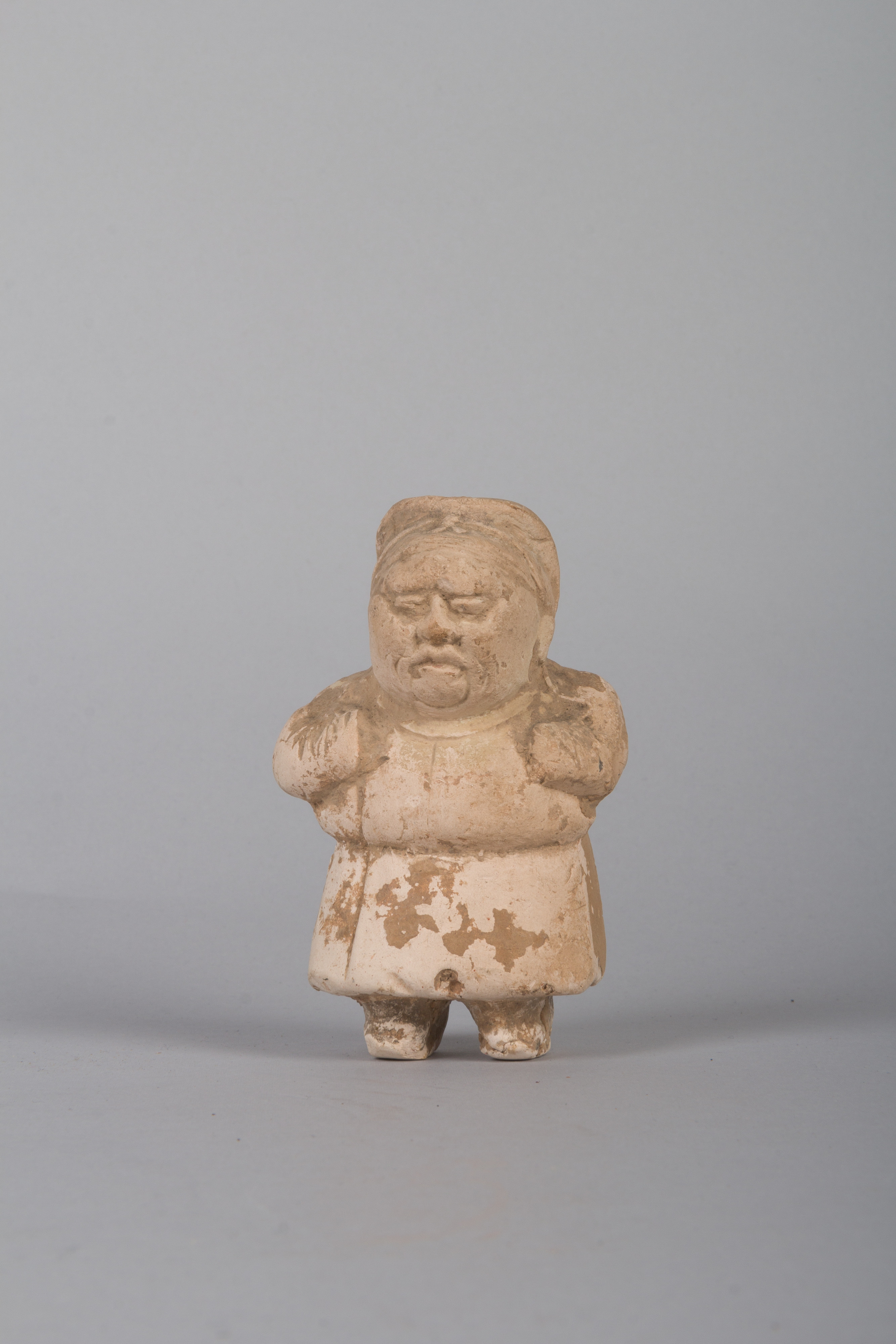
| a hefty cousin |
Thursday, January 6, 2022
Keeping Me Warm: short story; fat; serial killer, jail, parents, reservation, western Washington

Keeping Me Warm
At first I thought he was a serial killer, but reversed my decision and settled on registered sex offender. In the dark of the movie theater I also concluded the man to my left was born old. Old is among the more subjective of terms, but you know what I mean and, besides. I teach English and literature, and am fat and a dyke. I know about subjective. Or something.
Drifting above grease slicks of chemical popcorn his sweat smelled like it had been frozen and was thawing. He wore an oily windbreaker reeking of unrepentance and sorrow, and spent long minutes peeling layers of Saran Wrap from snacks he’d smuggled in, peeling it off, biting slices of something I hoped was cheese. He kept knocking his right elbow into the human tissue-stuffed cloud of my midriff, into flannel shirt, sweatshirt and the loft of my parka.
I might have told you this before, but I have a history. My parents were drug dealers in the Bay Area. They were caught, imprisoned and through a contrivance of fate and a variable deity’s unending knack for amusement, died two years in, my mother in a fire in the kitchen of the Northern California Women’s Facility; my father in a classic shanking by a jailed member of Nuestra Familia. The murderer needed recognition although how much he received for fatally slicing my conniving though generally dazed and kind father, well, I have to wonder.
Now I live in the great Pacific Northwest, in the city of Seattle where I teach in a private high school. For the record, I didn’t leave California because of my parents. I left because of a woman, a fat woman, like me. I am a fat woman who loves fat women.
Merlye was not a fat woman but it was she who was seated on my non-serial killer side in the theater. I exuded hostility when the serial killer, registered sex offender or whatever he was kept intruding on my space. Fortunately, Merlye was alert as he positioned his elbow for another gratuitous jab. Around the time the movie star in the Utah desert was deliriously hosting an imaginary morning talk show, she whispered we should switch seats. Mr. Grandma Smell proved disinterested in Merlye, who is thin and not vulnerable, at least not openly like I am. The movie ended without incident, unless you want to count the character played by the movie star sawing off his arm.
It was kind of unusual that Merlye and I were at the theater or even doing something together at all, but there we were. On Thursday after school, she had asked if I wanted to drive her to the reservation the next day. We’d been getting to know each other. I’d asked for Native American fiction suggestions for my class. Two afternoons a week she taught history of Native art to a select crew of our students. She’d appreciated my interest and, I suspect, understood, just looking at my very large, pale and serious face, I was, as they say, a breed apart, certainly apart from our principal and board. Of course everyone wants to be a breed apart,, wants their breakdancing inner-city child to manifest so the world knows how cool they really are. Lots of people just might be cool. You don’t know.
Merlye’s car was in the shop, and the loaner wasn’t reliable enough for a round-trip into the countryside. She is a little skittish, but not skinny-woman skittish which is like kitten-on-crack skittish. More like smoker-skittish. She is in her early forties, with a son out of rehab, living at his girlfriend’s apartment and selling his canvases to galleries. Her husband is living or dead, I have yet to figure that one out, though they weren’t talking, which would be more relevant if he were alive.
So when she asked if I wanted to see to the reservation—she said, “If my car is still busted.”—I responded, “Yeah, sure.” I am a sucker for being included in pretty much anything and as a northern Californian, adore field trips. My parents thrilled to high deserts such as the area around Mount Shasta, and one time we drove the Oregon Coast highway, curvy, dramatic, moody. I would be happy if I were asked to be driver for a bank robbery, something my father suggested but my mother talked him out of. I think he was kidding.
“See the reservation? Yeah, I’d like that.”
Her job was a curator at United Indians of All Tribes Daybreak Star Cultural Center’s art gallery in Seattle’s Discovery Park, in the Magnolia neighborhood, where I picked her up Friday afternoon, a little later than we’d agreed, but then she hadn’t finished whatever she was working on. We had to stop by her apartment for bags of groceries and whatever else. About the time we packed the car a storm broke, half a day before Channel 5 predicted it would.
The ground was getting muddy and muddier, the downpour was violent compared to the generally misty sort of rain we know here. Backpacks and bags were safe in the back seat, but our outer gear, a term I’d learned since leaving the Bay Area, was challenged to withstand the wet. Even before I shifted into first it was clear the windshield wipers were organizing a protest against water and gravity. They screeched like rubber banshees.
“Hey,” Merlye said. “Wanna see a movie?” She suggested things might clear up in spite of weather forecasts. Caesar’s death may have been accurately predicted (or not—maybe there were monthly warnings, Beware the Ides of April, Beware the Ides of May, Beware the Ides of December, oh, and March, too) but overall, auguries even of a scientific nature are a guess. If we could see into the future we would be able to see into the future. Right?
So there we were, next to a child molester-type and wondering what it would feel like to saw off your own arm.
It was after nine when we left the cineplex.
She climbed into the passenger seat, and soon as I put my key in, messed with the radio which, like the Bible, can be used to tell you whatever you want to believe. We were told the worst of the storm had moved east and she asked if I wouldn’t want to head for the reservation now. “Sounds like the roads are safe.”
“You sure?” I was having trouble seeing her expression. Her hood had a drawstring. It was pulled tight. She reminded me she had been making the drive forever and offered to take the wheel. She could navigate, I told her.
Before getting on the highway we stopped for cigarettes but once inside the convenience store decided not to buy any and left carrying hot coffees and Twizzlers. However, sort of like the Bible or a radio station, you can find what you want in a many a purse. Merlye found half a pack of generic cigarettes in hers. As she lit up, she said, “They’re cheaper home,” and handed over a lit smoke. She snarled that Big Tobacco was attempting to do what the treaty breakers of the U.S. government failed at—”Killing us off.”
Some events, car trips among them, call for tobacco—in other words, some events demand a sacrifice. Life isn’t a Shirley Jackson story, as I tell my students, but there’s a reason everyone reads “The Lottery” and it isn’t just that educators who write curriculum are lazy (they might be but that’s another story). It’s because the village wants its scapegoat. Gotta train the young ones.
It was a dark drive under the black wool night of the great Pacific Northwest, brooding, a change from San Francisco’s dark and smoky civilized terror. Civilization is a scary sucker trying to run interference on the existence of evil.
We arrived well after midnight. Her sister Gail was up watching a talk show and doing some kind of needlework. She was kind to me, rubbing my shoulder, maybe because we shared something. Like me, she was big.
They laid out some quilts and settled me on the couch. The next morning I woke up when a four-year old ran a red metal car on my legs. Hot wheels. He had big black eyes in a big round face and unleashed, big joy. Gail called out from the kitchen there was coffee; Merlye told me to hang out because they were going to get the place ready. I didn’t know what they meant, but they took Harold with them, leaving me with eggs and a loaf of bread, margarine, a toaster, one side of which worked. I pulled on my sneakers to walk outside with my buttered toast. I chewed and studied small houses and some trailers set up on wheels. The trees, oh the tress, were tall and so present, thriving among people’s lives, their needles making patterns on the ground like a child’s craft or a landed kaleidoscope. A crow in Goth black flew here and there, narrating events with authoritative caws. I had been thinking of sitting outside but everything was wet from the storm, of course, so I wandered back, buttered another slice of toast, and felt the quiet.
Then Gail and Merlye returned, and Harold, who was crying because his hot wheels were missing one wheel. I found another car under a cushion on the couch. He imbued me with magic powers until I winced because he’d run a car over a bandaid on my ankle. My yelp made him sad so we spent some time with reparations, another car on my other leg, the couch’s armrest, the rug. Gail made lunch. Around three, Merlye asked if I was ready. I was thinking maybe she meant for a ceremony or sweat lodge, but she meant to drive back to Seattle, directly from the event, whatever it was. We’d never established an itinerary and after the movie and wet drive, a night on the couch, I was satisfied with stopping off at the playground where Harold ran ahead of Gail. Things had dried up enough he had fun on the slide. Gail asked if I wanted to stay another night. Merlye gave no clue as to whether or not she did. I said we should go to the event they’d chattered about, and leave from there.
It was a birthday party for her cousin Mack who was turning nine. He got T-shirts with logos of a local team and the Seahawks, plus those electronic things kids get now, Gameboys or similar. Her uncle Phil asked me what I thought about Columbus Day, though I could tell he anticipated my response of rage and irony. He complimented me by saying I thought like an Indian. I don’t know that I do, what that means or that Phil really believed his compliment but we got along. He said all the religions worth a damn were pro-kindness and that you never knew who you might need if you fell into a crevice in the Utah desert. He knew which movie Merlye and I’d seen, and asked what I thought of it, but before I could answer, observed anyone could get into trouble in the wilderness, even a native.
“But one of our team, we would’ve changed shape and flied out of that canyon.”
Was I included in his team? I was pretty sure he was gay so I might have been. Following up on the movie he commented on the things people have to do under duress. “When I was a young man in love, I was out of control when my person said no. I don’t even want to tell you things I did.” I’m used to hearing confessions from people, and was grateful this one wasn’t specific, though it brought to mind last night’s serial killer/child molester.
Gail and some others started putting away paper plates and gathering soda cans. I loaded a few big plastic bags into the trunk, which Merlye unloaded back at her apartment. Blankets for the gift shop at Daybreak Star.
“Thanks,” I said, and she said the same. It was a comfortable exchange, a comfortable night and day, and I counted myself lucky as I have known field trips to turn sour. When I got home I returned a phone call from my friend Eudie, short for Eudora, though I always teased her it was a Swedish way of saying Judy. We filled each other in on recent events; she thought Merlye had used me, but I didn’t agree. I got out of town, which is always good, and was served lunch and breakfast—and cake, plus saw beautiful trees, which alone compensate for many of life’s trials.
I upended my backpack, threw some stuff into the hamper and some other stuff I neatly folded and returned to the dresser. I can be pretty organized at times, which is the way to be if you are a high school teacher with papers to grade. But I wasn’t ready to do any work, yet. Eudie had invited me over. We left it open. In the meantime I figured I’d walk to the market a block away, on 45th, for a few staples.
There is a sturdy tree, a willow, whose leafy branches tremble at my living room window. My apartment is the second floor of a house. I have a private entrance, up a wooden stairway in back. The stairs were once painted green, though it was hard to tell anymore. They blended in. Anyway, I walked down the back stairway, my stairs, and over to my willow, to ground me. It’s a touchstone.
And there was the serial killer or registered sex offender, standing under my willow’s weeping foliage. I saw a neighbor across the street picking up stray branches from his yard, probably from the storm, and waved, although I had never talked to him. It was a way of indicating, Hey, Registered Sex Offender, I see you and so does my entire neighborhood. The neighbor fastened a lid on one of his plastic receptacles and went inside his house. I started to walk away because ignoring something or someone is a decent enough way of handling a scary situation, but the wrinkled man—I could see his face was a map of something like grief—called out to me.
“How are you?” he asked.
I can’t even begin to tell you how eerie that felt, to be asked by the old man in an oily windbreaker how I was doing. It was zone-of-twilight-like that he’d somehow tracked me down, maybe followed Merlye and me to my car on Friday night, copied my plates and traced them, or saw my parking sticker from school and conducted a little online research.
My next thought was to be direct with him, to say, “Not interested” or “I’m a dyke” but I couldn’t make myself engage in any way. He spoke again.
“Don’t be scared,” he said.
I flashed on his Saran Wrapped-snacks, unfolding.
“Or worried.” He took a step toward me. A squirrel raced up the willow to the branches behind him—and another scampered in pursuit. Their tails quivered fur and whim. “I followed you to the theater.” That was an explanation?
“How long have you—”
He held out his arm for me to stop talking.
“Your father,” he said. And, “I just got out last month.”
From the penitentiary. If no one was monitoring him, if he was free to travel to Seattle from the Bay Area, he wasn’t a registered sex offender. I tried to feel good about that though I worried a serial killer could be released on a legal technicality.
“I meant, retired.” He expression was crushed by yet another mistake. “I didn’t get out like a prisoner does. I was a correctional officer. I tried to save your father, but there was so much blood, I mean a lot of blood, whew, and I’ve seen my share of blood. I got it all over my arms and the front of my uniform, my union saw to it I didn’t have to pay for a new uniform. Well, I didn't have to pay full price.”
I didn’t flinch but if I had, it wouldn’t have mattered. He was not sensitive to my kind of body language, the movements of a large, mistrustful, soft woman. He was sensitive, if you even want to call it that, to quick moves and rage, to revenge and agony in their various manifestations, clearly stated and acted out.
“Working there was like being in lock up, except I left every night, but I brought it home with me. I bring it everywhere. I brought it to Seattle. Hello, Seattle.” His arms hung limply. His windbreaker was the kind with a flannel lining so old it was turning to dust. “The ugliness of the human race greets you.”
I asked if he had something to tell me about my father, but all he could say was my father wasn’t a bad man. “He was one of the better ones. I think he might of felt bad about your mom.”
My father might have felt bad about my mother’s death in California’s most dire women’s penitentiary? I should hope so and about the daughter they left behind. I would hope my father felt bad about a lot of things. He just might have.
“Is that all,” I asked. I’d forgotten to grab my woolen cap, and sensed an evacuation of my body’s heat. It was ascending.
Apparently, that was all. He dragged himself over to his Honda, which was new and really dirty. It might have been me romanticizing, the literary me, trained by Dickens and Victor Hugo to see past the circumstantial evidence, and me molded by the largeness of my soul to see beyond life’s ephemera, but I felt comfortable he didn’t want to hang around and wasn’t going to be a bother. He said he liked sunshine and had settled in Shasta of all locales, a chaparral of shrubs and trees and fragrant earth, not the stark monastic Utah backdrop for a sawed-off arm. His wasn’t a pilgrimage of many stops. My father was the only man who had died bloody in his arms, and now he’d fulfilled some mission.
I went inside and called Eudie, but she was out, so I dialed Merlye. “Man, did something weird just happen here.”
And I told her.
“I didn’t feel anything when I sat next to him,” she said. “I thought he was just another creep who likes a certain kind of women. Some weirdos like natives and some like black women and fat women and, you know.”
“Well I hope he meets up with a nice half-Black, half-native fat woman.” We didn’t laugh and I didn’t see him again. When I told Eudie, I said he was like a ghost in uniform, and later, when I phoned my ex in San Francisco, I embellished and said he had the feel of being a prophet looking for a few decent people so God didn’t blow the whole thing up.
My ex decided this was a good thing.
“The whole thing isn’t blown up, we’re all here. Maybe he bargained God down to finding one person—one decent person—so God would spare the planet.”
My conclusion wasn’t that I was the one decent person around but that I was, in fact, a decent person. That understanding made me glow, as if a shaft of light was shining on me through branches or a window, keeping me warm.
Saturday, January 1, 2022
Belonger’s Tale: It wasn't easy to be a lesbian in the seventies

Belonger
It was the seventies. My girlfriend had left me for some spiritual community a million miles away – in Canada and I thought I would try to win her back. I threw together my nickels and dimes to travel by bus from L.A. to a Christian-y commune north of Toronto, only to verify what I already knew, that Ginny didn’t want to be won back.
“You understand I’m happy here, right?” We were in windowed porch attached to a kitchen, an old, quiet room saturated with morning sun. She was scrubbing enough potatoes to feed twenty people which didn’t seem like a reason to stay, but I was more of a seeker and definitely more corrupt than she was. “What about you?” Her blonde hair was wound around her head as if she was living in another century. “You okay?”
No, I wasn’t okay. It wasn’t the easiest – to be a lesbian in the seventies and then have your girlfriend leave you for a community that churned butter and prayed. I caught a ride to Toronto where I boarded a bus to Buffalo in the mighty nation of New York.
As I walked into the Buffalo depot, a crazy rumpled man blocked my path for a sec, then with the curlicue gesture of an eighteenth-century footman bid me continue and receded as if he were a special effect in a movie, as if I’d smoked a little, which I couldn’t because I didn’t have any. I caught a glimpse of my reflection in a window, of my short, carroty hair which framed my face like a one-size-has-got-to-fit-a-whole-lot frame from a five-and-dime, and accepted myself with my many limitations. I believed – and still do – that being a dyke gets me a pass on matters of fashion. I got a Snickers from a vending machine and settled into a scratched-up plastic chair to think. And watch some old ladies fussing with purchases they were ushering back to Canada.
“Can you tell?” Lady Number One had a tiny head with frizzy hair. She wore two dresses. I knew because the hem of the first showed two inches below the second. “Maybe you want to switch the dresses?” Lady Number Two’s eyes narrowed, like she was the dealer in a tight game of Texas hold’em. She’d chanced on a sale on Contac paper and importantly arranged the flowered tubes in her giant paper bag. Her sculpted hair, veiled in a black chiffon scarf, looked secret.
I tossed the Snickers wrapper in a sand ashtray, consulted a phone book, and dialed the “Y” for walking directions. When I arrived, I stumped the clerk because all I had was six dollar bills and a cashiers’ check for $200. The clerk, who was skinny, pockmarked, and tired phoned a superior, put him on hold, asked if I had anything I could put up as collateral. I showed him my graduation present, a Bulova watch. He handed over a room key.
Women in curlers watched bowling on T.V. Hearing I was from L.A. one asked about, “Dat dere beauty contest, you know, the Academy Awards.” The elevator door had iron webbing. My room had a slanted ceiling, the bed a scooped-out cradle in the mattress. Sleep overtook me, which helped with a rational approach to business the next day. I cashed the check at a nearby bank. My watch was returned to my wrist. I wasn’t sure what was next, stopped for coffee, and struck up a conversation with a woman my age. She was like me, lesbian. I don’t know how you know these things, even now I don’t know but the knowledge is delivered by something old and sure in the body. You just know. Myra invited me to her place which I hoped smelled like she did, of essential oils, lavender and geranium. Like Ginny she was a blonde but her long hair was loose, and maybe a bit dirty.
The day was beautiful, bright, and crisp. I liked Buffalo’s warm brick buildings as backdrop. I lugged duffel bag and followed her. Maybe this was the greater rationale for my having traveled so far from home just a few months after graduating college, to meet my truly great love. We transferred from one local bus to another, facades changed to shabby, stuck-together houses, like in a photograph of America back then. The bus bumped over railroad tracks beneath many wires.
“I have a roommate.” Her eyes were small and black, shaded by dark brows. She wore a long dress that looked like an Indian bedspread stitched-up. “Don’t let the landlord see you.”
I hesitated but she smiled, and man oh man, I wanted more of that smile.
“Don’t worry.”
We arrived. “Mr. Ami lives there. She pointed to a doorway by the stairs we ascended. “He doesn’t like our having guests.” The other “us” was Ren, who was tall and lumber-y-of-motion. She made us tuna sandwiches. I wolfed mine.
“So. California?” I found Ren’s voice to be coarse. “I hear San Francisco is over, that free love is no more.”
Her words were a rebuke of my home state. Suddenly I was fighting back tears. She wasn’t the sort to notice, and when Myra told her I was from L.A., not San Francisco, her face, its small features bunched together, lit up. “We want you to stay here.” She was fake magisterial, like Laurel or Hardy could be, without the lovability. The kitchen was crummy looking, with paint peeling from the cupboards and an ancient stove you had to use matches with to make work. The living room, which we’d settled in, made me sad, not because of old furniture but because. Fragrant Myra sat next to me on the couch. Something was going on. I couldn’t put my finger on it.
Myra put a finger to her lip, the international distress signal for quiet, and asked if I needed anything. She popped up, slinging her woolen purse from Mexico over her shoulder. “The store’s just a few blocks in that direction.” I didn’t want to stay there with Ren, but Myra was out the door so quickly. And Ren had settled in the bathroom. “On the toilet!” she shouted. I wandered. The few bookshelves were filled with self-improvement authors. Dale Carnegie, Napoleon Hill, Florence Scovell-Shinn, Ayn Rand, a Cliff’s Notes for Thoreau. Someone was a student of the Akashic record, something I gleaned from tomes on spirit guides, alchemy, Edgar Cayce, and Atlantis.
I heard a key in the door, and wondered if Myra had forgotten something. It wasn’t she. “I’m Mr. Ami,” announced a tall, skinny man in workers’ overalls. I shared my name, feeling like a run-away teenager in need of outreach.
“I want my money.” He was direct.
“Ren?” I shouted. I told her she had a visitor. “I’ve been here half an hour,” I whispered to Mr. Ami.
He didn’t block me as my duffel bag and I raced past him. I worried I’d run into Myra, but a bus pulled up and I boarded, making my way to the bus depot where I bought a ticket to Albuquerque, where my cousin Joshua lived. A Greyhound attendant tagged and stored my luggage even though I was hours too early. “You have some time on your hands,” he said.
“I do indeed,” I replied and headed outside, reflecting that the attendant was nice and that nice people are everywhere. I breathed, in and out, in and out. I had dodged a bullet, although I didn’t know how, why, or the caliber. A small adventure over. Maybe that was what this trip was about – learning to live with uncertainty. Learning to be light on my feet. I watched a few women herd children and random people looking anxiously down the street, presumably for a relative to retrieve them. A van pulled up. Folk of the tribe of the tie-dyed were dropping off a friend. They felt more like my people than anyone since I left L.A. I wasn’t a hippie, but they felt like home.
“Hey, guys.” I waved.
Whoever was at the wheel backed up.
“Hey, traveler,” a girl my age responded. She was wearing enough black eyeliner to be a forerunner of Goth.
I asked where I could hear some music. “Maybe some women’s music?”
“Hey, man, that’s cool.” She was okay with me being a dyke, something I hated. Don’t approve of me, sister, I thought. But I figured, things were going to keep being strange so why not, and climbed into the van. The passenger seat next to the driver was gutted. A slight guy named Ralph was in the back with Dee Dee, the eyeliner queen, both wearing T-shirts of the gods – Morrison and Hendrix. I eased down, took the joint passed to me, toked, passed it on. God that felt good.
Jack, the driver, asked where I was from and everyone suddenly wanted to know if I could surf.
“Man, I could use a quick vacation.” Jack turned around and made eye contact with Dee Dee who reached into a battered ice chest, popped the cap on a beer, and handed it over or tried to, but the van ran a curb and hit a car parked in a driveway. We were baptized in cheap booze.
“Ah shit!” Jack slapped the steering wheel. “I already got my license suspended.”
“Bummer. You okay?” Dee Dee asked.
“Move the van, man, move it,” Ralph yelled.
Jack backed off the curb and hit the gas. “We didn’t hurt that car, not really.”
“It had fenders, I saw them.” Dee Dee crawled as far front as possible and rubbed his arm. “Where’s the joint?”
I was holding it. “Uh.”
I must have looked pretty out of it because they broke into laughter. I can be funny, generally when I’m not trying to be. I said, “I’m hungry. Would you mind bringing me back to the bus station?”
They laughed again because of course I was hungry. I was smoking weed.
“That’s crappy food,” Dee Dee sneered. “Bus station food.”
“It’s crap!” Jack yelled. He looked back at us and I held my breath.
Ralph’s lips pulled down as if a cartoonist were drawing an unhappy face, but then he lightened. “Wings. You’re in Buffalo, let’s get you some wings.” By the appreciative murmurs all around, I figured he was onto something. Jack made a quick U. A beer can rolled. The van lurched. I held out the joint. Ralph lit another match. I inhaled.
We pulled into a parking lot for a sallowly lit building with a neon sign: Wings Over Buffalo. Ralph and Dee Dee told me to wait. I thought about fried chicken backs – something my mom would make for us the day before payday. Looking out I noticed a red glow. Jack swore and ran into the chicken wing stand for Ralph and Dee Dee. I peeked out to see two policemen nearing the Wings’ entrance, stubbed out the roach, and gingerly climbed out. There stood a cop, who looked me up and down. “This your van?”
“I met these guys at the bus station, and I gotta get back.” I showed him my ticket. He looked me up and down again. I swear he knew I was a lesbian and judged me meanly for that, but he told me to get moving. Which I did.
These days, every other bar and coffee shop sells chicken wings, but not back then. I slumped in the scooped-out plastic of a row-chair, wiping bus station hot dog mustard from my Pendleton, and feeling I’d missed out on something special.
“Cheap thrills.” The disheveled man from the day before stood in front of me, pointing to a t-shirt barely visible beneath his ratty sweater. He was pointing to Janis Joplin, to a t-shirt of a goddess. He drifted like smoke into the end chair of my plastic row, and unlike smoke started pushing back and forth with enough force it seemed plausible he would yank out the bolts and send me toppling.
“I see you.” His eyes were looking straight ahead but he had me in his peripheral vision.
I was relieved to hear that. It is good to be seen. Definitely for one’s sexual preference. Maybe for one’s tarnished soul. When my bus was called, he’d fallen asleep. I sneaked a dollar bill into one of his pockets. The attendant who’d stored my luggage walked over as I was boarding.
“Saw what you did for Lawrence.”
I shrugged.
“We take care of him.” He tapped my shoulder. “You’re one of us.”
My little chest heaved with pride. Then I boarded my bus.
...first published in Callisto (Sibling Rivalry Press), Raymond Luczak, editor
Tuesday, March 28, 2017
With Y as an Absence of Pain #fiction

A story I wrote is in print or virtual print. Check out the latest issue (#17) of Cleaver Magazine to read "With 'Y' as an Absence of Pain."
Thank you. It takes so long to write one story and then, poof, it's up and out, a dandelion shred blowing.
With 'Y' as an Absence of Pain
Saturday, July 11, 2015
Oracular Radiation and The Young Orator

2 poems:
Marc Jacobs designs clothes or his team does or whatever. And accessories. And many new stores which are polluting Greenwich Village. So that's the background to "(Marc Jacobs to the West Village.)" And, yeah, I did feel an elephant trunk brush my calves, but that was as I crossed Third Avenue, near 26th Street. See, "As She Crosses." Both poems are in Other Rooms Press' latest issue, Oracular Radiation. That is such a great name I'm not sure poems are necessary. Oracular Radiation conjures old movies and visions of what could be.
Co-editors of Other Rooms are Ed Go and Michael Whalen. Ed Go is a poet and artist - I've oogled with much respect his collaborations several times at the Center for the Book in New York City. He wrote "Heaven, Hell & Middle Earth," an essay about three poems in my collection, The Future Is Happy.

1 story:
Last year my story "The Young Orator" was published as a fiction chapbook by Winged City. The publisher and editor, Teneice Marie, has revamped so Winged City is now under Argus House Press. "The Young Orator," about an eight-year old who spouts quotations from Ben Franklin and Thomas Jefferson. The story also features a '57 Chevy Bel Air with pinstriping.
Tuesday, February 14, 2012
Leaving the Familiar: Clouds abounded but there was no rain; the air rang sweet and dank.

Thanks to the publication Whistling Fire for publishing "Leaving the Familiar."
C.G. went to the forest. She lied about going on a sleepover―at Eleanor’s, Ma, and found her parents’ trusting, Okay, Cee, maliciously benign. She slammed the front door, shouted an apology and left, to pedal furiously along the road winding like a concrete shoreline by the river. At its end she hid her bike under bushes.
A farmer she recognized from the Saturday market allowed her on the back of his pickup along with his cants, toms, corn and berries. She ate one ear of fresh, raw corn while she was in the back of that truck, threw the husk to the floorbed and let the silk glide in the air to the road. . . .
... to read the rest of "Leaving the Familiar" click on the title or here.
Sunday, January 9, 2011
Getting work rejected, again: it's okay

The new work is six stories I wrote. I thought I was done with fiction, but I wasn't. The old work is stories my mom had held onto, pre-1989. I'd thought they were lost long ago, then looked more closely at the contents of one box a month or so ago. Talk about voila!
Okay, so let's say I have three short story collections waiting to be published. When will it happen? What does it mean that they are not published? My stories aren't sparky happy fun fun fun fun. I wish they were.
When I started writing I was convinced I had to produce art--"art." I hadn't yet read Flaubert's travel journals or Madame Bovary but the idea of creating the work so carefully each sentence is a craftily laid tile of a mosaic was in the ballpark of what I thought I should do.
I'm not saying I was pretentious. I was ambitious; also working out my style. Making my way without workshops and classes. I really struggled with the burden of classicism, of thinking I should write about Oedipus and Jocasta, not a twenty-something in a Hollywood laundromat.
The laundromat won. Each time I write I write as best as I can. And still my short story collections are rejected by the few competitions I enter (NO-FEE competitions). I'm not really complaining, just wondering when, if ever, I will figure it out.
What do I think I'll figure out? That I should give up?
These meditations are brought to you by the University of Pittsburgh Press' Dru Heinz competition. The press announced this year's winner on Friday. It wasn't me. I hadn't expected that it would be me, but of course I hoped it might.
It's hard. It's hard for everyone. Who knows anything. Every so often someone will contact me about one of my stories or poems to thank me. That has to be enough.
To tell you the truth, it is.
Wednesday, December 29, 2010
Wringing Out the Old: in preparation for 2011

Don't ask me for what.
This end-of-year emptiness, however, is deceptive. I am writing--finishing up--making nice--one of my 2010 short stories. It's been a boon year for fiction writing for me and may 2011 be a boon year for fiction publishing. For me.
The boon was half earned, if boon's can be earned, before 1989. My mom had saved every story I'd written up until then. I have already written about this. I found the stash earlier this month and have already sent out (submitted) at least four of the Lost Stories of Sarah Sarai.
There are one or two more I'm going to take a look a tomorrow. Those may need some work. I'll have to decide if they are worth the effort.
This year I figured out a way, a sort of device so I could include family experiences in my fiction without plunging myself into pain or doubt, worry or grief. Maybe even looking back with joy? Nah! When at least one of the New Stories of Sarah Sarai is published, I'll explain more what the device is.
Have to go. No promises but I probably should write something tomorrow and Friday, shouldn't I, given the year is about to end. It was a hard one but a grand one.
Saturday, September 25, 2010
I'm Writing Faster: The Force That Won't Take No for an Answer

I may have mentioned this before, but it hasn't stopped. If my experience can get anyone out of writing doldrums I'm willing to repeat myself. Fiction, is what this pertains to, short stories. In the past I had trouble ending fiction. I struggled to for the "perfect" solution so "the end" was earned. I was pretty insecure, too.
Sometime in a late-winter haze I read Maxine Chernoff's Some of Her Friends That Year: New & Selected Stories (Coffee House Press). (Which is back on library shelves so I can't be more specific; it's not, however, the specificity of naming any one story but the aha that matters here.)
I remember being upset with her. She ended that story too soon. (I said to myself). And it works! (I added.) And so I realized I could leave my stories "open" in the way a poem is left "open." Leave them wanting more. Or maybe I was simply ready to realize.
This year I've written five (5) new short stories and started the sixth yesterday. The first five are "go's." They work, although are not finished. This year line-ups of authors' names have returned come to me from my vigorous and loving reading qua devouring books in my teens and twenties: John Cheever, Isaac Singer, Flannery O'Connor, F. Scott Fitzgeral, Isaac Babel, Peter Taylor; many others but all from, say, twenty and thirty years ago. I can't know their exact influence but I know they are my foundation.
The End.

Sunday, July 11, 2010
Wherein fiction is completed and more fiction appears
 A few months ago I declared two novellas I'd been working on for years, years I say!, done. Finished. The ended.
I folded each into my short story collection which bulked it up so I had two story collections, each with one of the novellas. It was such a good feeling to be finished and to have two collections to submit. I don't enter poetry book contests but I will try short story collection contests. How else will I publish a collection? I don't know. I just don't. If you do, tell me.
Here's the thing. Before I declared the novellas (From the One Side of Heaven and A Vote for Ross Perot) done, I had a sense that fiction was over for me. I wasn't interested in generating anything new and nothing new was coming to me.
No sooner were the two collections in the mail than I came across a beginning of a draft of a story from 1995, when I still lived in Seattle. It had been hiding from me. It had pricked its finger on a spindle and was waiting for me to mail the two collections, already. I liked the story's tone. I was excited about the characters who were opinionated, odd and interesting.
I also began writing a new story. Just like that. And (further) a third story. (This one I'm not so sure about, but...)
That said, I'm not feeling confident, not at all. The little voice, that doubting nagging voice, is strong these days. Luckily I'm too stubborn and too curious about how I'll end the stories to quit.
Luckily (redux) I understand much more about writing now than I did when I started. I know shortcuts and conveniences, and I know to get to the emotional heart of a character. I'm not sure I knew that years ago. I was working on art years ago, not self-consciously or in a precious way. (We don't like precious.) My perspective was of me as artisan designing a mosaic, one of many, for the emperor. It had to be perfect. It never was. That's why it took so long.
For some reason I am called on here to document my victory--finishing the novellas--and my fear of being a not-good writer. Consider both documented. The end.
image from: http://popartmachine.com/machine/daily/2009-03-22/the-new-independent-pop-artists/west-coast-indy-grunge-art--rosicrucian.jpg
Sunday, April 11, 2010
Editing fiction: an outtake, and why, from "The Devil Is Her Friend"
 I recently wrote here of trials and tribulations of getting my story "The Devil Is Her Friend" published. It ended up, gloriously, in Stone's Throw Magazine. Here's an outtake from the story, a section I edited out over a year ago with reluctance and wisdom. It wasn't working, however much I denied it or appreciated my own early reading history.
I am revealing some of the process of editing in hopes another writer might find it useful. This story had been around for a long time, as I previously wrote, and my attachment to the outtake was hard to overcome.
"Devil" is about (or "about"--who ever knows what anything is about, really) Pearl Miller, a hybrid. In her case that means half Christian, half Jewish, although readers who are racially or otherwise mixed also favorably responded to the story. She's also a rebel.
And bucker of authority figures. I had to do intensive research for that character trait, ho ho. Her dual background, or, rather, reactions to her dual background, are explored briefly, as Pearl winds up teaching at a Catholic high school. There's a crisis when the Archdiocese demands all teachers, Catholic or not, attend a periodic faculty Mass in addition all-school Masses, at which teachers are more chaperones (to the pews, to keep them free of gum and graffiti). Pearl decides she will read during the mandatory Mass.
Pearl being Pearl, the question looms: What will she read? Her back-and-forthing on this issue is what I partly deleted as it was too much of an intellectual segue which served neither story nor characters. I am fond of that internal discussion, however. So here it is. (The story, sans the OUTTAKE/book debate, is at (copy and paste): http://stonesthrowmagazine.com/authordisplay.php?authorid=141
OUTTAKE BEGINS:
So much for the tensile strength of a dual upbringing, Pearl thinks. “I’m on my own,” she tells her rear view mirror as she drives home. She is hurt and annoyed. And determined. Her only decision is what to read during the faculty Mass. The choice will be everything, and so she thinks long and hard.
Her first inspiration is to read a Catholic theologian, maybe St. Thomas Aquinas. Who can forget that odd paragraph in the Modern Library selections from Summa Theologica, in which Aquinas conjectured about the number of dancing angels on pin tops—as if all angels couldn’t fit all places at all times. Summa wouldn’t really be much of a statement; not much stronger than thumbing through the daily Missile available in the pews. Even the mystic authors of The Cloud of Unknowing or The Way of the Pilgrim can be construed as writers of commentary on doctrine, and thus coals to Lancaster, or Manchester, or the Appalachians, maybe even coals to the Devil, a perhaps dramatic perspective of the whole mess; the shebang; all of it.
Jewish theology is a possibility, although much of it seems a reach. Reading Abraham Abulafia or the Zohar would be hypocritical on Pearl’s part since she hasn’t been able to get a footing in Kaballah, other than Gershom Scholem’s Major Trends in Jewish Mysticism, which, like Freud’s Introductory Lectures, offer as much as she imagines she wants to know on the subject, at least at this crossroads of life. Except for his translations of Hasidic tales, she’s never been a fan of Buber, and aren’t those tales too sprightly for this occasion? For the occasion of reading during faculty Mass? She might as well read Roth or Bellow, but then there is the whole woman issue.
OUTTAKE ENDS (ABOVE).
This part does remain in the story:
The night before the first scheduled opportunity for faculty salvation, Pearl is on the phone with Angelette. “I’m not a literature teacher,” she explains needlessly, “but I sure to like to read it.”
Angelette has trouble following Pearl’s mental wanderings. “Your Sunday School teachers said you were a good reader.” She sips Sanka while cradling the phone on her shoulder and thumbing through an article on “Spirituality in the Cubicle” in the Christian Science Sentinel. “Be careful.”
Makes sense; Pearl is a little nervous. After saying good night to her mother, she sits cross-legged in on the Persian rug in front of her bookcase. Her apartment is small and spare, but for the solid oak book cases and treasured carpet. What to read, who to read. Which author can be brought into a church? Well, any and all, but which one will approximate a religious experience — that’s what she is looking for. Her choices suddenly narrow: Emily Dickinson or Anton Chekhov.
Emily, well, Dickinson, but who wants to call Emily Dickinson — Dickinson — wrote a poem works, “If I feel physically as if the top of my head were taken off, I know that is poetry,” which sounds pretty ecstatic to Pearl. Atop a list of Ten Best Artists the World’s Ever Known, which Pearl and her friend Roger, who she met in a literature class at the university, compiled, Pearl places Emily.
“Dickinson, my dear Rog, is pure energy, crystal, zircon, an emerald diamond. Her poetry is equivalent to the cipher which the space adventurers in a movie find in the obelisk, which has the key to a galactic understanding and peace.” Roger hadn’t argued.
In the end, however, Pearl settles on bringing in a collection of Chekhov’s stories. She hasn’t read the entire volume because every time she opens the book her heart starts beating so rapidly, she gets scared. The air will thicken, and Pearl finds herself lying on her bed, or once, putting her head down on a tabletop at MacDonald’s while a girl scooping fries into a red cardboard container shouted to bring some water to the lady who’d passed out. Chekhov indeed. Isn’t there God and religion and a philosophy of hope in such artistic construction? At least. And if she faints, the Mass will be cut short.
###
More than you wanted to know? Hey. Maybe a writing teacher can use this as a warning note, or intro to self-editing. Go for it.
Sculpture of angels from: www.chickschwartz.com/sculptures.html
Saturday, December 19, 2009
My Snowflake Rocks: perfection and art
 Funny. On my way to get coffee this morning I thought about many extremely gifted poets whose work I admire greatly but who I might bypass in my search for inspiration (in art, life, death). I thought about me, more than twenty years ago, when I began writing fiction.
I spent a few years trying to write my first mystery novel that didn't fly (tried a few others that didn't fly), and found short fiction in the process. Being in love with Cheever's stories, Chekhov, Flannery O'Connor and others I am slighting only because I have the memory of one hand clapping, I felt honored, heck, relieved, to even be involved the process. The crossover from ne'er-do-well to writer, reckless and easy, justifies an oddlife.
I was in love with the smallness of the form, the Indian minature-ness, the possibilities a small story held for perfection. I crafted and rewrote, in hopes I could like God create a jewel. I don't say that's the case of the poets I allude to above, that they spend years rewriting or foolishly attempting to sing as an angel, but their end product, however wonderful, can't compare with my snowflake. This does not, and should not, bother any poet or writer. This is about acceptance appreciation and love of my voice. If I don't love it, how can I nurture it?
This is an assessment of my goals, not of others' goals. My goal in poetry is to find God, to heal the world, to create consciousness. I don't mind if my poems, carefully wrought though they are, or at least labored over, get wild and strange. I'm a little wild and strange and okay with it. Hey, I'm stuck with it.
(Caveat. I can only labor or a word in a poem if I am able to stay alert. I wonder if I don't sleep through some phrases, or give up, or OCD my way out. Total consciousness work, a perfection of its own.)
White paper snowflakes dangle by the counter and float on the walls at my coffee place. I asked about them this morning--when I came in it was just me and two kids behind the counter. They told me I'd get a free small coffee if I made one. As Jama handed over a piece of paper and scissors I felt a jolt from space. I'd been listening to Sun Ra at home. That'll prepare your mind to be a landing strip for the ships. I knew mine would be different and that if I TRIED to make it look like every other, or any other snowflake, I'd fail. It's been that way my whole life.
My snowflake looks like a tribal mask, simple, rectangular, jagged and if you don't mind my saying so, arresting. Yes. I'm bragging about my paper snowflake. It is, as one esteemed journal wrote in their we're not taking this batch but send another as you have an original voice note, different.
The short stories I wrote in the past are wonderful and careful. I futilely hope they can be collected and published. Whatever. But my poems are channeled. That's that and Merry Christmas, my children of light and affection.
Subscribe to:
Posts (Atom)