- I am grateful for scaffolding. When it's rainy and windy I'm protected, at least one block at a time, by the overhang. So are other pedestrians (hence, and this may be a stretch, there's an increase in community - not only are we in this together, we're under it).
- I am grateful for my job - enormously unbelievably genuinely deliriously verging on maddeningly so. Work, a paycheck, benefits, the dailiness - yes & yowza.
- I am grateful for friends who hang in with me, no matter what.
- I am grateful for fear though I can't come up with a reason why. It alerts me to my psyche? It's real? I get through it?
- I am grateful when the rain stops enough I can go outside without a coat (the visual: Sarah racing out of the office during lunch) to pick up a sandwich.
- Bonus round: Yay for sandwiches.
Wednesday, November 27, 2013
Five Bits of Gratitude, Wednesday, November 27
Gratitude, according to an article I read yesterday, serves as an antidepressant. Write 5 statements of gratitude every night and give life's beauty a chance to outshout moods. It's not a full remedy, duh, but it sure is a help, an appeasement (I'll take it), and also an acknowledgement of what's at hand, often overlooked. Today's 5, shared.
Monday, November 25, 2013
Wanda Coleman, There and Still Here
One of America's most alive, most caring, and most righteously enraged poets, Wanda Coleman, has passed on. She served as Los Angeles' poetic spirit for years and years. Her passion will be missed. Her poems remain as its testament.
American Sonnets: 91
the gates of mercy slammed on the right foot.
they would not permit return and bent
a wing. there was no choice but
to learn to boogaloo. those horrid days
were not without their pleasure, learning
to swear and wearing mock leather so tight
eyes bulged, a stolen puff or two
behind crack-broken backs and tickled palms
in hallways dark, flirtations during choir practice
as the body organized itself against the will
(a mystic gone ballistic, not home but blood
on the range) as one descended on this effed-up
breeding hole of greeds—to suffer chronic seeings
was’t hunger or holiness spurred the sighting?
______
Wanda Coleman, 1946-2013. From Mercurochrome (Black Sparrow Press/Godine) @ 2001.
Monday, November 11, 2013
Amy Lowell Takes on the Moon, and Tenderly So, in "Interlude"
Interlude
When I have baked white cakes
And grated green almonds to spread on them;
When I have picked the green crowns from the strawberries
And piled them, cone-pointed, in a blue and yellow platter;
When I have smoothed the seam of the linen I have been working;
What then?
To-morrow it will be the same:
Cakes and strawberries,
And needles in and out of cloth
If the sun is beautiful on bricks and pewter,
How much more beautiful is the moon,
Slanting down the gauffered branches of a plum-tree;
The moon
Wavering across a bed of tulips;
The moon,
Still,
Upon your face.
You shine, Beloved,
You and the moon.
But which is the reflection?
The clock is striking eleven.
I think, when we have shut and barred the door,
The night will be dark
Outside.
____
by Amy Lowell (I don't know which collection (if any) this is from; found it on the archive, Modern American Poetry (Illinois.edu)
Otherstream Anthology, Shadows of the Future, a free e-book! (soon on our lover's back)
I am thrilled to have my poems "The Quiet Softness," "Today No One Is Your Friend," "The Philadelphia Art Museum," and "Look Now" appear in the new anthology of the Otherstream writing group, Shadows of the Future,
edited by Marc Vincenz and published by Jeffrey Side of The Argotist
Online.
The anthology is free and online, both of which are exciting to report. Soon we'll be able to download directly to our palm, our forearm, our lover's back, but for now, an e-book is sufficient innovation.
You are welcome to disseminate, share, and most of all, read!
Other poets include Larissa Shmailo, Susan Lewis, mIEKAL aND, Camille Bacos, Jack Foley, David Chirot (whose artwork is on the cover), Jukka Pekka-Kurvinen, Carol Novack, Jeffrey Side, Mark Vincenz, Dan Raphael, Howie Good, Keith Higgenbotham, Jake Berry, Mary-Marcia Casole . . . and more.
Publication was September, 2013.
Sunday, November 10, 2013
Assembling my Poetry Collection So Each Poem's Comfortable with its Neighbors: take 3 with more to come
Less than a year ago I thought it was done. I thought I had a 2nd poetry
manuscript and with great though occasionally nagging conviction I submitted it.
The "nagging" in nagging conviction is hard to fathom – it has depths, some of which are reasonable
while others are meaningless.
And thus the great art of discernment, one-half the price of being an artist. So okay. More new poems got written or completed since last year’s book, some quite strong. I decided to reassemble the manuscript, to add in poems and attempt the ruthless discard. And re-ORDER the poems.
Determining the order of poems in a manuscript is not an act of discernment (which is an art), though remains a bit of a mystery, and there is no perfection. The amount of attention a poet pays to her manuscript adds to its strength, mystique, believability, readability, desirability, saleability, poetry, and poem-companionability. The more attention paid to the sequencing or ordering of the poems, the more comfortable each poem is with its place in the collection. The more respect each poem has for its neighbors.
Poems like poets have egos. They like to be read, heard, appreciated. Yes, there are shy poets who don't like to read their work aloud but I haven't met one who didn't want her/his work read on the page. Poems exist. Existence demands some level of attention. Even rocks in the desert sense fulfillment when a lizard scurryies to rest in their shadow.
Like a knight I believed in the rightness of my kills, my deletions. More important than believing I was right, was knowing by way of the internal nag that a poem didn't belong in the book because it couldn't stand up to the others. It made me sad, but also proud of the others, so strong and noble.
After I made a few changes to the doc., I printed it out and put it in a federal express cardboard-like envelope I kept in my bag. Since I am working a 40-hour job I didn't have lots of time to take a look, but I peeked some ,took it out for perusal once or twice. I choose and I reordered a bit. I demystified various of my false beliefs that in books to come some of my themes might take precedence and so I should hold onto poems for that future time. Truth is, I don't know what's to come. I do know that holding a poem because of what MIGHT happen doesn't make sense. It's like holding back in fiction, not letting a character take action when the character wants to.
Then I just googled how to order a poetry manuscript (in different iterations). I read different perspectives about creating sections in the book, headings, or just going arbitrary--throwing the pages in the air (well, that's what I suggested I’d do, on Facebook). Last week, at his reading, I asked George Guida how important was the order of poems.
"Very," he said. I believed him. I also believed him when he added, "at least to the poet."
Another week, more thinking, ordering (or not), adding, deleting. The weekend came. I made piles of the poems. I think I'll hold back on the content of the piles (except for one, which was, no go). Finished, I felt the moment. Looked at the poems in their golden groupings. I decided that as a reader of my manuscript, a reader who is easily bored, I would appreciate a little surprise.
And so I organized the poems variously, placing a poem from one pile, one grouping, next to a poem from another pile, a different grouping. I realized that my themes can carry from grouping to grouping. Yes, I considered each poem as I ordered. I looked at what I had, page by page. Left my apartment for my Tai Chi lesson in the East Village, a manicure, a to-go meal. Then I sat with the stack and reordered the Word document. Which took several hours and involved, inevitably, more deliberation.
Somewhere along the line, last night when I was being social or in dreams, I remembered two poems I hadn't included. Added them in. Edited one. (Oh, all along the way, poems--definitely not all but some, especially the unpublished poems--get a little editing, PRN as the docs say.)
So now I have a poetry manuscript. I will print it out, consider. And I will be mailing hard copy and emailing the document to a friend for a "if you see something say something" edit. It's not over. But all of us, Sarah Sarai and her x# of poems (oh be surprised later) are coalescing, like clouds of joy.
image from Manuscripts in the Kandilli Observatory (astronomy, mathematics and geography of the Arab world), courtesy of Turkish Airlines
Monday, November 4, 2013
But To Discover Same ("The only way two people can make it work") A POEM
Worse and more embarrassing mistakes have been made. I've heard, for instance, that Ashbery included the same poem in two collections. Gasp? Not really. It's impossible to keep up with all our poem titles--which change organically and otherwise. In my case, I realized last week I'd submitted "But To Discover Same" to several journals, when, in fact, the poem is in my online, pdf chapbook, I Feel Good (Beard of Bees, 2013). So I had to withdraw it.
The most splendid news is I loved writing this poem. A few years ago I'd was in communication with a one-time, or not, junky whose level of abstention from booze or heroin was unclear. He wrote, read, thought.
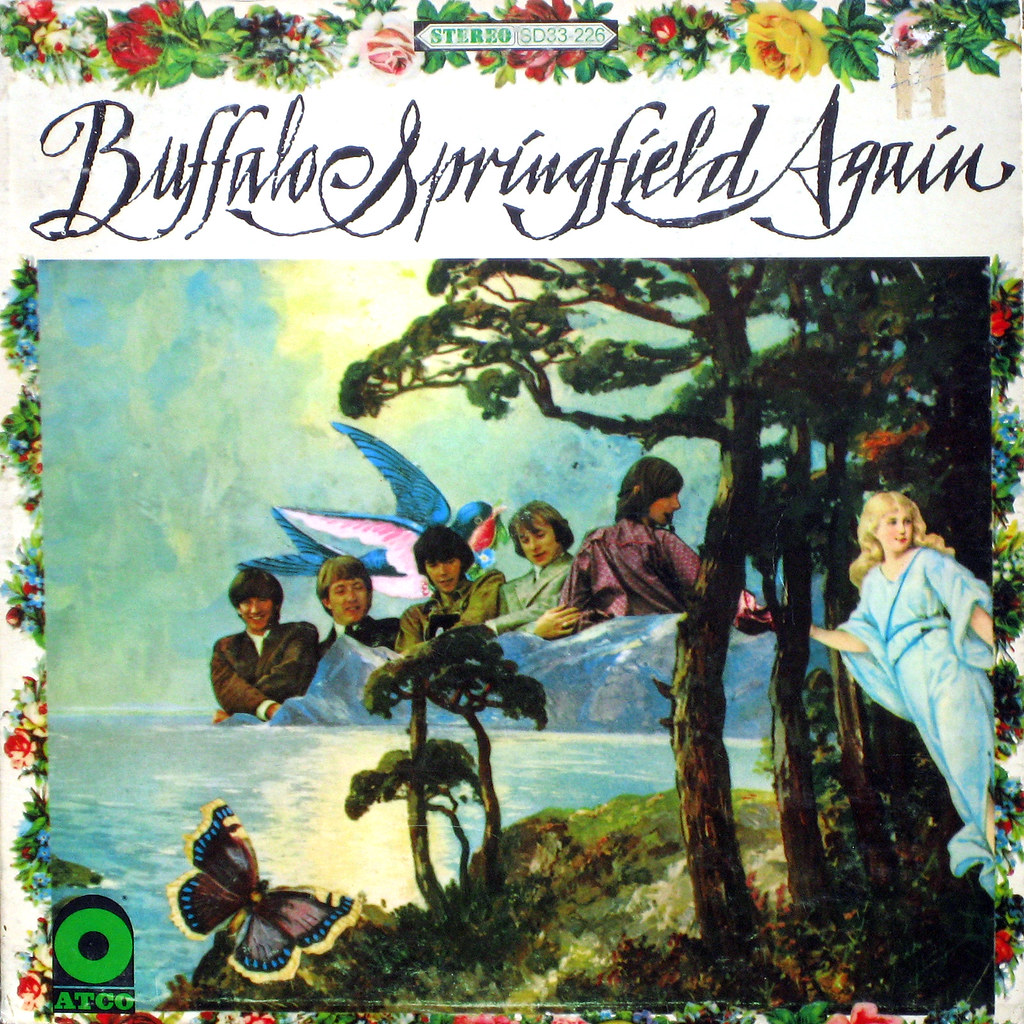
So that's the "skin pop of retribution." As for Buffalo Springfield, didn't you, don't you love them? And imagine yourself, in a not entirely related retrospection, on a crowded bus with jovial folk carrying chickens in wire cages. But not all the folk are jovial. And how do we make anything work, anything, let alone, it.
to expect no one to know
you are a soft kiss on
the sky at dawn but
to discover, same.
The most splendid news is I loved writing this poem. A few years ago I'd was in communication with a one-time, or not, junky whose level of abstention from booze or heroin was unclear. He wrote, read, thought.
So that's the "skin pop of retribution." As for Buffalo Springfield, didn't you, don't you love them? And imagine yourself, in a not entirely related retrospection, on a crowded bus with jovial folk carrying chickens in wire cages. But not all the folk are jovial. And how do we make anything work, anything, let alone, it.
But To
Discover Same
The only way two people can
make it work (advise close
consideration of “work”
“make” “it” and seven other
napkin holders) is
to inhabit a fearful present
beautiful
in its summation of
so times kicking
screaming (being how) thusly
one ends up an ivory
engraved and pouchy corpus
by which it is meant
not only to have now but
now be all and each
skin pop of retribution
and restart natural impulse aborted
when Babar & co.
were stole by lesser than gods
to neither pretend
Buffalo Springfield is
on the turntable nor
that even are “make” “it”
or “work” feasible
and so to arrive at the depot
after sitting in
a car chicken-shit
packed (also feathers, old babies
venomous grandparents)
after sitting in
a car chicken-shit
packed (also feathers, old babies
venomous grandparents)
to expect no one to know
you are a soft kiss on
the sky at dawn but
to discover, same.
_____
Sarah Sarai, from I Feel Good (Beard of Bees, 2013).
Tuesday, October 22, 2013
A BEST New York Poem: Mervyn Taylor's "The Center of the World"
I have heard Mervyn Taylor read this poem three times and each time saw with my shivering essence the heartbreaking beauty of New York, more specifically, Brooklyn, that most mysterious of boroughs. Saw a New York crackling like a fire with promise and eradication. Saw a specific New York, closer than approximation, one I know, of supers and late-night MacDonalds, dying relationships, lost keys and keys lost to boozy nights. The pot that never melts, except in some mayor's false paradise. This is an amazing poem. A parade. The universe.
The Center
of The World
I.
From
here I can see the world, all the people
walking
down Flatbush Ave., going into stores,
waiting
at the bus stop, all the latecomers rushing
into the
subway cat-a-corner from my window,
across
Ocean Ave. all the new immigrants in winter
wearing
too much clothes, the police recruit from
Long
Island under the awning of the Arab grocer.
Salaam,
I can hear the crack addict, the last of
his kind
disappearing between the floorboards,
arguing
with the Arab chief, the one with the scar
in his
left cheek next door to whom the Asians
scrape
calluses from feet three times the size
of their
own, giving them the designs they want:
star,
crescent, half-moon, the flag of any country.
I see
all four seasons pass through the park, in
winter,
the lake shimmering between the trees,
in
autumn the nervous leaves shaking and falling,
the
sudden flood of green in spring. And summer,
oh
summer, with the smoke of a hundred grills,
the
smell of bar-b-q, the birthday balloon sailing
away
from the crying boy, the slap of dominoes
on the
picnic tables, the relentless hawk, a rat
dangling
from its talons, dripping red onto the
cyclist’s
jersey, the yellow paddleboats on their
circular
journey around the island that is the ducks’
breeding
ground, dense, impenetrable, the raccoon
that
scared us after the concert at the band shell
the
night Rudder sang his calypso blues, where
a year ago
Odetta made her last appearance half-
sitting
under a falling moon. And the vet whose
shock of
white hair stood out among the runners,
I don’t
hear his sidewise shout anymore.
In the
zoo the enclosure where the bears ate a boy
has a higher
fence, painted with pretty pictures.
On
Sundays the drummers still form their circle,
and in
the evenings horns announce the arrival of
the
Haitians, their sound atonal, harsh, unrelieved.
They
move in concentric circles, singing not words
but a
series of o’s, rising, falling, rising.
II.
Sometimes
the midnight lines at the McDonald’s are
seven
registers across. Here a homeless man might sit,
nursing
coffee, pretending to wait for the No. 12.
I know
where it goes, out Linden, through dangerous
parts of
East New York, I take it almost to the end of
the
line, to a building boasting a thirteenth floor and
terraces
with a great view of flights leaving Kennedy.
I watch
the Puerto Ricans on their day, the coquis on
the
hatband of the older men. Fridays the Jews
stream in
numbers toward the end of the park where
the big
synagogue is, the cops with backs to them
blocking
traffic. I see all the time accidents at this
five-way
intersection, the elderly couple never
making
it to a wedding, their car spun round facing
the
opposite way. I catch, on Labor Day,
steel
pans going down the middle of the avenue,
a girl
waving a mysterious flag, the sergeant longest
on the
beat saying, ahh, don’t worry ‘bout it, too long
to
explain what wining is. I’ve heard relationships die
at 3 am,
among the pillars in the pavilion, or at the stoplight
while a
car idled. I’ve heard the prettiest rendition of
a Scott
Walker song come up the fire escape and through
my
window, through a long and sleepless night…
III.
I’ve
heard the shocking quarrels of people over
a
parking space, over love, over nothing. I’ve
seen a
boy gasp his last between the park benches
after
the pop, pop turned out not to be fireworks,
the cap
on his head turning red. There are times
I looked
out to see not a soul, and times it seemed
a
congregation had gathered under my window,
times
when the heat would rise and then would not,
my guest
and I sleeping in gloves.
I’ve
lived through three supers, watched their sons
grow to
manhood. I’ve let the woman next door
climb
through my window when she’d forgotten
her
keys. I’ve stepped over the nodding ghosts of
men
acting like doormen in the lobby, their number
dwindling
till there was one, who could hardly lift
my
suitcase. I leave but always come back here,
where I
review things from this vantage point,
the
confluence of people and lives after deliveries
are
dropped off early in the morning by trucks
rambling
through this intersection of the world.
--Mervyn Taylor, from No Back Door (Shearsman), 2010
Thursday, October 10, 2013
Sir Walter Raleigh on the hypocrisy of our times: "The Soul's Errand" (a poem)
![]() |
| The Soul’s Errand |
By Sir Walter Raleigh |
(Written by the English soldier and statesman, 1554?–1618, just before his execution) |
|
Friday, September 20, 2013
Yahia Labadidi...3 poems from "Barely There"..."a glorious metamorphosis"
Poet Yahia Labadidi offers us remnants from silks and linens used to create longer forms. Poems in Barely There (Wolf and Stock, 2013) may be, as advertised, short, but many are evocative, some haunting in the way fine poems can be. Silk is silk, full dress or suit, or patch.
For instance, courtesy of legend and the history of western painting, St. Sebastian is usually imagined as visibly pierced. but here, it's the not visible that marks him. I'm always afraid to talk muses (superstitious me), so moving to the third poem below . . . the acknowledgement that a nation's metamorphosis is ongoing. Currently that change, invention, reinvention is obvious and painful to observe in Egypt, but look at Egypt's mighty, varied history, look at America's steps and missteps; look. The poet's history as Egyptian and American, hovers.
On a personal note, Yahia has a good sense of humor. That's high praise, right there. Three from his latest collection:
St. Sebastian
Egypt
You are the deep fissure in my sleep,
that hard reality underneath
a stack of soft-cushioning illusions.
Self-exiled, even after all these years,
I remain your ever-adoring captive
I register as inner tremors
—across oceans and continents -
the flap of your giant wing, struggling
to be free, and know I shall not rest until
your glorious metamorphosis is complete.
Barely There, Short Poems (Wolf and Stock, 2013) by Yahia Labadidi.
For instance, courtesy of legend and the history of western painting, St. Sebastian is usually imagined as visibly pierced. but here, it's the not visible that marks him. I'm always afraid to talk muses (superstitious me), so moving to the third poem below . . . the acknowledgement that a nation's metamorphosis is ongoing. Currently that change, invention, reinvention is obvious and painful to observe in Egypt, but look at Egypt's mighty, varied history, look at America's steps and missteps; look. The poet's history as Egyptian and American, hovers.
On a personal note, Yahia has a good sense of humor. That's high praise, right there. Three from his latest collection:
St. Sebastian
Sometimes, he found it difficult
to dislodge the arrows
preferring to keep them there
reverberating in silence
along with his invisible wounds.
Defiant Muse
to dislodge the arrows
preferring to keep them there
reverberating in silence
along with his invisible wounds.
Defiant Muse
With myth and parable, the defiant muse
reminds us of the art of being present
and then, how to vanish without a trace.
reminds us of the art of being present
and then, how to vanish without a trace.
Egypt
You are the deep fissure in my sleep,
that hard reality underneath
a stack of soft-cushioning illusions.
Self-exiled, even after all these years,
I remain your ever-adoring captive
I register as inner tremors
—across oceans and continents -
the flap of your giant wing, struggling
to be free, and know I shall not rest until
your glorious metamorphosis is complete.
Barely There, Short Poems (Wolf and Stock, 2013) by Yahia Labadidi.
Saturday, September 14, 2013
Longing for Prophets. Shirley Kaufman poem. Story of my life.
![]() |
| ** |
Longing for Prophets
Not for their ice-pick eyes,
their weeping willow hair,
and their clenched fists beating at heaven.
Not for their warnings, predictions
of doom. But what they promised.
I don't care if their beards
are mildewed, and the ladders
are broken. Let them go on
picking the wormy fruit. Let the one
with the yoke around his neck
climb out of the cistern.
Let them come down from the heights
in their radiant despair
like the Sankei Juko dancers descending
on ropes, down from the hills
to the earth of their first existence.
Let them follow the track
we've cut on the sides of the mountains
into the desert, and stumble again
through the great rift, littered
with bones and the walls of cities.
Let them sift through the ashes
with their burned hands. Let them
tell us what will come after.
Shirley Kaufman, from Field (journal) and Rivers of Salt (collection)
Drunken Boat interview with Shirley Kaufman
**& as you know the photo's a still from Bunuel's Simon of the Desert
Thursday, September 12, 2013
On Rage or Righteous Anger / On Letting Go of a Friend
I'm home waiting for a phone call I agreed to take several weeks ago. I didn't sleep in, but I didn't have to race to work to squint at a slew of documents needing copyediting. I like what I do as much as I can like what I do, ie, I'm not complaining. I'm saying.
Having time to wander the Web (after I spent two hours hashing out drafts of poems), I came across an article that annoyed and a photograph that infuriated. The article was on poetry and the photo was of Nicki Minaj; it was on The Atlantic website and intended to depict her as anyone but Rudyard Kipling. Whom to she was being contrasted.
Nicki was eating fried chicken. The photo was out of context. In fact (I am told), she was eating fried chicken on stage at a concert. As performance. Got it. But that wasn't clarified.
Out of my whalish spout on my whalish back I spewed Twitters and a Facebook post. The author of the article responded to me--we conversed as much as is possible in the context of Twitter. The Atlantic didn't respond. I suspect they are a) bemused and b) happy for the attention and c) waiting to see if anyone else cares. I doubt if anyone else will care. It's Nicki Minaj. A rapper. A woman. A Black woman.
A few months ago, a friend made fun of me for being so (relatively) volatile and then said rather cruel things via assessment of me. Though after four years of "friendship" she was finally able to tell me, in a begrudging, shaking voice, that my poetry was of a "High Level," we're no longer friends. Too many put downs. Trust me on that.
This posting is itself a release of steam and water and dross. I'm changing every day but what to change. Is a question. I have no answer but asking helps.
Image is from Frigid Hare, a Looney Tunes cartoon. For more info, click on info.
Tuesday, August 27, 2013
John Renbourn singing John Donne's "Song"
| Song |
| GO and catch a falling star, | |
| Get with child a mandrake root, | |
| Tell me where all past years are, | |
| Or who cleft the Devil's foot; | |
| Teach me to hear mermaids singing, | 5 |
| Or to keep off envy's stinging, | |
| And find | |
| What wind | |
| Serves to advance an honest mind. | |
| If thou be'st born to strange sights, | 10 |
| Things invisible to see, | |
| Ride ten thousand days and nights | |
| Till Age snow white hairs on thee; | |
| Thou, when thou return'st, wilt tell me | |
| All strange wonders that befell thee, | 15 |
| And swear | |
| No where | |
| Lives a woman true and fair. | |
| If thou find'st one, let me know; | |
| Such a pilgrimage were sweet. | 20 |
| Yet do not; I would not go, | |
| Though at next door we might meet. | |
| Though she were true when you met her, | |
| And last till you write your letter, | |
| Yet she | 25 |
| Will be | |
| False, ere I come, to two or three. |
JOHN DONNE (1573-1631). from The Oxford Book of English Verse: 1250–1900, Arthur Quiller-Couch, ed. 1919.
Subscribe to:
Posts (Atom)