Sunday, November 10, 2013

Assembling my Poetry Collection So Each Poem's Comfortable with its Neighbors: take 3 with more to come


Less than a year ago I thought it was done. I thought I had a 2nd poetry manuscript and with great though occasionally nagging conviction I submitted it. The "nagging" in nagging conviction is hard to fathom –  it has depths, some of which are reasonable while others are meaningless.

And thus the great art of discernment, one-half the price of being an artist. So okay.  More new poems got written or completed since last year’s book, some quite strong.  I decided to reassemble the manuscript, to add in poems and attempt the ruthless discard. And re-ORDER the poems.

Determining the order of poems in a manuscript is not an act of discernment (which is an art), though remains a bit of a mystery, and there is no perfection. The amount of attention a poet pays to her manuscript adds to its strength, mystique, believability, readability, desirability, saleability, poetry, and poem-companionability. The more attention paid to the sequencing or ordering of the poems, the more comfortable each poem is with its place in the collection. The more respect each poem has for its neighbors.

Poems like poets have egos. They like to be read, heard, appreciated. Yes, there are shy poets who don't like to read their work aloud but I haven't met one who didn't want her/his work read on the page. Poems exist. Existence demands some level of attention. Even  rocks in the desert sense fulfillment when a lizard scurryies to rest in their shadow.

Like a knight I believed in the rightness of my kills, my deletions.  More important than believing I was right, was knowing by way of the internal nag that a poem didn't belong in the book because it couldn't stand up to the others.  It made me sad, but also proud of the others, so strong and noble.
After I made a few changes to the doc., I printed it out and put it in a federal express cardboard-like envelope I kept in my bag.  Since I am working a 40-hour job I didn't have lots of time to take a look, but I peeked some ,took it out for perusal once or twice.  I choose and I reordered a bit.  I demystified various of my false beliefs that in books to come some of my themes might take precedence and so I should hold onto poems for that future time. Truth is, I don't know what's to come. I do know that holding a poem because of what MIGHT happen doesn't make sense.  It's like holding back in fiction, not letting a character take action when the character wants to.

Then I just googled how to order a poetry manuscript (in different iterations).  I read different perspectives about creating sections in the book, headings, or just going arbitrary--throwing the pages in the air (well, that's what I suggested I’d do, on Facebook).  Last week, at his reading, I asked George Guida how important was the order of poems.

"Very," he said. I believed him. I also believed him when he added, "at least to the poet."

Another week, more thinking, ordering (or not), adding, deleting. The weekend came. I made piles of the poems. I think I'll hold back on the content of the piles (except for one, which was, no go).  Finished, I felt the moment. Looked at the poems in their golden groupings. I decided that as a reader of my manuscript, a reader who is easily bored, I would appreciate a little surprise.

And so I organized the poems variously, placing a poem from one pile, one grouping, next to a poem from another pile, a different grouping. I realized that my themes can carry from grouping to grouping. Yes, I considered each poem as I ordered. I looked at what I had, page by page. Left my apartment for my Tai Chi lesson in the East Village, a manicure, a to-go meal. Then I sat with the stack and reordered the Word document. Which took several hours and involved, inevitably, more deliberation.

Somewhere along the line, last night when I was being social or in dreams, I remembered two poems I hadn't included. Added them in. Edited one.  (Oh, all along the way, poems--definitely not all but some, especially the unpublished poems--get a little editing, PRN as the docs say.)

So now I have a poetry manuscript. I will print it out, consider. And I will be mailing hard copy and emailing the document to a friend for a "if you see something say something" edit. It's not over. But all of us, Sarah Sarai and her x# of poems (oh be surprised later) are coalescing, like clouds of joy.

image from Manuscripts in the Kandilli Observatory (astronomy, mathematics and geography of the Arab world), courtesy of Turkish Airlines

Monday, November 4, 2013

But To Discover Same ("The only way two people can make it work") A POEM

Worse and more embarrassing mistakes have been made. I've heard, for instance, that Ashbery included the same poem in two collections. Gasp? Not really. It's impossible to keep up with all our poem titles--which change organically and otherwise.  In my case, I realized last week I'd submitted "But To Discover Same" to several journals, when, in fact, the poem is in my online, pdf chapbook, I Feel Good (Beard of Bees, 2013). So I had to withdraw it.

The most splendid news is I loved writing this poem. A few years ago I'd was in communication with a one-time, or not, junky whose level of abstention from booze or heroin was unclear. He wrote, read, thought.

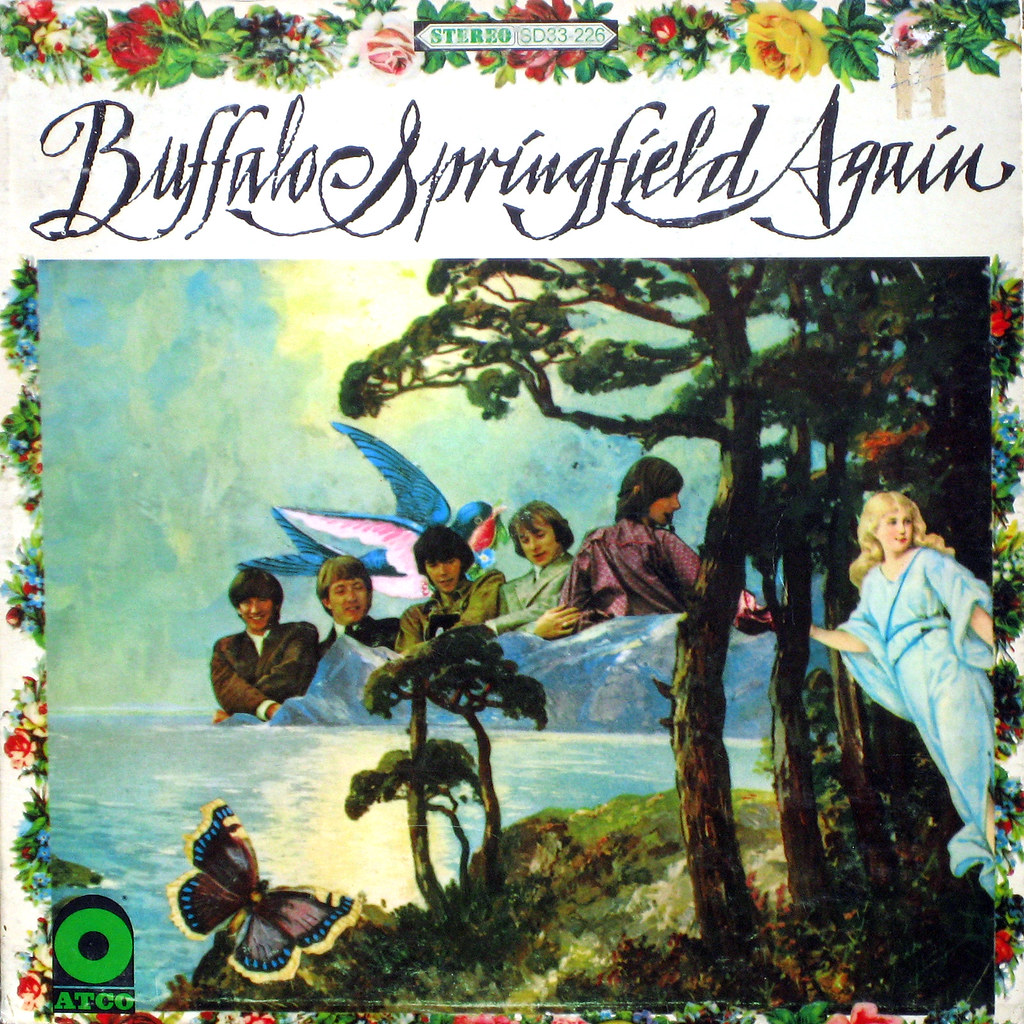
So that's the "skin pop of retribution." As for Buffalo Springfield, didn't you, don't you love them? And imagine yourself, in a not entirely related retrospection, on a crowded bus with jovial folk carrying chickens in wire cages. But not all the folk are jovial. And how do we make anything work, anything, let alone, it.


But To Discover Same

The only way two people can
make it work (advise close
consideration of  “work”
“make” “it” and seven other
napkin holders) is

to inhabit a fearful present
beautiful
in its summation of
so times kicking
screaming (being how) thusly
one ends up an ivory
engraved and pouchy corpus

by which it is meant
not only to have now but
now be all and each
skin pop of retribution

and restart natural impulse aborted
when Babar & co.
were stole by lesser than gods

to neither pretend

Buffalo Springfield is
on the turntable nor
that even are “make” “it”
or “work” feasible

and so to arrive at the depot
after sitting in
a car chicken-shit
packed (also feathers, old babies
venomous grandparents)

to expect no one to know
you are a soft kiss on
the sky at dawn but

to discover, same.
_____
Sarah Sarai, from I Feel Good (Beard of Bees, 2013).

Tuesday, October 22, 2013

A BEST New York Poem: Mervyn Taylor's "The Center of the World"


I have heard Mervyn Taylor read this poem three times and each time saw with my shivering essence the heartbreaking beauty of New York, more specifically, Brooklyn, that most mysterious of boroughs. Saw a New York crackling like a fire with promise and eradication. Saw a specific New York, closer than approximation, one I know, of supers and late-night MacDonalds, dying relationships, lost keys and keys lost to boozy nights. The pot that never melts, except in some mayor's false paradise. This is an amazing poem. A parade. The universe.

The Center of The World

I.
From here I can see the world, all the people
walking down Flatbush Ave., going into stores,
waiting at the bus stop, all the latecomers rushing
into the subway cat-a-corner from my window,
across Ocean Ave. all the new immigrants in winter
wearing too much clothes, the police recruit from
Long Island under the awning of the Arab grocer.

Salaam, I can hear the crack addict, the last of
his kind disappearing between the floorboards,
arguing with the Arab chief, the one with the scar
in his left cheek next door to whom the Asians
scrape calluses from feet three times the size
of their own, giving them the designs they want:
star, crescent, half-moon, the flag of any country.

I see all four seasons pass through the park, in
winter, the lake shimmering between the trees,
in autumn the nervous leaves shaking and falling,
the sudden flood of green in spring. And summer,
oh summer, with the smoke of a hundred grills,
the smell of bar-b-q, the birthday balloon sailing
away from the crying boy, the slap of dominoes
on the picnic tables, the relentless hawk, a rat

dangling from its talons, dripping red onto the
cyclist’s jersey, the yellow paddleboats on their 
circular journey around the island that is the ducks’
breeding ground, dense, impenetrable, the raccoon
that scared us after the concert at the band shell
the night Rudder sang his calypso blues, where
a year ago Odetta made her last appearance half-
sitting under a falling moon. And the vet whose
shock of white hair stood out among the runners,
I don’t hear his sidewise shout anymore.

In the zoo the enclosure where the bears ate a boy
has a higher fence, painted with pretty pictures.
On Sundays the drummers still form their circle,
and in the evenings horns announce the arrival of
the Haitians, their sound atonal, harsh, unrelieved.
They move in concentric circles, singing not words
but a series of o’s, rising, falling, rising.


II.
Sometimes the midnight lines at the McDonald’s are
seven registers across. Here a homeless man might sit,
nursing coffee, pretending to wait for the No. 12.
I know where it goes, out Linden, through dangerous
parts of East New York, I take it almost to the end of
the line, to a building boasting a thirteenth floor and
terraces with a great view of flights leaving Kennedy.  

I watch the Puerto Ricans on their day, the coquis on
the hatband of the older men. Fridays the Jews
stream in numbers toward the end of the park where
the big synagogue is, the cops with backs to them
blocking traffic. I see all the time accidents at this
five-way intersection, the elderly couple never
making it to a wedding, their car spun round facing
the opposite way. I catch, on Labor Day,

steel pans going down the middle of the avenue,
a girl waving a mysterious flag, the sergeant longest
on the beat saying, ahh, don’t worry ‘bout it, too long
to explain what wining is. I’ve heard relationships die
at 3 am, among the pillars in the pavilion, or at the stoplight
while a car idled. I’ve heard the prettiest rendition of
a Scott Walker song come up the fire escape and through
my window, through a long and sleepless night…

III.
I’ve heard the shocking quarrels of people over
a parking space, over love, over nothing. I’ve
seen a boy gasp his last between the park benches
after the pop, pop turned out not to be fireworks,
the cap on his head turning red. There are times
I looked out to see not a soul, and times it seemed
a congregation had gathered under my window,
times when the heat would rise and then would not,
my guest and I sleeping in gloves.

I’ve lived through three supers, watched their sons
grow to manhood. I’ve let the woman next door
climb through my window when she’d forgotten
her keys. I’ve stepped over the nodding ghosts of
men acting like doormen in the lobby, their number
dwindling till there was one, who could hardly lift
my suitcase. I leave but always come back here, 
where I review things from this vantage point,
the confluence of people and lives after deliveries
are dropped off early in the morning by trucks
rambling through this intersection of the world.

--Mervyn Taylor, from No Back Door (Shearsman), 2010

Thursday, October 10, 2013

Sir Walter Raleigh on the hypocrisy of our times: "The Soul's Errand" (a poem)


The Soul’s Errand

By Sir Walter Raleigh

(Written by the English soldier and statesman, 1554?–1618, just before his execution)


GO, Soul, the body’s guest,
  Upon a thankless errand;
Fear not to touch the best;
  The truth shall be thy warrant:
    Go, since I needs must die,        5
    And give them all the lie.

Go tell the Court it glows
  And shines like rotten wood;
Go tell the Church it shows
  What’s good, but does no good:        10
    If Court and Church reply
    Give Court and Church the lie.

Tell Potentates they live
  Acting, but oh! their actions;
Not loved, unless they give,        15
  Nor strong but by their factions:
    If Potentates reply,
    Give Potentates the lie.

Tell men of high condition,
  That rule affairs of state,        20
Their purpose is ambition;
  Their practice only hate:
    And if they do reply,
    Then give them all the lie.…

Tell Physic of her boldness;        25
  Tell Skill it is pretension;
Tell Charity of coldness;
  Tell Law it is contention:
    And if they yield reply,
    Then give them all the lie.…        30

So when thou hast, as I
  Commanded thee, done blabbing;
Although to give the lie
  Deserves no less than stabbing:
    Yet stab at thee who will,        35
    No stab the Soul can kill.
 

Friday, September 20, 2013

Yahia Labadidi...3 poems from "Barely There"..."a glorious metamorphosis"

Poet Yahia Labadidi offers us remnants from silks and linens used to create longer forms. Poems in Barely There (Wolf and Stock, 2013) may be, as advertised, short, but many are evocative, some haunting in the way fine poems can be. Silk is silk, full dress or suit, or patch.

For instance, courtesy of legend and the history of western painting, St. Sebastian is usually imagined as visibly pierced. but here, it's the not visible that marks him. I'm always afraid to talk muses (superstitious me), so moving to the third poem below . . .  the acknowledgement that a nation's metamorphosis is ongoing. Currently that change, invention, reinvention is obvious and painful to observe in Egypt, but look at Egypt's mighty, varied history, look at America's steps and missteps; look.  The poet's history as Egyptian and American, hovers.

On a personal note, Yahia has a good sense of humor. That's high praise, right there. Three from his latest collection:

St. Sebastian


Sometimes, he found it difficult 
to dislodge the arrows 
preferring to keep them there 
reverberating in silence
along with his invisible wounds. 

Defiant Muse


With myth and parable, the defiant muse 
reminds us of the art of being present 
and then, how to vanish without a trace. 


Egypt

You are the deep fissure in my sleep, 
that hard reality underneath
a stack of soft-cushioning illusions. 

Self-exiled, even after all these years, 
I remain your ever-adoring captive

I register as inner tremors
—across oceans and continents -
the flap of your giant wing, struggling
to be free, and know I shall not rest until 

your glorious metamorphosis is complete. 


Barely There, Short Poems (Wolf and Stock, 2013) by Yahia Labadidi.

Saturday, September 14, 2013

Longing for Prophets. Shirley Kaufman poem. Story of my life.

**
I figure since today is a holy day for distant ancestors running from the Cossacks back there in Georgia near Azerbaijan-- not that anyone on my father's side was religious or observant of much of anything but the world's inconsistencies (which need observation and witness, so I'm not complaining)-- I'll post a poem about longing for holiness, answers, a freaking needed explanation for the suffering.  On my mother's side, in Sweden, they're looking at the dark skies and cursing fate, then laughing. Someone's wondering what's funny.

Longing for Prophets

Not for their ice-pick eyes,
their weeping willow hair,
and their clenched fists beating at heaven.
Not for their warnings, predictions
of doom. But what they promised.
I don't care if their beards
are mildewed, and the ladders
are broken. Let them go on
picking the wormy fruit. Let the one
with the yoke around his neck
climb out of the cistern.
Let them come down from the heights
in their radiant despair
like the Sankei Juko dancers descending
on ropes, down from the hills
to the earth of their first existence.
Let them follow the track
we've cut on the sides of the mountains
into the desert, and stumble again
through the great rift, littered
with bones and the walls of cities.
Let them sift through the ashes
with their burned hands.  Let them
tell us what will come after.

Shirley Kaufman, from Field (journal) and Rivers of Salt (collection)
Drunken Boat interview with Shirley Kaufman
**& as you know the photo's a still from Bunuel's Simon of the Desert

Thursday, September 12, 2013

On Rage or Righteous Anger / On Letting Go of a Friend

I'm home waiting for a phone call I agreed to take several weeks ago. I didn't sleep in, but I didn't have to race to work to squint at a slew of documents needing copyediting. I like what I do as much as I can like what I do, ie, I'm not complaining. I'm saying.

Having time to wander the Web (after I spent two hours hashing out drafts of poems), I came across an article that annoyed and a photograph that infuriated. The article was on poetry and the photo was of Nicki Minaj; it was on The Atlantic website and intended to depict her as anyone but Rudyard Kipling. Whom to she was being contrasted.

Nicki was eating fried chicken. The photo was out of context. In fact (I am told), she was eating fried chicken on stage at a concert. As performance. Got it. But that wasn't clarified.

Out of my whalish spout on my whalish back I spewed Twitters and a Facebook post. The author of the article responded to me--we conversed as much as is possible in the context of Twitter. The Atlantic didn't respond. I suspect they are a) bemused and b) happy for the attention and c) waiting to see if anyone else cares. I doubt if anyone else will care. It's Nicki Minaj. A rapper. A woman. A Black woman.

A few months ago, a friend made fun of me for being so (relatively) volatile and then said rather cruel things via assessment of me. Though after four years of "friendship" she was finally able to tell me, in a begrudging, shaking voice, that my poetry was of a "High Level," we're no longer friends. Too many put downs. Trust me on that.

This posting is itself a release of steam and water and dross. I'm changing every day but what to change. Is a question. I have no answer but asking helps.

Image is from Frigid Hare, a Looney Tunes cartoon. For more info, click on info.

Tuesday, August 27, 2013

John Renbourn singing John Donne's "Song"

On his debut album, John Renbourn (later of Pentangle) recorded a version of John Donne's "Song" (the first line of which is "Go and catch a falling star"). Renbourn changed the last line to "False, ere I count one, two three.." Courtesy of Bartleby.com.

Song
  
GO and catch a falling star,
  Get with child a mandrake root,
Tell me where all past years are,
  Or who cleft the Devil's foot;
Teach me to hear mermaids singing,         5
Or to keep off envy's stinging,
        And find
        What wind
Serves to advance an honest mind.
If thou be'st born to strange sights,  10
  Things invisible to see,
Ride ten thousand days and nights
  Till Age snow white hairs on thee;
Thou, when thou return'st, wilt tell me
All strange wonders that befell thee,  15
        And swear
        No where
Lives a woman true and fair.
If thou find'st one, let me know;
  Such a pilgrimage were sweet.  20
Yet do not; I would not go,
  Though at next door we might meet.
Though she were true when you met her,
And last till you write your letter,
        Yet she  25
        Will be
False, ere I come, to two or three.

JOHN DONNE (1573-1631). from The Oxford Book of English Verse: 1250–1900, Arthur Quiller-Couch, ed. 1919. 

Friday, August 16, 2013

Count the images in a Kristine Ong Muslim poem. "The Pilot." Go on.

Turner.  Who else?

& today I was led to this poem. (Led how? Alls I can say is, I held my hand out to the goddess of chance and expedience. She embraced it, almost gently -- her nail dug into my palm -- guiding it to waters of luck, random but never coincidental. I'd kind of hinted the poet's name before we began our journey.) Kristine Ong Muslim is a poet of many wonders, "The Pilot." among them. That first image, the six-month tests, the flight plan -- foreboding, all of it.

The Pilot.

The sky is a bed nailed to the ceiling; it turns
when I sleep. I do not think about it that much
these days. It may show up in my psychological
tests, the ones I have to take every six months.
Most of the time I imagine the plane growing
outward, throttling the last breath of a giant tin can,
thickening the fog as it arches from takeoff;
the path of air lengthening in its wake.
______________________
by Kristine Ong Muslim, read more here

Tuesday, August 13, 2013

Lee Upton's "Drunk at a Party" . "What latch keeps a brain from spinning like a prawn dropped on a stranger’s parquet?" (poem)

* painting by Colin Page
Lee Upton's "The Coast of Apples" flew off my bulletin board today. I'd cut it out from Boston Review and stuck it next to my bird calendar.  So here is a poem of hers which first appeared in Agni (2009). I like "get lugubrious with that woman / from the controller's office" and all the rest.

Drunk at a Party 

He couldn’t imagine it now,
kicking back, back kicking,
wandering around with a glass,
weirdly morose or—what’s the word?—
jolly. His voice sounding vaguely Swiss
or Peruvian or Dutch. Could he
pick up the rhythm
of the lush he once was,
get lugubrious with that woman
from the controller’s office?
Break down, regret everything or—
the opposite—
boast? What latch keeps a brain
from spinning like a prawn
dropped on a stranger’s parquet?
Ages ago in a land far away
lucky people got three martinis for lunch.
Whole lifetimes hung on a ledge
disgorging the slippery
feelers of sloe gin.
Who would he be
if he passed out again?
Or if love plucked his eyes
and made any throat glisten?
This descendant of men who broke
their necks
in buckets of hard cider?
Why am I speaking
at this moment
as if I were a man?
What ruse am I guilty of?
What keeps a lobster out of a tank?
____
Lee Upton, 2009. For more info on the poet, who teaches at Layfayette College in PA, click on her name.
*artist Colin Page, painting Lobster Fuel Tanks
*more on Colin Page

Thursday, August 8, 2013

Confessions of a Type Z: Making a List of My Short Stories

I don't work-work until tomorrow. Work-work is one of my names for real world money earning, for those stretches of time when the coffee is free, the air conditioning is full blast, and every hour at a desk and computer is reimbursed.

Money is good. I wish I had more, but at least my nut gets covered.

I recently saw a listing for a personal financial guide, The Type-Z Guide to Success by Marc Allen. I haven't read it but holy cow, that's me. Type Z. (Assuming that means a slacker who excels at slackerdom.) It's not that I don't have Type A urges, but they manifest mainly when I am trying to get to work on time, i.e., somewhere near the subway. Otherwise, it is a miracle of the Almighty's grace and compassion that anything I write gets accepted for publication, or gets written in the first place. Or that any monies enter my life.

Complexities abound in my infrastructure and you better believe I have examined each of them as if my understanding might earn me a Nobel (pictured) in introspection. Not that I'm trying for one.  I just need the money.

A short story of mine was accepted for publication (2014) this week. It's the first story of a novella of sorts. So it occurs to me to pull the rest of the novella together. Like really do it, and not assume each file is "pretty much okay." Everything as-of-yet unpublished bears another look. So I need to prioritize. Last month I drew up a list of my published short stories, and wrote a three-sentence descriptor of each.

Now I need a full list, published and unpublished, with arrows and stars for what needs fixing and finishing. As anyone of any sensibility knows, every task takes longer than planned for unless the planner astutely plans large chunks of time for each task.

Regardless, irregardless, I believe such a list would motivate me, de-cobweb my brain a bit, force my hand to finish stories I've forgotten, improve stories I thought finished, abandon hope where necessary, and feel great satisfaction about what I have accomplished. Onward.

Wednesday, July 31, 2013

"My cups were B" -FOR THE TIDE BEING- {a poem}


I can't figure out why this poem hasn't made it into any of the big anthologies. Well, I accept a life of ignominy with my usual genial disillusion. Read and then tell me your life hasn't been changed by Sarah Sarai. And no, I am not posting it to fulfill my ongoing need for content. I don't think it has any.


For the Tide Being
  
I was adrift
5 billion years
& then I swept ashore
 
w/ a jig & a tra
& a Ain’t I
Miss La De Da
  
The sand was firm,
my legs were not,
upon the moundy beach 
  
w/ a ho & a heave           
& a In your cups,
again?
  
My cups were B,
I cleaved to earth:
o! sandy Mama Dear
 
w/ a cry & a whoop
& a Worried
I’m all wet? 
___
Of for and by Sarah Sarai. Written in the previous century, but latish, like the 1998s.
...The delightful illustration is from the Cairo newspaper Al-Ahram Weekly and part of a series illuminating the fiction of Nagib Mahfouz (who won a Nobel in 1988).